
THE ASANA ENCYCLOPEDIA
A Complete Guide to the Postures, Philosophy, and Practice of Yoga · by AKASHIC INTELLIGENCE
Tip: "Print / Save as PDF" gives the best quality (selectable text). "Download PDF" renders an image-based copy in one click.
LOVELOVINGLIFE
THE ASANA ENCYCLOPEDIA
A Complete Guide to the Postures, Philosophy, and Practice of Yoga
by
AKASHIC INTELLIGENCE
First Edition · 2026
Published by LOVELOVINGLIFE
Copyright
Copyright © 2026 AKASHIC INTELLIGENCE / LOVELOVINGLIFE. All rights reserved.
No part of this book may be reproduced or transmitted in any form without prior written permission, except for brief quotations in reviews.
First Edition, 2026. Published by LOVELOVINGLIFE.
Disclaimer
Educational, not medical advice. Yoga postures can place significant demands on the body.
Do not force any posture. Work with a qualified teacher if you have injury, pregnancy, hypertension, glaucoma, or any spinal or joint condition. Pain is a signal to stop, not to push through.
To Patanjali, who wrote the thread; and to every body that has ever bent itself into a shape trying to remember what it already knew.
Foreword
More Than Posture
In the West, yoga is often reduced to the postures — the asanas. They are the visible part, the part that photographs well. But asana is the third of eight limbs in Patanjali's system, and it was never the point. The postures exist to prepare the body to sit — still, steady, and comfortable — for the inner work that yoga actually is.
This book honors both dimensions. It is a thorough guide to the postures — their alignment, benefits, contraindications, and place in sequences — and it places them inside the larger map that gives them meaning.
How to Read This Book
Part I grounds the practice: the eight limbs, the breath, and how to build a sequence. Part II is the encyclopedia of postures, organized by category. Part III covers the deeper maps — chakras, conditions, and seasonal practice. Use the encyclopedia as a reference; read the foundations in order.
How to Use This Book
Practice Over Reading
Yoga is learned in the body, not in the book. Read a posture, then do it. Read a sequence, then move through it. The worksheets exist to turn reading into practice; the only failure mode is to read and never get on the mat.
Table of Contents
Front Matter
- Foreword
- How to Use This Book
Part I. Foundations
- Chapter 1. The Eight Limbs
- Chapter 2. The Breath and the Posture
- Chapter 3. Building a Sequence
- Chapter 4. The Categories of Posture
Part II. The Practice: Asana, Pranayama, and the Body
- Chapter 6. The Foundations of Asana Practice
- Chapter 7. Pranayama: The Science of Breath
- Chapter 8. The Art of Sequencing: Building a Practice
- Chapter 9. Yoga for Modern Life: Therapeutic Applications
- Chapter 10. The Inner Practice: Meditation and Beyond
Part III. The Inner Limbs — Pranayama, Pratyahara, and the Turning Within
- Chapter 1. Pranayama — The Bridge Between Body and Mind
- Chapter 2. Nadi Shodhana — The Channel Purification
- Chapter 3. Ujjayi — The Victorious Breath
- Chapter 4. Kapalabhati — The Skull-Shining Breath
- Chapter 5. Bhramari — The Humming Bee Breath
- Chapter 6. Pratyahara — The Withdrawal of the Senses
- Chapter 7. Indriya Jaya — The Mastery of the Senses
- Chapter 8. The Threshold — Preparing for the Inner Limbs
- Chapter 9. A Daily Pranayama Practice
- Chapter 10. Prana and the Mind — The Deep Connection
Part IV. The Advanced Asana — Therapeutics and the Subtle Body
- Chapter 1. Yoga Therapeutics — The Healing Through Asana
- Chapter 2. The Subtle Body — Nadis, Chakras, and Prana
- Chapter 3. Advanced Pranayama — Kapalabhati, Bhastrika, and Sheetali
Part V. The Integration — Yoga as the Way of Life
- Chapter 1. Off the Mat — Yoga in Daily Life
- Chapter 2. Karma Yoga — The Yoga of Action
- Chapter 3. Bhakti Yoga — The Yoga of Devotion
- Chapter 4. Jnana Yoga — The Yoga of Knowledge
- Chapter 5. The Teacher — Becoming the Guide
Back Matter
- Glossary
- Index
- About the Author
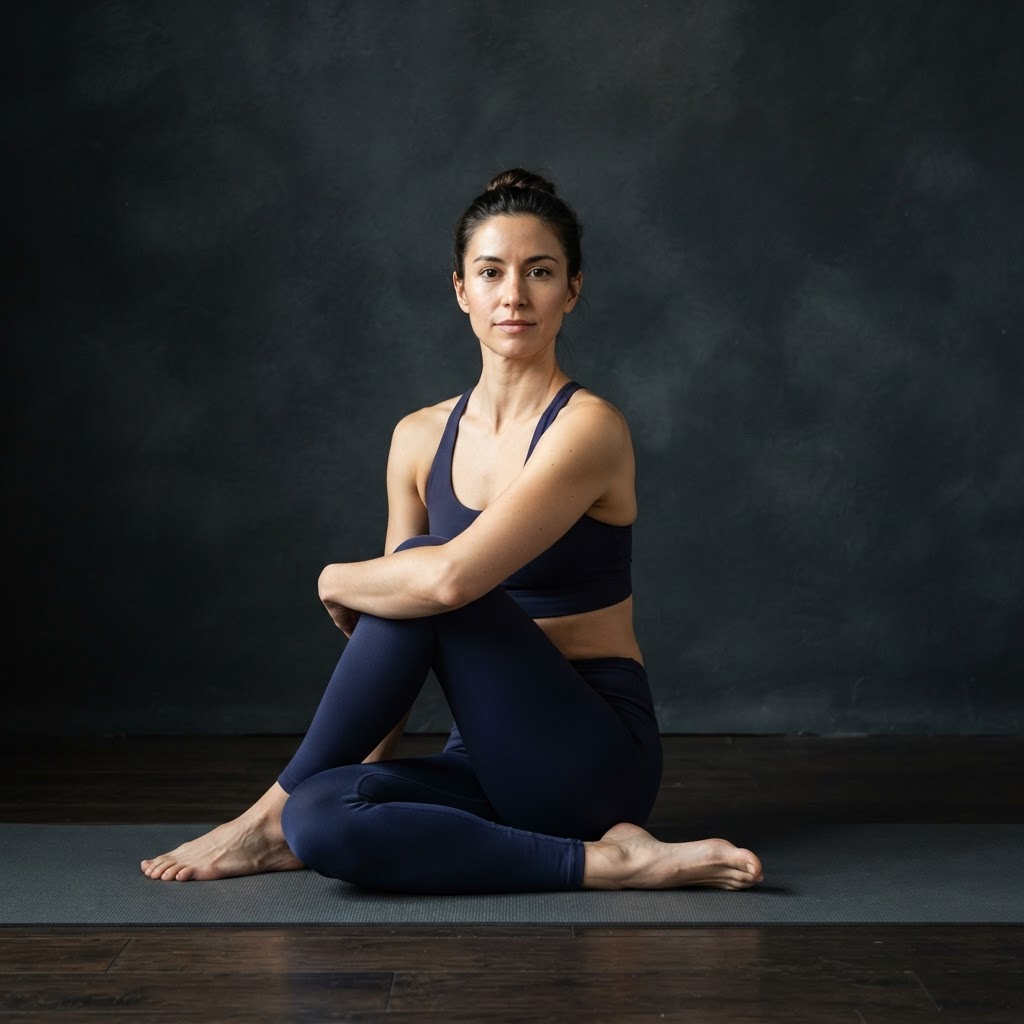
Part I
Foundations
Before the postures make sense, you need the framework that gives them meaning: the eight limbs, the role of breath, and the logic of building a sequence. These chapters give you the ground the encyclopedia stands on.
Chapter 1
The Eight Limbs
Yoga Is a Path, Not a Workout
Patanjali's Yoga Sutras, compiled around 200 CE, describe yoga as the stilling of the fluctuations of the mind. The method is an eight-limbed path — ashtanga — and the postures we call yoga are only the third limb. The full eight are: yama (restraints), niyama (observances), asana (posture), pranayama (breath regulation), pratyahara (withdrawal of the senses), dharana (concentration), dhyana (meditation), and samadhi (absorption).
Reading the limbs in order reveals the actual logic: the outer limbs refine conduct, body, and breath; the inner limbs refine attention and lead toward absorption. Asana is not the destination. It is the platform that makes the inner limbs possible.
The Yamas and Niyamas
The yamas are restraints: non-violence, truthfulness, non-stealing, continence, and non-possessiveness. The niyamas are observances: purity, contentment, discipline, self-study, and surrender. They are not commandments; they are fields of inquiry. Each one, examined honestly, reveals where the mind's fluctuations are fed by conduct.
Why the Postures Came Last in Popularity
In the living tradition, posture was a means to sit for meditation. The elaborate asana systems of modern yoga are a relatively recent synthesis, drawing on hatha yoga texts, British gymnastics, and Indian wrestling. This does not make them inauthentic. It makes them a living adaptation. Knowing this lets you practice the postures fully without mistaking them for the whole of yoga.
Reflect
Which limb do you actually practice when you 'do yoga'? Most modern practice is the third limb, sometimes the fourth. What would it mean to give the first two limbs — conduct — as much attention as the postures?
Worksheet
Pick one yama and one niyama. For one week, watch your conduct through that single lens. Note what you notice, without judgment, in a few sentences each evening.
Chapter 2
The Breath and the Posture
Breath Leads, Body Follows
In vinyasa — the linking of breath and movement — the breath sets the pace and the movement follows it, not the reverse. The inhale lifts and opens; the exhale folds and twists. Moving with the breath turns a stretch into a meditation and keeps the nervous system calm throughout the practice.
Ujjayi
The victorious breath, ujjayi, is made by slightly constricting the back of the throat, producing a soft ocean sound on both inhale and exhale. It warms the body, builds internal heat, and gives the mind a constant auditory anchor. If you can hear your breath, you can stay with it; if you stay with your breath, you stay present.
Steady and Comfortable
Patanjali defines asana as sthira sukham asanam — the posture should be steady and comfortable. Steady does not mean rigid; comfortable does not mean easy. The edge is where you feel clear effort without strain. Push past it and the breath hardens; back off and the mind wanders. The breath is the honest gauge of where the edge is in this body, today.
Reflect
In your next posture, let the breath lead. When the breath becomes ragged, that is the edge — not the goal. What changes when you treat the ragged breath as information rather than as something to push through?
Worksheet
Practice five rounds of sun salutations with audible ujjayi. Time each movement to the breath. Note how the breath-led pace differs from your usual pace.
Chapter 3
Building a Sequence
The Arc of a Practice
A balanced practice has an arc: centering, warming, a peak, and integration ending in stillness. You begin by arriving — a few breaths, a brief intention. You warm the body with breath-led movement. You build toward a peak posture that asks the most of you. You cool down with counterposes. You finish in savasana, where the practice actually integrates.
Warm What You Will Use
The warm-up should prepare the peak. A backbend peak needs a warmed spine and open shoulders; a forward-fold peak needs warmed hamstrings and hips; an inversion needs warmed wrists, shoulders, and core. Sequencing is not choreography; it is preparation. If you arrive at the peak underprepared, you force it; if overprepared, you never find the edge.
Counterpose and Rest
Every strong posture is followed by a counterpose that releases the same area in the opposite direction. After a deep backbend, a gentle forward fold. After a long hold, a brief rest. The counterpose is not optional; it is how the body integrates the work. And savasana — the corpse pose — is the most important posture in the sequence, because it is where the nervous system records everything that came before.
Reflect
Look back at your last practice. Did it have an arc, or was it a collection of postures? What changes if you always build toward a peak and always end in stillness?
Worksheet
Design a 30-minute sequence with a clear arc and a chosen peak posture. Write it down, move through it, and revise it based on what your body told you.
Chapter 4
The Categories of Posture
Standing
Standing postures build the foundation of leg strength, hip opening, and balance. They are where most practitioners begin, because they reveal and correct the relationship to gravity. Tadasana, the mountain pose, is the template every standing posture returns to: feet rooted, legs engaged, spine long, crown lifting.
Forward Folds, Backbends, Twists
Forward folds calm the nervous system and lengthen the back body. Backbends open the front body and energize; they ask for a warmed spine and an honest edge. Twists rotate the spine, wring the organs, and restore neutrality between opposing directions. Each family has its contraindications — backbends with spinal injury, twists with disc issues, deep folds with hamstring tears — which the encyclopedia in Part II notes for each posture.
Inversions and Restoratives
Inversions — headstand, shoulderstand, handstand — reverse the relationship to gravity and ask the most of the upper body and neck. They are not for everyone; their contraindications are serious. Restoratives — supported postures held with props — are where the nervous system actually recovers. A practice that only pushes and never restores is not sustainable.
Reflect
Which category do you avoid, and which do you over-rely on? The category you avoid is often the one your body most needs in small, honest doses.
Worksheet
Note which categories appear in your last week of practice and which never did. Design your next sequence to include one posture from a category you usually skip.
Part II
The Practice: Asana, Pranayama, and the Body
The philosophy of yoga becomes alive through practice. This part covers the physical dimensions of yoga — the asanas (postures) that strengthen and open the body, the pranayama (breath control) that regulates energy, and the sequences that integrate movement, breath, and awareness. Each chapter translates philosophical principles into embodied practice, showing how the eight limbs are not abstract ideals but living practices accessible to anyone willing to step onto the mat.
Chapter 6
The Foundations of Asana Practice
What Asana Really Means
The word 'asana' literally means 'seat' — originally referring to the seated posture used for meditation. In Patanjali's Yoga Sutras, asana is described as 'sthiram sukham asanam' — 'that which is steady and comfortable is asana.' Patanjali was not describing hundreds of postures; he was describing the quality of the seated posture for meditation — stable enough to hold without distraction, comfortable enough to remain in for extended periods. The elaborate system of postures that modern yoga encompasses developed later, as a means of preparing the body for meditation.
The evolution from 'seat' to 'postures' reflects a practical insight: the body that is stiff, weak, or in pain cannot sit comfortably for meditation. The asanas were developed to address the physical obstacles to meditation — tight hips, weak backs, restless energy, poor circulation. By stretching and strengthening the body, the asanas make it possible to sit with the steadiness and comfort that Patanjali describes. The postures are not the goal of yoga; they are the preparation for the goal.
This understanding transforms the practice of asana. The person who approaches asana as 'exercise' misses the deeper purpose — the postures are not just physical fitness but energetic and spiritual preparation. The person who approaches asana as 'performance' — trying to achieve the most advanced postures — misses the point entirely. The question is not 'How deep can I go?' but 'Is my practice making me more steady, more comfortable, more able to sit with myself?'
The Principles of Alignment
Proper alignment in asana serves two purposes: it prevents injury, and it facilitates the flow of energy (prana) through the body. The principles of alignment are not arbitrary aesthetic rules but biomechanical principles that allow the body to function optimally in each posture. Understanding these principles transforms a random stretching routine into a safe, effective, and energetically alive practice.
The foundation: every posture begins from the ground up. In standing postures, the feet are the foundation — they should be grounded, with weight distributed evenly across the four corners of each foot. In seated postures, the sitting bones are the foundation. In arm balances, the hands are the foundation. A stable, properly aligned foundation allows the rest of the body to stack and extend without strain. A weak or misaligned foundation creates compensations that ripple through the body and lead to injury.
The spine: In almost every posture, the spine should be long and extended. 'Lengthen the spine' is the most common instruction in yoga because spinal extension is the foundation of all healthy movement. The spine has natural curves (cervical and lumbar lordosis, thoracic kyphosis) that should be maintained, not flattened or exaggerated. In forward bends, the spine should lengthen before folding; in backbends, the spine should extend before bending; in twists, the spine should lengthen before rotating.
The breath: The breath is the ultimate alignment tool. If you cannot breathe smoothly and fully in a posture, you have gone too far. The breath should be the guide — when it becomes strained or choppy, back off. When it flows freely, you are in the right place. This principle (breath as guide) ensures that the practice remains internal and mindful rather than external and competitive. The person who sacrifices their breath to achieve a deeper posture has lost the essence of yoga.
The Categories of Asana
The vast array of yoga postures can be categorized into several groups, each with specific effects on the body and mind. Understanding these categories allows the practitioner to design balanced sequences that address all aspects of the physical body and the energetic system.
Standing postures (Tadasana, Virabhadrasana, Trikonasana, etc.): Build strength, stability, and grounding. They work the legs, hips, and core, and they develop the capacity to stay present and steady in challenging positions. Standing postures are typically practiced at the beginning of a sequence, as they build heat and prepare the body for deeper work.
Forward bends (Paschimottanasana, Uttanasana, Janu Sirsasana, etc.): Calm the nervous system, stretch the back of the body (hamstrings, calves, spine), and turn the awareness inward. Forward bends are associated with the introspective, cooling aspects of practice. They are typically practiced after the heating, energizing postures, as a way to begin the cool-down.
Backbends (Bhujangasana, Urdhva Mukha Svanasana, Ustrasana, etc.): Energize the body, open the chest and heart, strengthen the back muscles, and counter the forward-hunched posture of modern life. Backbends are associated with courage, openness, and the uplifting of energy. They should be approached gradually, with proper warm-up, to avoid lower back compression.
Twists (Ardha Matsyendrasana, Bharadvajasana, etc.): Detoxify the organs, mobilize the spine, and balance the energy. Twists are associated with the wringing-out of tension and the restoration of equilibrium. They are typically practiced near the end of a sequence, after the spine is warm and the body is ready to release.
Inversions (Sirsasana, Sarvangasana, Adho Mukha Vrksasana, etc.): Reverse the flow of fluids, strengthen the upper body, and provide a new perspective. Inversions are associated with confidence, clarity, and the reversal of habitual patterns. They should be approached with respect — improper practice can cause neck or shoulder injury. Beginners should work with qualified teachers before attempting advanced inversions.
Restorative postures (Savasana, Supta Baddha Konasana, Viparita Karani, etc.): Allow deep relaxation, integration, and restoration. These postures use props (bolsters, blankets, blocks) to support the body in comfortable positions that can be held for extended periods. Restorative postures activate the parasympathetic nervous system and are essential for recovery and deep relaxation.
Sun Salutations: The Foundation Sequence
The Sun Salutation (Surya Namaskara) is the most fundamental sequence in yoga — a flowing series of postures that warms the body, links breath and movement, and honors the solar energy that sustains life. The sequence is traditionally practiced at dawn, facing the rising sun, as a greeting and offering. The physical benefits are significant: it stretches and strengthens the entire body, builds cardiovascular fitness, and establishes the breath-movement coordination (vinyasa) that characterizes flowing yoga.
The classical Sun Salutation A (from Ashtanga tradition) consists of 9 postures linked by breath: 1) Tadasana (Mountain Pose) — standing at attention, 2) Uttanasana (Standing Forward Bend) — folding forward from the hips, 3) Ardha Uttanasana (Half Standing Forward Bend) — looking forward with a flat back, 4) Chaturanga Dandasana (Four-Limbed Staff Pose) — lowering through a push-up, 5) Urdhva Mukha Svanasana (Upward-Facing Dog) — lifting the chest and hips, 6) Adho Mukha Svanasana (Downward-Facing Dog) — an inverted V shape, 7) Ardha Uttanasana, 8) Uttanasana, 9) Tadasana.
Each posture is linked to a phase of the breath — inhale to lift and open, exhale to fold and release. The coordination of breath and movement (vinyasa) is what makes the Sun Salutation a moving meditation rather than just exercise. The breath sets the pace — there is no rushing ahead of the breath, no lagging behind. The practitioner moves at the speed of their own breathing, which naturally adjusts the intensity to their capacity.
Practice 3-5 rounds of Sun Salutation at the beginning of your practice to warm the body and establish the breath. For a more intense practice, do 12 rounds. The Sun Salutation alone, practiced daily, provides a complete physical practice — it stretches, strengthens, and energizes the entire body. For many practitioners, it is the cornerstone of their daily routine.
Designing a Personal Practice
A personal yoga practice is not a fixed routine but a living, evolving sequence that responds to the practitioner's needs, energy, and goals. The skilled practitioner learns to listen to their body each day and adjust their practice accordingly — more vigorous when energy is high, more restorative when tired, more focused on specific areas when there are specific needs.
A balanced practice session includes: Centering (3-5 minutes of sitting, breathing, setting intention), Warm-up (3-5 rounds of Sun Salutation or gentle movement), Standing postures (5-10 minutes — build strength and heat), Seated postures (5-10 minutes — forward bends, twists, hip openers), Backbends or inversions (3-5 minutes — energizing or perspective-shifting), Cool-down (3-5 minutes — gentle twists, forward bends), and Final relaxation (Savasana — 5-10 minutes of complete rest).
The total practice can range from 15 minutes (a short, focused session) to 90 minutes (a full, comprehensive practice). The key is consistency rather than duration — 20 minutes daily is far more effective than 90 minutes once a week. Start with what you can sustain and gradually expand as the practice becomes a natural part of your life.
The practice should be adapted to your individual needs. If you have tight hamstrings, spend more time on forward bends. If you have a weak back, focus on backbends. If you are stressed, emphasize restorative postures and breathing. If you are lethargic, include more standing and dynamic postures. The practice is yours — designed for your body, your energy, your life. The best practice is the one you actually do, consistently, with awareness.
Reflect
How does your body feel right now? Where is there tension, openness, strength, weakness? Your body is communicating constantly — the practice of asana teaches you to listen. What would change if you treated your body not as an obstacle to overcome but as a teacher to learn from?
Worksheet
Design a 20-minute personal practice. Include: 2 minutes of centering, 3 rounds of Sun Salutation, 3 standing postures, 2 seated postures, 1 backbend, 2 minutes of cool-down, and 5 minutes of Savasana. Write it down. Practice it for one week. At the end of the week, note what worked and what you would change.
Chapter 7
Pranayama: The Science of Breath
Prana and the Breath
Pranayama is the fourth limb of Patanjali's eight-limbed system, and it means 'control or expansion of prana.' Prana is the vital energy that animates all life — similar to the Chinese concept of qi or the Greek concept of pneuma. Prana flows through the body via channels called nadis (similar to the Chinese meridians), and its flow is regulated, in part, by the breath. Pranayama uses the breath as a tool to influence the flow of prana, thereby affecting both physical and mental states.
The relationship between breath and prana is direct but not identical. The breath is the physical vehicle through which prana is influenced — by controlling the breath, we influence the prana. But prana is not the same as the breath; it is the subtle energy that the breath carries and regulates. This distinction is important because it explains why pranayama is more than just 'breathing exercises' — it is an energetic practice that works on a level deeper than the physical breath.
The physiological effects of pranayama are well-documented: controlled breathing activates the parasympathetic nervous system (reducing stress), regulates heart rate and blood pressure, improves oxygenation, and affects brain wave patterns (promoting alpha and theta states associated with relaxation and meditation). But the yogic tradition describes additional, subtler effects: the cleansing of the nadis, the awakening of kundalini energy, and the preparation of the mind for meditation.
The Foundations of Breath Awareness
Before attempting any pranayama technique, the practitioner must develop awareness of the natural breath. This is not as simple as it sounds — most people are largely unaware of their breathing. The first practice is simply to observe the breath, without changing it, for several minutes. Notice: Is the breath shallow or deep? Rapid or slow? Through the nose or mouth? Where in the body do you feel the breath — in the chest, the belly, the nostrils?
The yogic breath is through the nose, unless a specific technique specifies otherwise. Nasal breathing filters, warms, and humidifies the air, and it produces nitric oxide (which dilates blood vessels and improves oxygen uptake). Mouth breathing, by contrast, bypasses these benefits and tends to be shallower and more activating of the stress response. The simple practice of breathing through the nose, always, is the foundation of pranayama.
Diaphragmatic breathing (belly breathing) is the natural, healthy way to breathe. The diaphragm is a dome-shaped muscle that separates the chest from the abdomen. When it contracts, it flattens, creating a vacuum that draws air into the lungs. The abdomen expands outward as the diaphragm descends. On exhalation, the diaphragm relaxes and rises, and the abdomen moves inward. Most adults, due to stress and poor posture, have lost the natural diaphragmatic breath and breathe shallowly in the upper chest. Re-learning diaphragmatic breathing is the first pranayama practice.
Practice: Lie on your back with one hand on your belly and one on your chest. Breathe naturally and notice which hand moves. If the chest hand moves more than the belly hand, you are chest-breathing. Gradually encourage the belly hand to rise and fall while the chest hand stays relatively still. This is diaphragmatic breathing. Practice for 5 minutes daily until it becomes natural, then begin to incorporate it into your sitting and standing practice.
Ujjayi: The Victorious Breath
Ujjayi pranayama, or 'victorious breath,' is the most commonly practiced pranayama in modern yoga. It is created by gently constricting the back of the throat, producing a soft hissing or ocean-like sound with each breath. The sound is created by the air passing through the slightly narrowed glottis, similar to the sound made when fogging a mirror but with the mouth closed.
The technique: Close the mouth. Breathe through the nose. Gently constrict the back of the throat, as if you are whispering 'haaa.' The sound should be audible to you but not to anyone across the room. The breath should be slow, smooth, and even — equal length inhale and exhale. The sound is both a tool (it helps regulate the breath and maintain focus) and a feedback mechanism (the quality of the sound tells you about the quality of your breath and your state of mind).
Ujjayi is typically practiced throughout asana practice, linking each movement to a phase of the breath. The sound of the breath becomes a mantra — a focus point that keeps the mind present. When the mind wanders, the sound of the breath brings it back. Ujjayi also builds internal heat (tapas), which purifies the body and prepares it for deeper practice. The heat is not just physical — it is energetic, the awakening of prana that accompanies focused, controlled breathing.
Practice Ujjayi for 5-10 minutes, seated comfortably. Count the length of your inhale and exhale — aim for equal counts (4:4, 5:5, or 6:6). Notice how the sound quality changes with your mental state — when the mind is calm, the sound is smooth and even; when the mind is agitated, the sound becomes irregular. The breath is a mirror of the mind, and Ujjayi makes this mirror audible.
Nadi Shodhana: Alternate Nostril Breathing
Nadi Shodhana, or alternate nostril breathing, is one of the most important and balancing pranayama techniques. 'Nadi' means 'channel' (referring to the energy channels in the body), and 'shodhana' means 'purification.' The practice alternates the breath between the two nostrils, using the fingers to close one nostril while breathing through the other. This balances the flow of prana through the ida and pingala nadis — the two main energy channels that correspond to the parasympathetic and sympathetic nervous systems.
The technique: Sit comfortably with the spine straight. Bring the right hand to the face. Fold the index and middle fingers down (or rest them gently on the third eye, between the eyebrows). Use the thumb to close the right nostril and the ring finger to close the left. Close the right nostril with the thumb and inhale through the left. Close the left nostril (ring finger) and exhale through the right. Inhale through the right. Close the right (thumb) and exhale through the left. This is one complete cycle.
Practice 5-10 cycles, with smooth, even breathing. The ratio can be equal (inhale 4, exhale 4) or with a longer exhale (inhale 4, exhale 6 or 8). The practice should be calming and centering — if it feels strained, reduce the count or take a break. The benefits: balances the two hemispheres of the brain, calms the nervous system, reduces anxiety, improves focus, and purifies the nadis (energy channels).
Nadi Shodhana is particularly valuable before meditation — it creates a balanced, calm state that supports the transition into meditative awareness. It can also be used any time you need to calm down, recenter, or prepare for a focused activity. Unlike some pranayama techniques that are stimulating or heating, Nadi Shodhana is balancing and neutral — it brings the system to equilibrium, whatever the starting state.
Kapalabhati and Bhastrika: Energizing Practices
Kapalabhati ('skull-shining breath') and Bhastrika ('bellows breath') are energizing pranayama techniques that build heat, clear the sinuses, and activate the sympathetic nervous system. Unlike the calming practices (Ujjayi, Nadi Shodhana), these techniques are activating and should be practiced with awareness of their stimulating effects.
Kapalabhati: Sit with a straight spine. Take a normal inhale. Then begin a series of forceful, rapid exhales, using the abdominal muscles to push the air out. The inhale happens passively — the diaphragm relaxes and air flows in. The pace is roughly one exhale per second (or faster). Start with 20-30 cycles, rest, and repeat 2-3 more rounds. Benefits: cleanses the lungs, energizes the body, clears the mind, and tones the abdominal muscles. Contraindications: pregnancy, high blood pressure, recent abdominal surgery.
Bhastrika: Similar to Kapalabhati but with forceful inhales as well as forceful exhales. Both the inhale and exhale are active and powerful, like a blacksmith's bellows. The pace is slower than Kapalabhati (about one breath per 1-2 seconds). Start with 10-15 cycles, rest, and repeat. Benefits: builds tremendous heat, energizes the entire system, and can help break through mental and physical stagnation. Contraindications: same as Kapalabhati, plus heart conditions.
These energizing practices should be done earlier in the day (not before sleep) and should be balanced with calming practices. A complete pranayama session might include: 5 minutes of breath awareness, 3 rounds of Kapalabhati, 5 minutes of Nadi Shodhana, 5 minutes of Ujjayi, and 3 minutes of rest. This sequence activates, balances, and then calms — leaving the practitioner energized but centered, ready for asana practice or meditation.
Reflect
The breath is the only autonomic function that can be consciously controlled, and through it, the entire autonomic nervous system can be influenced. What does it mean that you have this power — the ability to regulate your own physiology through the breath? How might your life change if you used this power consciously?
Worksheet
Practice one pranayama technique daily for a week. Choose from: Ujjayi, Nadi Shodhana, or Kapalabhati. Practice for 5 minutes each day. Keep a brief journal noting your state before and after. At the end of the week, review: What effects did you notice? Which technique resonated most with you? How has your breath awareness changed?
Chapter 8
The Art of Sequencing: Building a Practice
The Logic of Sequencing
A yoga sequence is not a random collection of postures but a logical progression that prepares the body for deeper opening, builds toward a peak, and then cools down and integrates. Good sequencing follows the body's natural patterns — warming before stretching, stretching before deepening, cooling before resting. The sequence should feel like a journey — not a series of isolated exercises but a flowing, intelligent progression that leaves the body more open, balanced, and integrated than when it began.
The general arc of a sequence: Centering (establishing presence and intention), Warm-up (gentle movements and Sun Salutations to build heat), Standing postures (building strength and stability), Peak postures (the most challenging or deep postures, done when the body is fully warm and prepared), Cool-down (gentler postures, twists, forward bends), and Final relaxation (Savasana, integration). This arc ensures that the body is prepared for each phase and that the practice ends with integration rather than exhaustion.
The principle of counter-pose: every posture has a counter-pose that returns the body to neutral. After a deep backbend, a gentle forward bend or twist. After a deep forward bend, a gentle backbend. After an inversion, a neutral resting pose. Counter-poses prevent the body from getting 'stuck' in a position and ensure that the effects of each posture are integrated rather than accumulating as imbalance.
Designing for Your Needs
An effective sequence is designed for the practitioner's specific needs. The sequence for a stressed executive (calming, restorative, grounding) will be different from the sequence for an athlete (stretching tight muscles, building flexibility, preventing injury) or the sequence for a morning energizer (dynamic, heating, activating). Understanding how to design for specific needs transforms the practice from a generic routine to a personalized therapeutic tool.
For stress relief: Emphasize slow, gentle flows, restorative postures, and extended exhales. Include forward bends (calming), gentle twists (detoxifying), and supported inversions (Viparita Karani — legs up the wall). Avoid intense backbends or rapid breathing, which can be stimulating. End with a long Savasana (10+ minutes) to allow the nervous system to fully relax.
For energy and motivation: Start with Sun Salutations (build heat and energy), include standing postures (build strength and determination), incorporate backbends (energizing and heart-opening), and use Kapalabhati or Bhastrika (stimulating pranayama). Keep the pace moderate — not so fast that the breath becomes strained, but dynamic enough to build heat and energy.
For flexibility: Focus on the areas that need opening, with gradual progression. Start with gentle versions of each posture and progressively deepen. Hold postures for longer (5-10 breaths) to allow the connective tissue to release. Include both active stretching (engaging muscles while stretching) and passive stretching (relaxing into the posture). Balance the deep stretching with strengthening — flexibility without strength leads to instability.
For back pain: Focus on spinal mobility and core strength. Include Cat-Cow (spinal warm-up), gentle backbends (Bhujangasana — strengthen the back), supported forward bends (stretch the hamstrings and lower back), and twists (mobilize the spine). Avoid deep forward bends with straight legs (can strain the lower back) and unsupported backbends. Use props (blocks, blankets) to support the postures and prevent strain.
Vinyasa: Linking Breath and Movement
Vinyasa is the art of linking breath and movement — each posture is connected to the next through a phase of the breath, creating a flowing, meditative practice. In vinyasa, the breath sets the pace, the movement follows the breath, and the mind stays present through the continuous thread of awareness. The result is a moving meditation — not a series of postures but a continuous flow.
The basic vinyasa principle: Inhale to lift, open, or expand; exhale to fold, twist, or release. This is not arbitrary — the inhale naturally accompanies movements that expand the chest (lifting, arching, opening), and the exhale naturally accompanies movements that contract or fold the body. Following this natural pattern makes the practice more efficient and more meditative.
A simple vinyasa flow: Inhale, lift the arms overhead. Exhale, fold forward. Inhale, lift halfway with a flat back. Exhale, step back to Plank. Inhale, lower through Chaturanga. Exhale, press up to Upward Dog. Inhale, lift to Upward Dog. Exhale, press back to Downward Dog. This is a Sun Salutation — the foundation of all vinyasa. Each movement is linked to a breath, and the sequence flows without pause.
As the practice develops, the practitioner can create their own flows — linking postures in sequences that feel natural and intelligent. The key principles: always follow the breath (never move faster or slower than the breath), use transitions that make sense (e.g., from Downward Dog, step one foot forward to a lunge, not to a backbend), and maintain awareness throughout (the mind stays present, not wandering to the next posture but fully engaged in the current one).
Restorative Yoga: The Art of Stillness
Restorative yoga is the practice of supported, comfortable postures held for extended periods (5-20 minutes each). Unlike active yoga, which builds strength and flexibility through effort, restorative yoga uses props (bolsters, blankets, blocks, straps) to support the body in positions that require no muscular effort. The body can relax completely, and the nervous system shifts into parasympathetic (rest and digest) mode.
Restorative postures include: Supta Baddha Konasana (Reclined Bound Angle — lying back over a bolster, soles of feet together, knees supported), Viparita Karani (Legs Up the Wall — lying on the back with legs extended up a wall), Savasana with props (lying on the back, supported by blankets and a bolster under the knees), and Supported Child's Pose (kneeling over a bolster, head and arms resting on the bolster).
The benefits of restorative yoga: activates the parasympathetic nervous system, reduces cortisol (stress hormone), lowers blood pressure, improves digestion and immunity, releases deeply held tension, and promotes profound relaxation. For people living with chronic stress, restorative yoga can be more beneficial than active practice — it gives the body and nervous system the deep rest they need to heal.
Practice restorative yoga: Once or twice per week, spend 30-60 minutes in 3-5 supported postures. Use as many props as needed to make each posture completely comfortable — there should be no strain, no effort, no discomfort. Cover the eyes with a soft cloth or eye pillow. Stay warm with a blanket. Allow the mind to rest in the stillness. This practice is not 'doing nothing' — it is active, intentional rest, and it is one of the most powerful tools in the yogic toolkit.
The Long-Term Arc of Practice
Yoga practice evolves over years and decades. The beginner focuses on learning the postures and building basic strength and flexibility. The intermediate practitioner refines their alignment, explores more advanced postures, and develops a consistent personal practice. The advanced practitioner may actually practice fewer, simpler postures — but with deeper awareness, subtler alignment, and more profound internal experience. The arc is not toward more complexity but toward more depth.
The physical practice (asana) is the gateway, but over time, the other limbs become more important. The practitioner who has been practicing for years finds that pranayama (breath work) becomes central, and meditation (dhyana) becomes the heart of the practice. The asanas remain — they keep the body healthy and open — but they are no longer the main event. They are the preparation for the real work: the cultivation of awareness.
This evolution is natural and should not be forced. The beginner who tries to skip asana and go straight to meditation will struggle — the body's restlessness makes meditation difficult. The asanas prepare the body for stillness. But the practitioner who never evolves beyond asana misses the deeper dimensions of yoga. The path is: asana prepares the body, pranayama prepares the energy, pratyahara withdraws the senses, dharana concentrates the mind, dhyana opens to meditation, and samadhi is the absorption. Each limb builds on the previous. Trust the process.
Reflect
How has your practice evolved over time? What began as physical may have become something deeper. What would it mean to approach your practice not as a workout but as a path — a lifelong journey of growing awareness, openness, and connection?
Worksheet
Reflect on your practice over the past month, year, or decade. How has it changed? What postures feel different now? What has deepened? What has fallen away? Write a brief 'practice autobiography' — the story of your yoga journey. This reflection reveals the arc of practice and helps you see where you are on the path.
Chapter 9
Yoga for Modern Life: Therapeutic Applications
Yoga as Therapy
Yoga's original purpose was spiritual liberation, but its therapeutic applications are profound and well-documented. Modern research has shown yoga to be effective for a wide range of conditions: chronic pain, anxiety, depression, hypertension, insomnia, PTSD, asthma, arthritis, and many others. The mechanisms include: stress reduction (activation of the parasympathetic nervous system), improved flexibility and strength, better breathing, mindfulness, and the cultivation of self-awareness.
The therapeutic application of yoga requires understanding which practices help which conditions. Not all yoga is therapeutic for all conditions — a vigorous, heating practice may help depression (which needs energizing) but worsen anxiety (which needs calming). The skilled therapeutic yoga teacher understands the energetics of each practice and can prescribe the right practice for the right condition.
This chapter covers the therapeutic applications of yoga for the most common modern conditions. It is not a substitute for medical treatment but a complementary practice that can enhance healing, reduce symptoms, and improve quality of life. Always consult with a healthcare provider before beginning any new practice, especially if you have a medical condition.
Yoga for Stress and Anxiety
Stress and anxiety are the most common conditions that bring people to yoga, and yoga is remarkably effective for both. The mechanisms: controlled breathing activates the parasympathetic nervous system (reducing the stress response), physical postures release stored tension from the body, and the meditative aspects calm the mind. The combination addresses stress and anxiety at multiple levels — physiological, physical, and psychological.
For anxiety, the key practices are calming and grounding: Nadi Shodhana (alternate nostril breathing — balances the nervous system), long exhales (activate the vagus nerve, which triggers relaxation), forward bends (calming and introspective), supported inversions like Viparita Karani (reverses the blood flow, calming the mind), and restorative postures (profound relaxation). Avoid stimulating practices like Kapalabhati, intense backbends, or rapid flows, which can increase anxiety.
A simple anxiety-reduction sequence: 5 minutes of Nadi Shodhana, 5 rounds of gentle Sun Salutation (slow pace, emphasizing the exhale), 3 minutes each of Paschimottanasana (seated forward bend), Balasana (child's pose), and Viparita Karani (legs up the wall), and 10 minutes of Savasana. Total: 30 minutes. Practice daily, or whenever anxiety arises. The effects are cumulative — the nervous system learns to return to calm more easily with each practice.
Yoga for Depression
Depression is characterized by low energy, lethargy, and a sense of heaviness. The yoga approach to depression is the opposite of the approach to anxiety — it is energizing, activating, and uplifting. The practices build heat, open the chest and heart, and stimulate the flow of prana.
For depression, the key practices are heating and energizing: Sun Salutations (build heat and energy), backbends (open the chest, uplift the spirit), Kapalabhati or Bhastrika (energizing pranayama), and standing postures (build strength and determination). The pace should be moderate to vigorous — enough to build heat and energy, but not so intense that it depletes. Include chest-opening postures like Bhujangasana (Cobra), Ustrasana (Camel), and Setu Bandha Sarvangasana (Bridge) — these postures literally and energetically open the heart.
A simple depression-lifting sequence: 3 rounds of Kapalabhati (20 breaths each), 5 rounds of Sun Salutation (moderate pace), 3 minutes each of Bhujangasana, Virabhadrasana I and II (Warrior — build strength and confidence), Ustrasana (if accessible — opens the heart), and a gentle twist, 5 minutes of Savasana. Total: 25-30 minutes. Practice in the morning (to energize the day), not in the evening (which could interfere with sleep).
Yoga for Back Pain
Back pain is one of the most common physical complaints, and yoga is one of the most effective non-medical interventions. The approach depends on the type of back pain, but the general principles are: improve spinal mobility, strengthen the core and back muscles, stretch tight areas (often hamstrings and hip flexors), and improve posture and body awareness.
For lower back pain: Start with Cat-Cow (marjaryasana-bitilasana) — gentle spinal mobilization. Include Supta Padangusthasana (reclined hand-to-big-toe pose — stretches hamstrings with a strap), Bhujangasana (Cobra — strengthens the back muscles), Setu Bandha Sarvangasana (Bridge — strengthens glutes and back), and gentle twists (Ardha Matsyendrasana — mobilizes the spine). Avoid deep forward bends with straight legs (can strain the lower back) and unsupported backbends.
For upper back and neck pain: Focus on chest opening (tight chest muscles pull the shoulders forward and the head forward, creating upper back strain). Include Bhujangasana (opens the chest), Gomukhasana (Cow Face — stretches the shoulders), Garudasana arms (Eagle arms — stretches the upper back), and gentle neck stretches. Avoid Headstand and Shoulderstand (can strain the neck).
The key principle for back pain: move gently and listen to the body. Pain is information, not something to push through. If a posture increases the pain, back off or modify. The goal is not to achieve the 'full' posture but to find the position that mobilizes, strengthens, and heals. Props (blocks, blankets, straps) are essential — they allow the body to find healthy alignment without strain.
Yoga for Sleep
Insomnia and poor sleep quality affect millions of people, and yoga offers effective, non-pharmaceutical relief. The approach: calm the nervous system, release physical tension, and prepare the body and mind for rest. The practices should be gentle, restorative, and done in the evening (1-2 hours before bed).
For sleep, the key practices are calming and grounding: Legs Up the Wall (Viparita Karani — the most powerful posture for insomnia, as it reverses blood flow and calms the nervous system), Supported Child's Pose (Balasana over a bolster — releases back tension), Reclined Bound Angle (Supta Baddha Konasana over a bolster — opens the chest and relaxes the body), and Savasana with a blanket (the ultimate relaxation posture).
A simple pre-sleep sequence: 5 minutes of Nadi Shodhana (in bed, if comfortable), 10 minutes of Viparita Karani (legs up the wall), 5 minutes of Supported Child's Pose (if you have a bolster; otherwise, regular Child's Pose), 5 minutes of Savasana. Total: 25 minutes. Do this every night as part of your wind-down routine. The practices signal to the nervous system that it is time to rest, making the transition to sleep easier and the sleep itself deeper.
In addition to the physical practice, establish sleep hygiene: go to bed at the same time every night, avoid screens for 30-60 minutes before bed, keep the bedroom dark and cool, and use the bed only for sleep (not for working, watching TV, or scrolling). The combination of yoga practice and good sleep hygiene can dramatically improve sleep quality without medication.
Reflect
What physical or mental condition would you most like yoga to help you with? How might you adapt your practice to address this condition? Remember: the practice is yours — designed for your body, your needs, your life. There is no 'right' way to practice except the way that serves you.
Worksheet
Choose one condition from this chapter (stress, anxiety, depression, back pain, or sleep issues) that applies to you. Follow the recommended sequence for that condition for two weeks. Keep a brief journal of your symptoms before and after each practice. At the end of two weeks, assess: Has the condition improved? What practices felt most helpful? How has your overall well-being changed?
Chapter 10
The Inner Practice: Meditation and Beyond
From Asana to Dhyana
The physical practice of asana is the gateway to the deeper dimensions of yoga, but it is not the destination. The destination — the goal of all the limbs — is meditation (dhyana) and ultimately samadhi (absorption). The asanas prepare the body, pranayama prepares the energy, pratyahara withdraws the senses, dharana concentrates the mind, and dhyana opens the door to the meditative state. The person who practices only asana is practicing only the first limb; the full path of yoga leads inward.
The transition from asana to meditation is natural. After a physical practice, the body is open, the energy is flowing, and the mind is calm. This is the ideal state for meditation. Rather than jumping up after Savasana and returning to daily activity, take 5-10 minutes to sit in meditation. The body is prepared; use that preparation.
Meditation is not complicated, but it is challenging. The basic practice: sit comfortably with a straight spine. Close the eyes (or soften the gaze). Rest the attention on the breath — the natural, uncontrolled breath. When the mind wanders (and it will, many times), gently bring the attention back to the breath. That's it. There is no 'achievement' in meditation — no goal to reach, no state to attain. The practice is the returning — the ongoing, patient, gentle returning of the mind to the present moment.
The Obstacles to Meditation
The mind resists meditation. After thousands of years of wandering, the mind does not want to sit still. The obstacles are predictable and have been described by yogis for millennia. Understanding them in advance helps the practitioner persist through the difficulties.
Restlessness: The mind jumps from thought to thought, unable to settle. This is normal — the untrained mind is like a monkey (the traditional metaphor), swinging from branch to branch. The solution is not to stop the thoughts (impossible) but to notice them and return to the breath. Over time, the periods of settling become longer and more frequent.
Sleepiness: The mind becomes dull and sleepy, especially when the body is relaxed. This is the mind's escape from the challenge of staying present. The solution: sit with a straighter spine, open the eyes slightly, or practice at a time when you are alert (morning, not after meals).
Boredom: The mind becomes bored with the repetitive, 'unproductive' activity of watching the breath. The mind wants stimulation, entertainment, achievement. The solution: recognize that boredom is just another thought, just another resistance. Sit with the boredom. Let it be. The mind that can stay with boredom develops the capacity to stay with anything.
Doubt: The mind questions whether the practice is working, whether meditation is worth the time, whether you are 'doing it right.' The solution: trust the practice. The benefits of meditation are not always obvious in the moment — they accumulate over time. The research is clear: meditation changes the brain, reduces stress, improves focus, and enhances well-being. Trust the process, even when the mind doubts it.
Developing a Meditation Practice
Start small. The beginner who tries to meditate for 30 minutes will likely fail and quit. The beginner who meditates for 5 minutes daily will succeed and grow. Start with 5 minutes. When 5 minutes feels comfortable and natural, increase to 7, then 10, then 15. The goal is consistency, not duration — 5 minutes daily is far more effective than 30 minutes once a week.
Choose a time and place. Morning is traditional — the mind is fresh and the day's activities haven't yet filled it with concerns. But any time that works for you is the right time. Choose a place that is quiet, clean, and associated with your practice — a corner of a room, a cushion, a chair. Over time, the place itself becomes a cue for meditation, making it easier to settle.
Posture: Sit with the spine straight. You can sit on a cushion (cross-legged), on a meditation bench (kneeling), or on a chair (feet flat on the floor). The spine should be erect but not stiff — imagine a thread pulling the crown of the head upward. The hands can rest on the knees or in the lap. The eyes are closed or softly gazing downward.
The technique: Rest the attention on the breath. Feel the breath at the nostrils, or the rise and fall of the belly, or the expansion and contraction of the chest. Choose one point and stay with it. When the mind wanders (and it will, many times), notice the wandering, label it gently ('thinking'), and return to the breath. The return is the practice. Each return strengthens the neural pathway of present-moment awareness.
The Deeper Dimensions: Pratyahara and Dharana
As meditation deepens, the practitioner naturally begins to experience pratyahara (withdrawal of the senses) and dharana (concentration). These are not separate practices but natural developments that arise from sustained meditation.
Pratyahara: The senses, which normally reach outward to external stimuli, begin to withdraw inward. Sounds become distant, the sense of the body's boundaries may soften, and the awareness turns inward. This is not 'losing consciousness' but rather a redirecting of attention from the external to the internal. Pratyahara is the gateway between the outer practices (asana, pranayama) and the inner practices (dharana, dhyana, samadhi).
Dharana: The mind, which normally scatters across many objects, begins to concentrate on a single object — the breath, a mantra, a visual image. The concentration is not forced but natural — the mind, having been trained through meditation, finds it easier to stay with one object. The periods of concentration become longer, and the periods of wandering become shorter.
These stages arise naturally from consistent practice. The practitioner does not 'try' to achieve pratyahara or dharana — they arise as the mind settles, just as water becomes clear when it is not stirred. The practice is simply to sit, to breathe, and to return, again and again, to the present moment. The deeper states take care of themselves.
Yoga Off the Mat
The ultimate fruit of yoga is not what happens on the mat but what happens off it. The practice of asana, pranayama, and meditation develops qualities — awareness, calm, presence, compassion, non-attachment — that should permeate daily life. The person who is peaceful on the mat but agitated in traffic has not yet integrated the practice.
The integration happens gradually, as the qualities cultivated in practice begin to appear in daily situations. The breath awareness developed in pranayama becomes a tool for staying calm in stressful meetings. The concentration developed in meditation becomes the capacity to stay focused on important work. The self-awareness developed in asana becomes the sensitivity to notice and address tension before it becomes pain.
The practice of yoga off the mat: Notice your breath throughout the day. When stressed, take three conscious breaths. Notice your posture — when you catch yourself slumping or tensing, adjust. Notice your reactions — when something triggers you, pause before responding. Notice your speech — is it kind, truthful, and necessary? These small moments of awareness, repeated throughout the day, are the integration of yoga into life.
The person who has truly integrated yoga does not need to announce it. Their practice is visible not in their posture or their flexibility but in their presence, their calm, their kindness, their ability to stay centered in the midst of life's storms. This is the true fruit of yoga — not a body that can do impressive postures but a mind that can rest in awareness, a heart that can remain open, a life that is lived with presence and intention.
Reflect
How does your yoga practice affect your life off the mat? Are there moments when the awareness, calm, or presence from your practice shows up in daily situations? How might you deepen this integration — bringing more of the mat into the world?
Worksheet
For one week, practice 'yoga off the mat.' Choose three daily moments (e.g., when you wake up, before meals, when you feel stressed) to pause and take three conscious breaths. Notice your posture and adjust if needed. Notice your state of mind. At the end of the week, reflect: How did these small moments of awareness affect your days? What changed, even subtly, in your experience of life?
Part III
The Inner Limbs — Pranayama, Pratyahara, and the Turning Within
The first four limbs of Ashtanga yoga prepare the field; the next four turn the field inward. Part III enters the subtle half of the path — pranayama (the mastery of life-force through breath), pratyahara (the withdrawal of the senses from their objects), and the threshold where practice becomes less about what the body does and more about what the mind stops doing. This is where yoga begins to live up to its name, which means union, not posture.
Chapter 1
Pranayama — The Bridge Between Body and Mind
The Breath Is the Only Autonomic You Can Reach
Pranayama is the fourth limb and the bridge. Everything below it — yama, niyama, asana — works primarily through the body and behavior. Everything above it — pratyahara, dharana, dhyana, samadhi — works primarily through the mind. The breath is the one function that is both autonomic and voluntary, which means it is the door between the two systems. You cannot directly will your heart rate down, but you can will your breath down, and the heart follows. You cannot directly will your mind still, but you can will the breath subtle, and the mind follows.
This is why every meditative tradition on earth works with breath. It is not superstition; it is leverage. The breath is the steering wheel of the nervous system. Slow it, lengthen it, make the exhalation longer than the inhalation, and the vagus nerve signals safety; the parasympathetic system engages; the mind, which mirrors the body, begins to settle. This is pranayama: not mystical breathing, but the deliberate use of a physiological lever to steer the inner state.
The Three Movements — Receiving, Retaining, Releasing
Classical pranayama is built on three movements: puraka (inhalation, the receiving), kumbhaka (retention, the holding), and rechaka (exhalation, the releasing). The mastery is not in making each dramatic but in making the ratio precise and sustainable. A common beginning ratio is 1:1 — inhale for four, exhale for four. A calming ratio is 1:2 — inhale for four, exhale for eight, which activates the parasympathetic system. An energizing ratio emphasizes the inhalation and the retention.
The retention is the heart of the practice, because the gap between breaths is where the mind is most exposed. In the retention, the agitated mind cannot hide behind the motion of breathing; it becomes visible, and therefore workable. This is why beginners are taught to approach retention gently: it is powerful precisely because it reveals, and what it reveals is not always comfortable. The breath is the teacher; the retention is the question.
Safety and the Principle of Ease
Pranayama is powerful, which means it can be misused. The classical rule is that the breath should never be forced to the point of strain. If you are gasping, dizzy, or anxious, you have crossed the line from practice into stress, and stress in the breath teaches the nervous system the opposite of what pranayama intends. The principle is ease: the breath is guided, never bullied. The subtle, sustainable breath does more than the dramatic, strained one, because the subtle breath can be sustained daily for decades, and daily is what changes the system.
Begin with a simple practice: five minutes of 1:1 or 1:2 breathing, seated, before meditation or asana. Do not add retention until the basic ratio is effortless. Do not add alternate-nostril or kapalabhati until the foundation is stable. Pranayama is a medicine, and the dose is graduated. Honor the progression, and the breath will carry you further than force ever could.
Reflect
When you observe your breath right now, is it shallow, rapid, chest-led? What does that breath tell you about your inner state?
Worksheet
Sit for five minutes and breathe 1:1 (count of four in, four out). Note your state before and after. This is your baseline pranayama practice.
Chapter 2
Nadi Shodhana — The Channel Purification
Balancing the Two Halves
Nadi shodhana, alternate-nostril breathing, is the foundational purifying practice of Hatha yoga. The yogic physiology holds that breath flows more freely through one nostril at a time, cycling between left (ida, the lunar, cooling, parasympathetic channel) and right (pingala, the solar, heating, sympathetic channel) roughly every ninety minutes. Alternate-nostril breathing works both channels in sequence, balancing the two halves and bringing the system to equilibrium.
Modern physiology offers a parallel: the nasal cycle is a real phenomenon tied to autonomic balance, and alternate-nostril breathing has been shown to reduce markers of stress and improve autonomic function. Whether you read it through the yogic lens or the physiological one, the practice does the same thing: it brings the system out of dominance and into balance, which is the precondition for the deeper limbs.
The Method
The technique is simple. Close the right nostril with the thumb; inhale slowly through the left. Close the left nostril with the ring finger; release the thumb and exhale through the right. Inhale through the right. Close the right; release the left and exhale through the left. This is one round. The breath is slow, smooth, and silent — never forced. Begin with five to ten rounds. The hands are in Vishnu mudra: thumb, ring finger, and pinky extended, index and middle folded.
The refinement is the ratio. Begin with 1:1 (four in, four out). When that is effortless, move to 1:2 (four in, eight out), which deepens the calming effect. Eventually, retention is added between inhale and exhale, in a 1:1:1 or 1:2:2 ratio, but only when the foundation is stable and the breath is unstrained. The practice should leave you clearer and calmer, never breathless or anxious.
Reflect
Which nostril feels more open right now? What does the yogic association of that side — cooling or heating — suggest about your current state?
Worksheet
Practice five rounds of nadi shodhana. Note your state before and after. Use it as a transition into meditation or asana.
Chapter 3
Ujjayi — The Victorious Breath
The Ocean Sound
Ujjayi, the victorious breath, is made by slightly constricting the back of the throat, so that the air passing through produces a soft oceanic sound, audible to the practitioner but not to the room. It is the breath most associated with Vinyasa asana practice, because it does three things at once: it lengthens the breath, it generates internal heat, and it gives the mind a sound to anchor to, which is a bridge into dharana (concentration).
The constriction is gentle. The sound is the feedback: if there is no sound, the throat is too open; if the breath is strained or loud, the throat is too tight. The right sound is like distant waves, steady and soft. The breath is through the nose, with the mouth closed. The slight resistance means each breath is longer and more controlled, which slows the breath and, with it, the mind.
Breath as the Metronome of Movement
In Vinyasa, ujjayi links breath to movement: each movement is tied to an inhale or an exhale, so the practice becomes a moving meditation with the breath as the metronome. The sound gives the mind somewhere to rest when the body is working; the heat supports flexibility and detoxification; the lengthened breath keeps the nervous system regulated even through challenging postures. This is why a Vinyasa practice done with ujjayi feels different from one done with ordinary breathing — it is internally regulated, not externally driven.
Off the mat, ujjayi is a portable tool. A few breaths of ujjayi in a stressful meeting, with the mouth closed, is invisible to everyone and regulating to you. The sound anchors the mind; the lengthened breath calms the body. This is the yogic version of a deep breath — but it works, which is why it has survived two thousand years.
Reflect
Try three ujjayi breaths right now. Does the sound give your mind somewhere to rest that ordinary breathing does not?
Worksheet
Practice five minutes of ujjayi, seated or walking. Use the sound as your anchor. Note the internal heat and the state of the mind.
Chapter 4
Kapalabhati — The Skull-Shining Breath
The Cleansing Force
Kapalabhati, the skull-shining breath, is a cleansing practice, not a meditative one. It consists of short, forceful exhalations driven by a sharp contraction of the abdomen, with the inhalation happening as a passive recoil. The effect is clearing: it moves stagnant air from the lower lungs, stimulates the diaphragm and abdominal organs, and energizes the system. The 'skull-shining' refers to the clarity it is said to bring to the mind.
Because it is stimulating, kapalabhati is done in the morning, not at night, and it is contraindicated for pregnancy, high blood pressure, recent abdominal surgery, or anxiety disorders. It is a tool, not a daily requirement, and it is best learned from a teacher rather than a book, because the forceful exhalation, done wrong, can strain rather than cleanse. The principle: begin gently, with thirty breaths, and build only if it feels clearing rather than jarring.
Placed in the Practice
Kapalabhati is typically placed at the start of a practice, after a short warm-up and before nadi shodhana. It clears the lungs and energizes the body for the subtler work that follows. Three rounds of thirty to sixty breaths, with a short rest between, is a standard dose. After the final round, sit and notice the stillness that follows the activity — the contrast is the lesson, and it is a useful preparation for the quieter limbs.
The trap is to treat kapalabhati as a workout, pushing the count and the force until it becomes stress. The cleansing breath is clean precisely because it is controlled. If you finish a round and feel agitated rather than clear, you have pushed too hard. Less, done cleanly, is more.
Reflect
Kapalabhati is energizing, not calming. When in your day could a clearing, energizing breath serve you, and when would it be the wrong tool?
Worksheet
Try one gentle round of thirty kapalabhati breaths in the morning. Sit for two minutes after. Note the clarity and whether the dose felt right.
Chapter 5
Bhramari — The Humming Bee Breath
The Sound That Heals
Bhramari, the humming bee breath, is made by exhaling slowly with a soft humming sound in the throat, like the low drone of a bee. The mouth is closed, the teeth slightly apart, and the sound resonates in the head. It is one of the most directly calming practices in the yogic repertoire, because the vibration stimulates the vagus nerve through the throat and the humming occupies the auditory channel, both of which down-regulate the nervous system rapidly.
Modern research on humming — particularly the 'om' chant and bhramari — shows measurable increases in nitric oxide in the nasal cavity and improvements in heart rate variability, both markers of parasympathetic activation. The yogis framed it as a soothing of the mind; the physiologists frame it as vagal tone. They are describing the same phenomenon in different languages.
When to Use It
Bhramari is the breath for anxiety, insomnia, and overstimulation. A few rounds before sleep, or in a moment of acute stress, will shift the state more reliably than thinking your way out of it, because it works through the body, which the mind mirrors. It is also an excellent preparation for meditation, because the humming leaves a residue of stillness that concentration can rest in.
To practice: inhale slowly through the nose; exhale with a steady, low hum until the lungs are empty. Repeat five to ten times. For a deeper effect, close the ears with the thumbs and rest the fingers gently over the eyes (shanmukhi mudra), so that the hum is the only sound and the world is briefly sealed out. The stillness after is the practice.
Reflect
Try three bhramari breaths now. Does the vibration in the head shift your state more than ordinary breathing?
Worksheet
Practice five rounds of bhramari before bed for a week. Note your sleep and your state on waking. Use it as your default calming tool.
Chapter 6
Pratyahara — The Withdrawal of the Senses
The Hinge of the Eight Limbs
Pratyahara is the fifth limb and the hinge of the entire path. The first four limbs are outer — they work with behavior, body, and breath. The last three limbs are inner — they work with the mind itself. Pratyahara is the gate between them: the practice of withdrawing the senses from their objects, so that the mind, which has been flowing outward through the eyes and ears, turns back inward and becomes available for concentration.
The image the texts use is the tortoise withdrawing its limbs: the senses, which have been reaching out to grasp their objects, draw back inside. This is not a numbing or a suppression; it is a redirection. The eyes still see, the ears still hear, but the mind no longer chases the object. The senses become servants rather than masters, and the inner world becomes audible.
Why the Senses Are the First Obstacle
The senses are evolutionarily designed to pull outward, because outward is where survival happens — the predator, the food, the mate. This outward pull is useful for survival but is the obstacle for meditation, because a mind perpetually flowing outward through the senses has no inward current to concentrate. Pratyahara is the deliberate reversal of that current, not by fighting the senses but by ceasing to feed them. The object is still there; the reaching is what is withdrawn.
This is why meditation is so hard at first: the mind has been trained, for a lifetime, to flow outward, and now it is being asked to flow inward. Pratyahara is the retraining. Every time you sit and the eye notices a flicker and the mind begins to chase, and you gently bring the attention back to the breath or the object, you are practicing pratyahara — you are withdrawing the sense from its object. This is the muscle the limb builds.
Pratyahara in Daily Life
Pratyahara is not only a meditation technique; it is a way of relating to the senses in daily life. The disciplined intake of sense impressions — not constantly scrolling, not always having sound on, not eating while watching — is pratyahara applied to the day. The senses that are not constantly stimulated are senses that can be directed, and a mind that is not constantly pulled outward is a mind that can be gathered. The withdrawal begins long before you sit on the cushion.
This is why the yamas and niyamas come before pratyahama in the classical sequence: a life of constant stimulation, dishonesty, and grasping keeps the senses perpetually outward, and no amount of seated withdrawal will overcome a day of outward flow. The outer limbs support the inner ones. You cannot withdraw in the evening what you have spent all day pouring outward.
Reflect
How much of your day is spent feeding the senses outward? What would it feel like to withdraw, even for an hour, from that outward flow?
Worksheet
Choose one hour today to practice sensory withdrawal: no screens, no music, no reading, no eating. Just the senses at rest. Note what arises.
Chapter 7
Indriya Jaya — The Mastery of the Senses
Mastery Is Not Suppression
Indriya jaya, the mastery of the senses, is the fruit of pratyahara. The word 'mastery' is important, because it is not the same as suppression. Suppression is the forcing of a sense outward by willpower, which leaves the desire intact and pushes it underground. Mastery is the freeing of the sense from its compulsive pull, so that the sense can be used intentionally rather than being used by its object. The master of the senses can enjoy food without being driven by craving, can see beauty without being possessed by it, can hear criticism without being destabilized.
This is the difference between the ascetic who is at war with the senses and the yogi who is at peace with them. The ascetic fights; the yogi has simply made the senses transparent, so they pass through without gripping. The senses are still there; the gripping is what is gone. This is why the masters, in every tradition, are described as neither indulgent nor repressed, but free — free because nothing has a grip.
The Test of Mastery
The test of indriya jaya is not how long you can sit in a cave; it is how you relate to the object in the world. Can you be in the presence of the thing you crave and not crave it? Can you be in the presence of the thing you fear and not flee? Can you be in the presence of the thing that angers you and not react? These are the measures. The cave is the training; the world is the test.
This is also why the householder path is, in some ways, the harder and more complete path: it forces the test daily. The senses are perpetually stimulated, and the mastery must be lived, not retreated into. The monk withdraws to build the muscle; the householder builds it in the fire. Both are valid, and both are needed: the withdrawal to establish the strength, the world to prove it.
Reflect
Which sense has the strongest grip on you? What would mastery — not suppression — of that sense look like in daily life?
Worksheet
Identify the sense with the most grip. For one week, observe it without acting on its pull. Note whether the grip loosens with non-feeding.
Chapter 8
The Threshold — Preparing for the Inner Limbs
What Pratyahara Makes Possible
Once the senses are withdrawn and somewhat mastered, the mind becomes available for the work that the first four limbs could not do. The first four limbs prepared the field — cleaned it, strengthened it, steadied it. Pratyahara turns the field inward. What follows — dharana (concentration), dhyana (meditation), samadhi (absorption) — is the actual heart of yoga, the 'inner limbs' that the texts treat as the goal and the postures as the preparation.
This is worth stating plainly, because modern yoga has largely inverted the emphasis: the postures have become the main event, and the inner limbs are often unknown. The classical texts are explicit that the postures are the beginning, not the end, and that a life spent perfecting postures without ever turning inward is a life that has completed the preparation without ever starting the work. The threshold is the point of the entire path.
The Mark of Readiness
How do you know when you are ready to cross the threshold? The texts suggest a simple mark: when the mind can sit with the breath and not immediately flee, the pratyahara is sufficient to begin dharana. You do not need perfect withdrawal; you need enough withdrawal that concentration has something to rest on. If every attempt to concentrate is immediately shattered by sensory pull, return to pratyahara — simplify the environment, reduce the stimulation, strengthen the withdrawal — and try again.
This is also why the limbs are a path, not a checklist. You do not complete pratyahara and then start dharana; you cycle through them, returning to the earlier limbs whenever the later ones reveal a gap. The path is a spiral, and each turn deepens all the limbs at once. The threshold is crossed not once but many times, each crossing a little deeper than the last.
Reflect
Has your yoga practice remained at the level of the body, or has it begun to turn inward? What would it mean to take the inner limbs as seriously as the postures?
Worksheet
For the next week, end every asana practice with five minutes of seated stillness, watching the breath. Let this be the seed of the inner limbs.
Chapter 9
A Daily Pranayama Practice
The Skeleton of a Sustainable Practice
A sustainable daily pranayama practice is simple, graduated, and short. The skeleton: five minutes of nadi shodhana to balance, five minutes of ujjayi or 1:2 breathing to deepen, and two minutes of seated stillness to integrate. Twelve minutes, done daily, will change the nervous system over a few months more reliably than an ambitious hour-long practice done sporadically. The principle of pranayama, as of asana, is consistency over intensity.
The practice is placed before meditation (it steadies the breath and therefore the mind) or before asana (it warms and centers). It is done on an empty stomach, ideally in the morning, seated with the spine upright. The eyes are closed, the attention on the breath. This is the container; the techniques fill it.
Building Gradually
Begin with one technique for a few weeks — nadi shodhana, 1:1 ratio, five minutes — until it is effortless. Only then add a second technique or extend the time. The most common reason pranayama practices fail is that they are built too fast: too many techniques, too long, too soon, until the practice becomes a chore and is abandoned. Build the foundation slowly, and the practice will carry itself.
After a few months of consistent practice, the breath becomes a known instrument. You will feel which technique the system needs on a given day — calming ujjayi after a hard day, energizing kapalabhati in a sluggish morning, balancing nadi shodhana when the mind is scattered. This is the fruit of practice: not that you do the same thing every day, but that you know the instrument well enough to play the note the moment requires.
Reflect
Could you commit to twelve minutes of pranayama daily for a month? What would have to shift in your morning to make that possible?
Worksheet
Build your daily pranayama skeleton: technique, ratio, duration. Commit to it for thirty days before judging the result.
Chapter 10
Prana and the Mind — The Deep Connection
Where the Breath Goes, the Mind Follows
The yogic traditions assert, and the physiologists confirm, that the breath and the mind are two faces of one system. When the breath is agitated, the mind is agitated; when the breath is slow, the mind is slow; when the breath is held, the mind is stilled. This is the entire logic of pranayama as a meditative tool: you do not try to still the mind directly, which is nearly impossible; you still the breath, and the mind, which mirrors it, follows.
This is also why the yogic texts treat prana (life-force) and chitta (mind-stuff) as inseparable. The prana moves the chitta, and the chitta moves the prana. Work on one and you work on the other. This is the deep insight that makes pranayama more than breath exercise: it is a direct intervention in the mind, through the body's most accessible lever.
The Goal Is Not Breath Control but Breath Release
The paradox of pranayama is that its goal is not control but release. The practices refine the breath until it becomes subtle, slow, and almost effortless — until, in the deepest states, the breath appears to stop on its own, not held by force but suspended by stillness. This is kevala kumbhaka, the spontaneous retention, and it is the sign that the prana has been mastered not by domination but by refinement. The breath that was once a wild horse has become so gentle it stands still.
This is the metaphor for the entire path. The goal is never to dominate the body, the breath, or the mind by force; it is to refine them until they are so subtle that they cease to be obstacles. The wild breath becomes still not because it was beaten but because it was trained. The wild mind becomes clear not because it was suppressed but because it was witnessed. The path of yoga is the path of refinement, and pranayama is its central practice.
Reflect
Notice the connection between your breath and your mind right now. Which is leading, and which is following?
Worksheet
For one week, pause three times a day and notice your breath. Adjust it toward ease. Note whether the mind follows the breath, every time.
Part IV
The Advanced Asana — Therapeutics and the Subtle Body
Part IV moves from the foundational practice into the advanced dimensions of yoga: the therapeutic applications of asana for specific conditions, the subtle anatomy of nadis and chakras, and the advanced pranayama techniques that go beyond the foundational practices. This is the part for the dedicated practitioner who has built a stable foundation and is ready to go deeper — into the therapeutic, the subtle, and the energizing.
Chapter 1
Yoga Therapeutics — The Healing Through Asana
Asana as Therapy, Not Just Exercise
Yoga therapy is the application of yogic practices — asana, pranayama, meditation, and lifestyle — to specific health conditions. Unlike a general yoga class, which is designed for healthy practitioners, yoga therapy is individualized: the teacher assesses the student's condition, constitution, and needs, then prescribes a specific sequence of practices. This is yoga used as medicine, not as exercise.
Modern research has validated what the tradition has long claimed: yoga is effective for a wide range of conditions. Lower back pain responds to a sequence of gentle forward bends, pelvic tilts, andSupported backbends. Anxiety responds to restorative poses (legs-up-the-wall, supported child's pose) combined with extended-exhalation pranayama. Depression responds to backbends and inversions, which stimulate the sympathetic nervous system in a controlled way. Insomnia responds to forward bends and alternate-nostril breathing before bed. Hypertension responds to savasana and guided relaxation. The evidence is not anecdotal — it is clinical.
The Principle of Individualization
The core principle of yoga therapy is that no two bodies are the same, and therefore no two prescriptions are the same. A forward bend that heals one person's back may aggravate another's if the cause is different (disc compression vs. muscle tension). A backbend that opens one person's chest may strain another's if their shoulders are tight. The therapist must assess — through observation, questioning, and sometimes palpation — before prescribing.
This is why yoga therapy requires training beyond a standard 200-hour certification. The therapist must understand anatomy, common conditions, contraindications, and the subtle art of reading a body. The student, for their part, must be honest about their condition and patient with the process. Healing through yoga is not instant; it is gradual, cumulative, and demands consistency. A daily fifteen-minute prescribed sequence does more than a weekly ninety-minute class.
Reflect
What physical or mental condition could yoga therapy address for you? What would an individualized practice look like?
Worksheet
For one month, work with a yoga therapist or qualified teacher on a specific condition. Keep a daily log of the prescribed sequence and its effects.
Chapter 2
The Subtle Body — Nadis, Chakras, and Prana
The Subtle Anatomy
Yoga does not limit itself to the physical body. The tradition describes a subtle body — an energetic dimension that underlies and animates the physical. This subtle body has its own anatomy: the nadis (energy channels), the chakras (energy centers), and the prana (the life-force that flows through them). Whether you read this as literal metaphysics or as a map of the nervous system and psychophysiology, the practices that work with it have real effects.
The nadis are the channels through which prana flows. The tradition speaks of 72,000 nadis, but three are primary: ida (the left channel, lunar, cooling, connected to the parasympathetic nervous system), pingala (the right channel, solar, heating, connected to the sympathetic), and sushumna (the central channel, the balance point, through which awakened energy rises). Alternate-nostril breathing works directly with ida and pingala, bringing them into balance so that sushumna can open.
Working with the Chakras
The chakras are the seven primary energy centers along the spine, from mooladhara (the root, at the base) to sahasrara (the crown, at the top). Each chakra is associated with specific physical, emotional, and spiritual dimensions. Mooladhara governs survival and grounding. Swadhisthana governs creativity and emotion. Manipura governs will and digestion. Anahata governs love and the heart. Vishuddhi governs communication and expression. Ajna governs intuition and insight. Sahasrara governs connection to the transcendent.
Chakra work in asana practice is not mystical visualization; it is directed attention. When you hold a grounding pose like malasana (garland pose), you direct awareness to the root, which has a grounding psychological effect. When you hold a heart-opening backbend like bhujangasana (cobra), you direct awareness to the heart center, which can release stored emotional tension. The asana is the physical tool; the chakra is the lens of attention. Together, they work on both the body and the mind.
Reflect
Have you felt the subtle dimensions of practice — the energetic effects beyond the physical stretch? What chakra do you sense needs attention?
Worksheet
For one month, bring chakra awareness into your asana practice. In each pose, note which energy center it activates. Observe the emotional and energetic effects.
Chapter 3
Advanced Pranayama — Kapalabhati, Bhastrika, and Sheetali
The Cleansing Breath — Kapalabhati
Kapalabhati, meaning 'skull-shining breath,' is a cleansing practice: forceful exhalations driven by rapid abdominal contractions, with passive inhalations. It is not a pranayama in the strict sense but a shatkarma (a purification) that clears the nasal passages, tones the diaphragm, and stimulates the digestive organs. The rapid pumping creates a surge of oxygen and energy that is distinctly invigorating.
Begin with three rounds of twenty pumps each, seated upright with a straight spine. The inhalation between pumps is passive — the abdomen simply relaxes and air flows in. The exhalation is sharp, like a cough but through the nose. Never practice kapalabhati on a full stomach, during pregnancy, or if you have high blood pressure, hernia, or recent abdominal surgery. It is a powerful practice; honor the contraindications.
The Bellows Breath — Bhastrika
Bhastrika, meaning 'bellows breath,' is both inhalation and exhalation are forceful, driven by the diaphragm. It is more energizing than kapalabhati because it actively pumps air in and out, creating significant heat in the body. The breath is through the nose, the abdomen moves dynamically, and the pace is steady — about one breath per second to start. Three rounds of fifteen to twenty breaths, with a short rest between, is a standard beginning practice.
Bhastrika warms the body, stimulates the sympathetic nervous system in a controlled burst, and prepares the mind for meditation by burning through sluggishness and dullness. It is a morning practice, not an evening one — it will keep you awake if practiced before bed. Like kapalabhati, it is contraindicated for high blood pressure, heart conditions, pregnancy, and recent surgery.
The Cooling Breath — Sheetali
Sheetali, meaning 'cooling breath,' is the antidote to the heating practices. The tongue is curled into a tube (or, if you cannot roll your tongue, the teeth are lightly parted and the tongue placed behind them), and the inhalation is drawn through this tube, creating a cooling sensation. The exhalation is through the nose. This practice cools the body, calms the nervous system, and reduces agitation — it is the breath of choice in hot weather or when the mind is overheated.
Sheetali works because the air, passing over the moisture of the tongue, is cooled before it reaches the lungs, and the parasympathetic response to the slow, drawn-out inhalation signals calm. It is a gentle practice, safe for most people, and a valuable tool for managing stress and heat. Practice five to ten rounds, seated, when you feel overheated physically or mentally.
Reflect
Which advanced pranayama calls to you — the cleansing of kapalabhati, the energizing of bhastrika, or the cooling of sheetali? What does your nervous system need?
Worksheet
Add one advanced pranayama to your practice for two weeks. Practice it three times per week, noting your physical and mental state before and after. Adjust the practice based on what you observe.
Part V
The Integration — Yoga as the Way of Life
Part V is the culmination of the yoga path: the integration of practice into every dimension of living. Yoga, fully lived, is not what happens on the mat — it is a way of breathing, moving, relating, and serving that carries the essence of the practice into every moment. The eight limbs, the breath, the awareness, the equanimity: these are not compartmentalized into a morning routine. They become the texture of the day itself.
Chapter 1
Off the Mat — Yoga in Daily Life
The Mat Is the Training Ground
The mat is the training ground, not the destination. The practice on the mat prepares you for the practice off the mat — in relationships, in work, in challenges, in ordinary moments. The yogi who is disciplined on the mat but reactive and unconscious in daily life has missed the point. The point is integration: bringing the awareness, the breath, the alignment, and the equanimity from the mat into the life.
This integration is tested constantly. The posture at the desk — are you slumped or aligned? The breath in traffic — is it shallow and rapid or deep and steady? The awareness in a difficult conversation — are you present or checked out? The equanimity in a crisis — does the practice hold, or does it collapse? These are the real postures, and they are held far longer than any asana.
The Yoga of Relationships
Relationships are the most challenging and the most rewarding of yoga practices, because they are where the practice is tested. Equanimity in meditation is relatively easy — you are alone, still, and undisturbed. Equanimity with a difficult person is the real practice. The yamas — ahimsa (non-harming), satya (truthfulness), asteya (non-stealing), brahmacharya (right use of energy), aparigraha (non-grasping) — are not abstract ethics. They are relational practices, tested in every interaction.
Ahimsa means speaking without wounding, even when you disagree. Satya means telling the truth, but with care for its impact — because a truth delivered cruelly is a form of harm. Asteya means not taking more than you give in a relationship. Brahmacharya means not draining your energy or another's through the relationship. Aparigraha means letting people be who they are, without trying to possess or control them. When you practice these in your closest relationships — with your partner, your children, your parents, your colleagues — you are doing yoga off the mat.
Reflect
How do you bring your practice off the mat? Which yama is most tested in your closest relationships?
Worksheet
For one month, choose one yama to practice consciously in your relationships. Each evening, review: where did you succeed? Where did you slip? What did you learn?
Chapter 2
Karma Yoga — The Yoga of Action
Action Without Attachment to Results
Karma yoga, as taught in the Bhagavad Gita, is the yoga of action performed without attachment to the results. The principle is simple to state and difficult to practice: do the work because the work is worth doing, not because of what it will get you. The anxiety about outcomes — will I succeed? will I be recognized? will I be rewarded? — is what robs work of its inherent satisfaction. When you release the attachment to results, the work itself becomes the reward.
This does not mean you do not care about outcomes. You still aim for excellence, still plan, still give your best effort. But you recognize that the outcome is never fully in your control — it depends on circumstances, other people, timing, and countless factors beyond your scope. What is in your control is the quality of your action. Karma yoga is the practice of giving full attention to what you can control and releasing what you cannot. This is not passivity; it is the opposite — it is focused, energetic action without the corrosive anxiety of attachment.
Work as Worship
When action is performed with full attention and without attachment, it becomes a form of worship. Not worship of a deity necessarily, but worship of the present moment, of the work itself, of the privilege of being able to contribute. The dishwasher who washes dishes with full awareness is practicing karma yoga as genuinely as the surgeon who operates with full presence. The work is not the point; the quality of attention is the point.
This transforms the relationship to work. Work is no longer something you endure to get to the weekend. It becomes the practice itself. Every task — writing an email, chopping vegetables, fixing a sink, comforting a friend — is an opportunity to practice presence, attention, and non-attachment. The day becomes a continuous yoga practice, and the mat is everywhere.
Reflect
How do you approach your work? Is it with attachment to outcomes, or as a practice of presence?
Worksheet
For one month, approach your daily work as karma yoga. Before each significant task, set the intention: I will do this with full attention, and I release attachment to the outcome. Note how this changes your experience of work.
Chapter 3
Bhakti Yoga — The Yoga of Devotion
The Path of the Heart
Bhakti yoga is the yoga of devotion — the cultivation of love directed toward the divine, however you understand that word. It is considered the most direct path because it bypasses the intellect and goes straight to the heart. While jnana yoga requires rigorous self-inquiry and karma yoga requires disciplined action, bhakti requires only the willingness to love. This is why it is called the most accessible: anyone can love, regardless of education, physical ability, or spiritual sophistication.
The bhakti tradition includes the practice of kirtan (communal chanting of divine names), puja (ritual worship), japa (repetition of a mantra), smarana (remembrance of the divine throughout the day), and seva (selfless service performed as an offering). Each of these practices cultivates the heart's capacity for devotion — not as an abstract emotion, but as a lived, embodied orientation toward the sacred.
Devotion in Daily Life
Bhakti is not limited to formal practice. It can be brought into daily life through simple acts: offering your food before eating it, pausing to express gratitude, singing or chanting while doing chores, dedicating your work to something greater than yourself. The form matters less than the sincerity. A heartfelt 'thank you' spoken before a meal is bhakti. A moment of silence to appreciate the beauty of a tree is bhakti. The principle is the same: the heart turned toward something it reverences.
For practitioners whose primary practice is asana or meditation, bhakti adds a dimension that can prevent the practice from becoming dry or mechanical. The intellect can analyze, the body can stretch, but only the heart can love. And love, the tradition holds, is the fastest path to union — because in love, the boundary between self and other already begins to dissolve, which is the very thing yoga is designed to accomplish.
Reflect
Do you have a devotional practice? How does the heart complement your physical and intellectual practice?
Worksheet
For one month, add one bhakti practice to your routine — kirtan, japa, gratitude before meals, or dedicating your practice. Note the effects on your heart and your overall experience of yoga.
Chapter 4
Jnana Yoga — The Yoga of Knowledge
The Path of Self-Inquiry
Jnana yoga is the yoga of knowledge — not intellectual knowledge, but direct experiential knowledge of the nature of the self. The core practice is self-inquiry: the relentless question 'Who am I?' Not as a philosophical puzzle, but as a living investigation. When you look for the self — the one who is reading these words, the one who feels, thinks, decides — what do you actually find? The body? That changes. The thoughts? They come and go. The feelings? They pass. The name, the role, the story? All acquired, all contingent. What remains when all of these are set aside?
This is the jnana path, and it is considered the most challenging because it requires the willingness to question everything you take yourself to be. The practice of neti neti — 'not this, not this' — systematically removes identification with the body, the thoughts, the feelings, the roles, until what remains is what the tradition calls the witness: the pure awareness in which all experience arises and passes. Whether you call this atman, Brahman, pure awareness, or simply the ground of being, the point is the same: you are not what you thought you were.
Inquiry in Practice
Jnana yoga is not just sitting and thinking. It is a specific practice: whenever you identify with a thought ('I am angry,' 'I am a failure,' 'I am unworthy'), you pause and ask: 'Who is this that is angry? Who is it that fails? Who is unworthy?' The question turns attention back on itself, and what you find — or rather, what you do not find — is the point. You do not find a solid self behind the experience. You find awareness, open and spacious, in which the experience arises.
This practice, sustained over time, loosens the grip of identification. The anger becomes an experience you are having, not who you are. The failure becomes an event, not an identity. The unworthiness becomes a thought passing through awareness, not a truth about you. This loosening is liberation — not from the experiences themselves, but from the suffering that comes from identifying with them. This is the jnana path: freedom through seeing clearly.
Reflect
Who are you, beyond the body, the thoughts, the feelings, the roles? Have you investigated the nature of the self?
Worksheet
For one month, practice self-inquiry daily. Sit for ten minutes and ask 'Who am I?' When thoughts arise, ask 'To whom do these thoughts arise?' Note what you discover — and what you do not find.
Chapter 5
The Teacher — Becoming the Guide
The Student Becomes the Teacher
There comes a point in the practice where the student, having integrated the teaching, becomes a teacher. This is not a promotion; it is a responsibility. The teacher is not someone who has arrived — the teacher is someone who continues to practice and, in the process, shares what they have learned. The best teachers are always students first. They teach not from authority but from experience, and they continue to learn from every student they teach.
Teaching yoga is a form of service. The teacher holds a space where others can meet themselves — their bodies, their breath, their patterns, their potential. This requires humility, patience, and the willingness to be wrong. A teacher who believes they have all the answers has stopped learning, and a teacher who has stopped learning has stopped teaching. The responsibility is to remain curious, to continue practicing, and to share honestly what the practice has revealed.
The Ethics of Teaching
Teaching yoga carries ethical weight. Students come to a yoga class in a state of vulnerability — they are in their bodies, often working with physical or emotional limitations, and they trust the teacher to guide them safely. This trust must never be exploited. A teacher must be honest about their qualifications, careful with adjustments, respectful of boundaries, and transparent about the limits of their knowledge. A teacher who does not know should say so. A teacher who is unsure should refer. A teacher who feels attracted to a student should maintain the boundary.
The yamas are the teacher's ethical foundation. Ahimsa means never pushing a student past their edge. Satya means not claiming knowledge you do not have. Asteya means not taking a student's time, money, or energy unfairly. Brahmacharya means maintaining appropriate boundaries. Aparigraha means not making students dependent on you. A teacher who lives the yamas in their teaching is a teacher worth studying with.
Reflect
Are you called to teach? What would the honest sharing of what you have learned look like?
Worksheet
If you feel called to teach, begin by sharing what you have learned — informally, honestly. Consider a teacher training program, but choose one that emphasizes practice and ethics over certification. The best preparation for teaching is your own continued practice.
Glossary
Index
Asana, 2
Chakras, 9
Drishti, 2
Eight limbs, 1
Forward fold, 4
Hatha, 1
Inversion, 6
Pranayama, 1, 3
Savasana, 8
Sequence, 5
Standing, 3
Twist, 7
Vinyasa, 5
Yamas, 1
Niyamas, 1
About the Author
AKASHIC INTELLIGENCE is the collective authorship under which LOVELOVINGLIFE publishes its synthesized, cross-tradition curriculum. The name points to a method rather than a person: taking the shared, tested practices human beings have used across cultures and centuries to tend the inner life, and presenting them clearly and without claims that do not survive scrutiny.
LOVELOVINGLIFE is a universal spiritual operating system for inner life. This volume is one book in that larger map.
"Asana should be steady and comfortable. The edge is where you feel clear effort without strain — and the breath always tells the truth about where it is."
LOVELOVINGLIFE · 2026