
TRIGGER POINTS & MUSCULOSKELETAL PAIN
Where Myofascial Pain Refers — and How Acupuncture Releases It · by AKASHIC INTELLIGENCE
Tip: "Print / Save as PDF" gives the best quality (selectable text). "Download PDF" renders an image-based copy in one click.
LOVELOVINGLIFE
TRIGGER POINTS & MUSCULOSKELETAL PAIN
Where Myofascial Pain Refers — and How Acupuncture Releases It
by
AKASHIC INTELLIGENCE
First Edition · 2026
Published by LOVELOVINGLIFE
Copyright
Copyright © 2026 AKASHIC INTELLIGENCE / LOVELOVINGLIFE. All rights reserved.
Disclaimer
Educational. Dry-needling and trigger-point release require training and an anatomical scope. This volume is a study guide, not a license.
To Peter Baldry, who mapped where the pain comes from.
Foreword
Two Maps, One Body
Myofascial trigger points and acupuncture points are two maps of the same tender ground. The trigger-point map tells you where pain refers from; the acupuncture map tells you the channel that releases it. Used together, they turn 'non-specific musculoskeletal pain' into something you can read and treat.
How to Use This Book
How to use this book
Start with the patient's pain drawing. Find the muscle whose referral matches it. Then find the acupuncture point that releases that muscle. Treat the source, not just the site.
Table of Contents
Front Matter
- Foreword
- How to Use This Book
Part I. The Trigger-Point Method
- Chapter 1. What a Trigger Point Is
- Chapter 2. The Common Headache Muscles
- Chapter 3. The Back and the Hip
- Chapter 4. Convergence with the Channels
- Chapter 5. Female-Prevalent Patterns
Back Matter
- Glossary
- Index
- About the Author
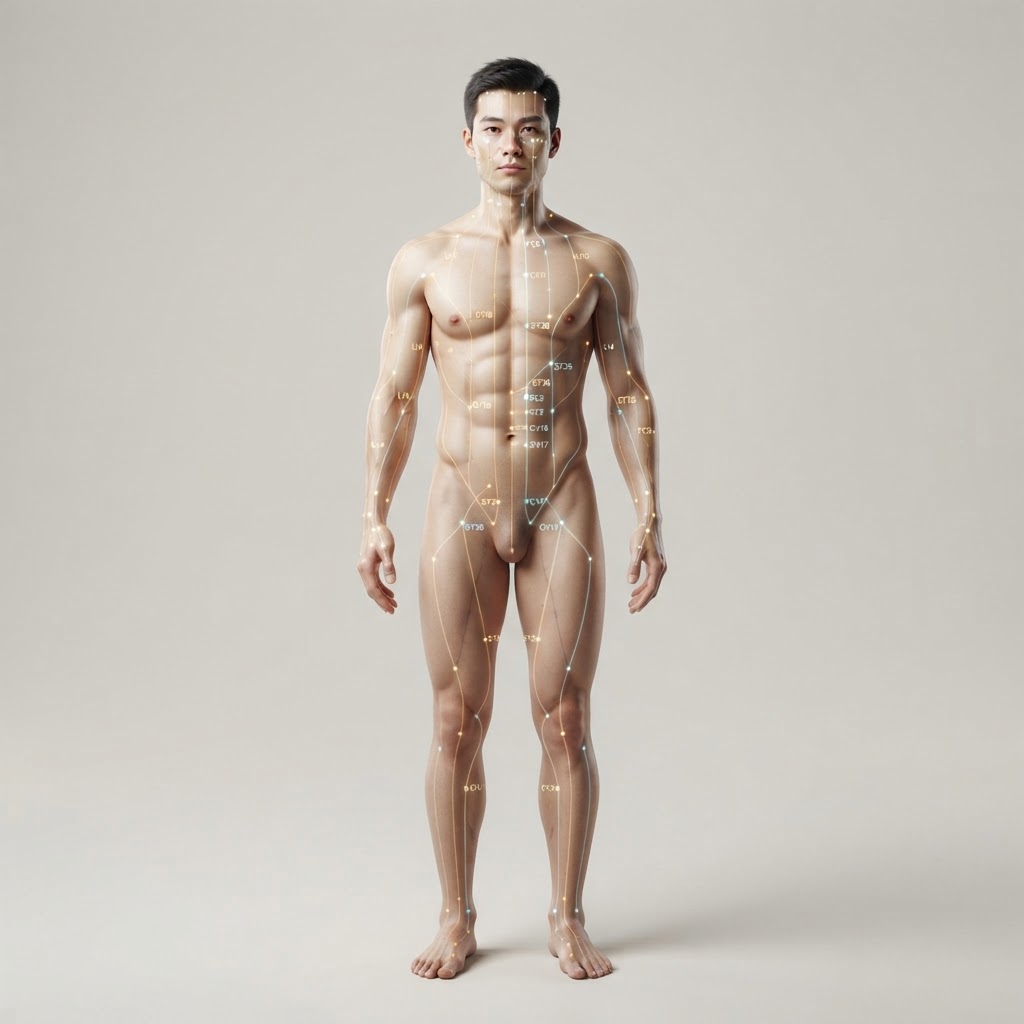
Part I
The Trigger-Point Method
Reading referred pain and matching it to the channel.
Chapter 1
What a Trigger Point Is
The taut band
A trigger point is a small, hyperirritable nodule within a taut band of skeletal muscle. Press it and the patient feels pain somewhere else — the referred pattern that names the muscle. That referral is consistent enough to map, and the maps are why this method works.
Active vs latent
An active trigger point hurts without being pressed; a latent one hurts only when pressed but still restricts movement and causes stiffness. Many chronic 'stiff necks' and 'tight backs' are latent points waiting to be read.
Reflect
Where is your own hidden tension referring today? Press the tight band and notice where the feeling travels.
Worksheet
Map one tender spot on your upper trapezius. Trace where the sensation goes — up the neck, behind the ear, to the temple.
Chapter 2
The Common Headache Muscles
Upper trapezius
The most common trigger point in the body. It refers up the back of the neck to the temple and behind the ear. Stress and forward-head posture keep it lit. Release at GB21 with a grasp-lift technique — shallow, never downward, to avoid the lung apex.
SCM and splenius
SCM trigger points refer to the face, forehead, and around the eye, and can cause dizziness; they are often mistaken for sinus headache. Splenius refers to the vertex. Both live in the neck and release with gentle, well-angled needling.
Reflect
Not every headache is in the head. Check the neck first.
Worksheet
For your next tension headache, press GB20 and the upper trapezius before reaching for anything else.
Chapter 3
The Back and the Hip
Quadratus lumborum
A deep lower-back muscle that refers to the hip and outer thigh, worse on coughing or turning in bed. A major hidden cause of chronic low-back pain. Release through careful positioning and points around BL52 and GB26.
Piriformis and gluteus medius
Piriformis refers down the back of the thigh and can compress the sciatic nerve — sciatica without a disc. Gluteus medius refers to the outer hip and hurts sleeping on the side. GB30 and BL54 address the deep hip.
Reflect
Low-back pain is often a hip in disguise. Test the hip before you treat the spine.
Worksheet
Lie on your side and find the tender spot behind the greater trochanter. Press and note the referral down the thigh.
Chapter 4
Convergence with the Channels
Two maps, one point
Many acupuncture points coincide with common trigger points: GB21 and trapezius, GB30 and piriformis, BL57 and gastrocnemius, SI11 and infraspinatus. When a point treats 'shoulder pain' or 'sciatica', it often does so by releasing the muscle whose trigger point lives there.
Local and distal together
Release the local trigger point, then open the channel distally — BL60 for the back, LI4 for the face, LR3 for tension. Local releases the source; distal keeps the channel clear.
Reflect
The channel explains why a distal point helps a proximal pain. The trigger point explains why the local point works.
Worksheet
For lateral thigh pain, release GB30 locally and add GB34 (tendon-influential) and GB39 distally.
Chapter 5
Female-Prevalent Patterns
Pelvic-floor trigger points
Pelvic-floor tightness refers to the lower abdomen, sacrum, and perineum, and underlies much chronic pelvic pain, dyspareunia, and bladder urgency. These points are released through internal or external work and supported by sacral BL points and SP6 — never in pregnancy. Many 'unexplained' pelvic symptoms are trigger points in disguise.
Pectoral referral and pregnancy biomechanics
Pectoralis minor trigger points refer down the arm and can mimic thoracic-outlet symptoms; they are common with nursing and forward-shoulder postures. In pregnancy, piriformis and gluteus medius trigger points drive lateral hip and sciatic-type pain as posture shifts. Adapt the formula to the changed mechanics.
Reflect
Pelvic and pectoral patterns are often missed because they sit outside the usual back-and-neck map. Ask, and the patient will point you there.
Worksheet
For a postpartum shoulder complaint, screen pectoralis minor. For pregnancy hip pain, screen piriformis with the sacral and hip points.
Glossary
Index
Trapezius, headache
Piriformis, sciatica
Quadratus lumborum, low back
Infraspinatus, arm
SCM, dizziness
About the Author
AKASHIC INTELLIGENCE synthesizes the trigger-point tradition with acupuncture channel theory for the LOVELOVINGLIFE curriculum.
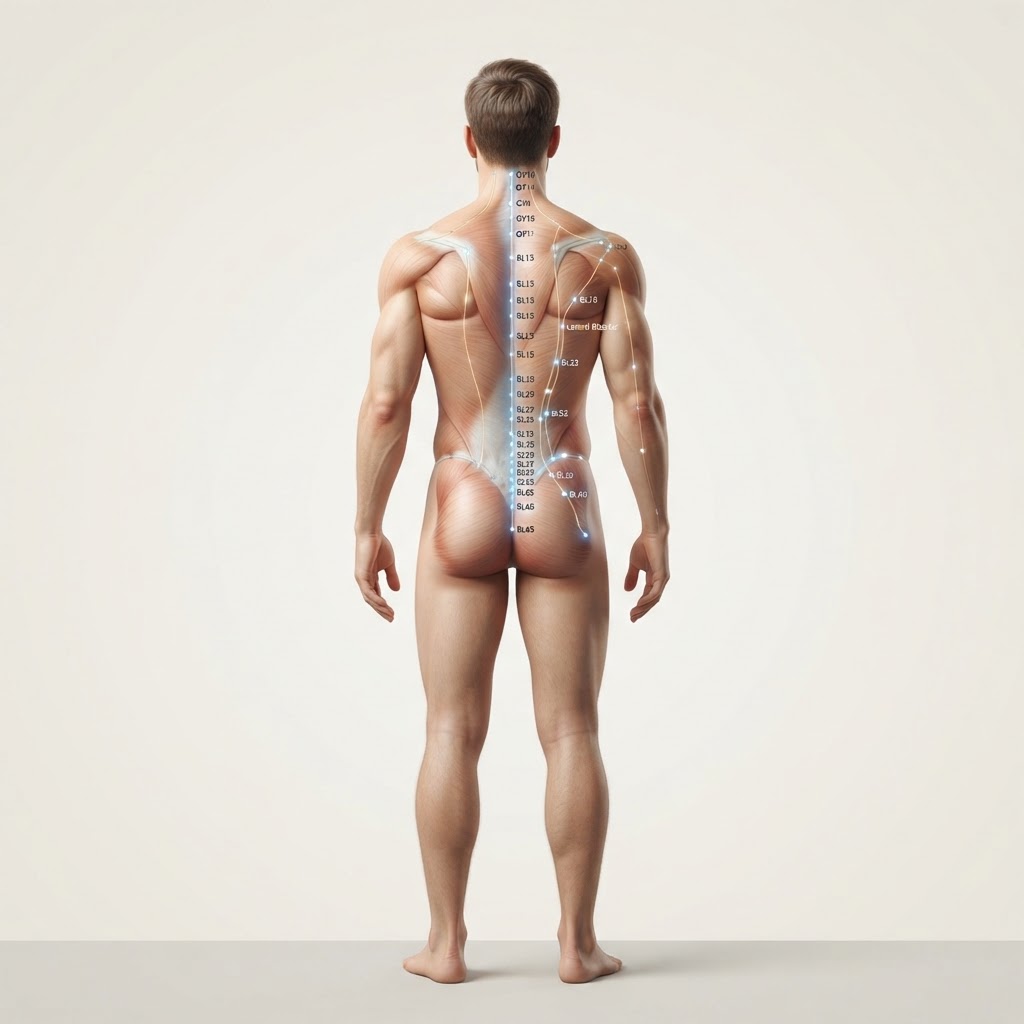
"Find where the pain comes from, and the point chooses itself."
LOVELOVINGLIFE · 2026