Policy Types Explorer
All life insurance is either term or permanent — and permanent splits into whole, universal, and indexed. Compare them side by side.
One need, two families of policy.
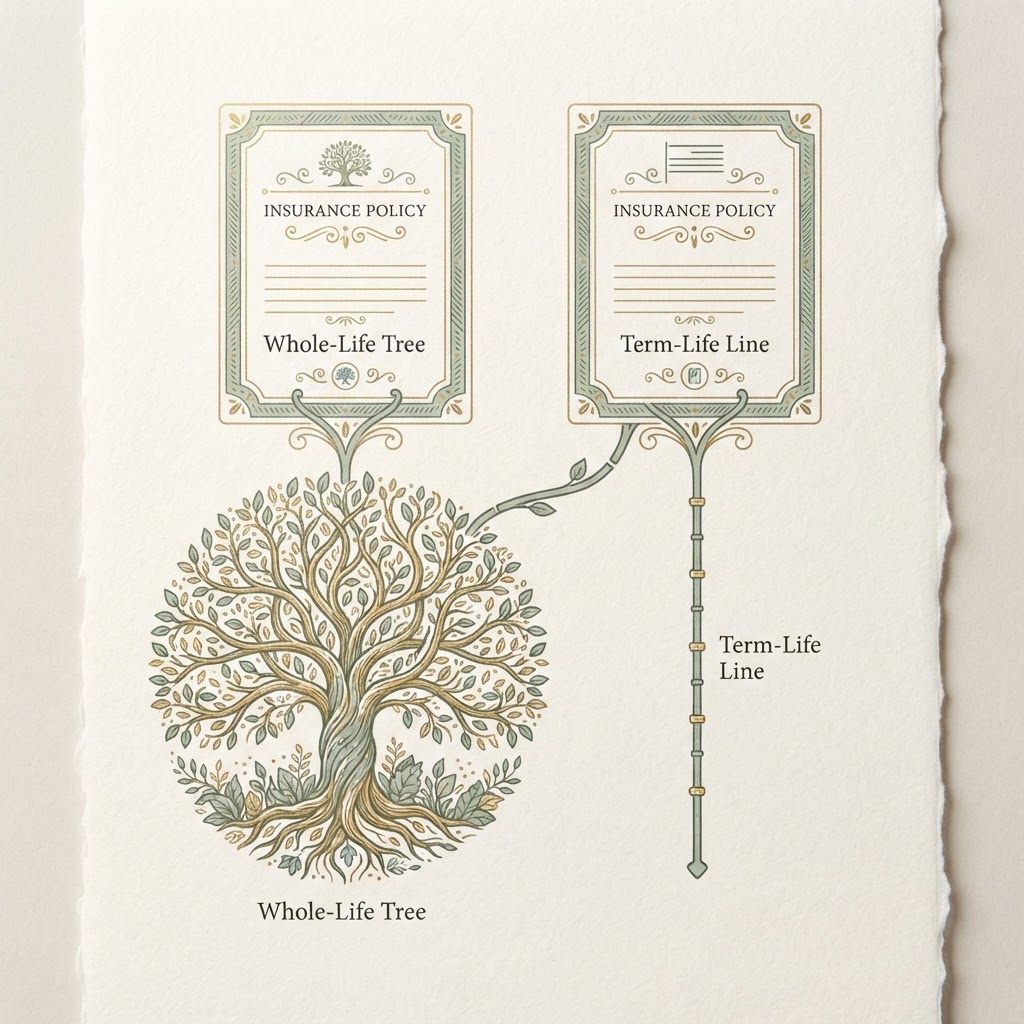
Two Families
Term covers you for a fixed period and pays only if you die during it — no cash value, the cheapest per dollar. Permanent (whole, universal, IUL) covers you for life, builds cash value, and costs more. Many families layer term for peak-need years and a smaller permanent policy for the lifelong part.
Term Life
Pure protection for a window
Pros
Cheapest per dollar of death benefit
Fixed premium for the term
Simple to understand
Convertible to permanent (often)
Cons
No cash value
Expires at end of term
Renewal can be costly
Cash value
No
Cost
$
Guarantee
Death benefit during term only
Best for
Covering a time-bound need — mortgage, young children, peak earning years.
Term vs Permanent — the core trade-off
Cheapest per dollar of death benefit
No cash value — pure protection
Matches a time-bound need (mortgage, kids)
Convertible to permanent without an exam