
THE WEALTH OPERATING SYSTEM
A Complete System for Earning, Keeping, and Growing What You Build · by AKASHIC INTELLIGENCE
Tip: "Print / Save as PDF" gives the best quality (selectable text). "Download PDF" renders an image-based copy in one click.
LOVELOVINGLIFE
THE WEALTH OPERATING SYSTEM
A Complete System for Earning, Keeping, and Growing What You Build
by
AKASHIC INTELLIGENCE
First Edition · 2026
Published by LOVELOVINGLIFE
Copyright
Copyright © 2026 AKASHIC INTELLIGENCE / LOVELOVINGLIFE. All rights reserved.
No part of this book may be reproduced or transmitted in any form without prior written permission, except for brief quotations in reviews.
First Edition, 2026. Published by LOVELOVINGLIFE.
Disclaimer
Educational, not financial advice. The principles here are timeless and cross-tradition, but no book can replace advice tailored to your specific situation.
Always consult a qualified, licensed financial professional before making investment, tax, or legal decisions. Past performance does not guarantee future results.
To the quiet, unglamorous discipline of living below your means — the one habit that makes every other wealth habit possible.
Foreword
Wealth Is a System, Not a Windfall
Wealth is rarely built by a single lucky break. It is built by a system: a set of repeatable habits that, applied over years, compound into financial freedom. The system is the same across cultures and centuries — spend less than you earn, save the difference, invest the savings, give generously, and protect what you build.
This book treats wealth as a system you operate, not a lottery you hope to win. The chapters are arranged the way the system actually runs: foundations first, then the earning and keeping, then the growing, then the giving, then the protection.
How to Read This Book
Part I grounds the system: the four pillars, the math of compounding, and how to audit where you stand. Part II covers earning, budgeting, investing, and giving. Part III covers the protection of wealth — entities, credit, and the long view. Do the worksheets; money is learned by doing, not by reading.
How to Use This Book
Do the Numbers
Every chapter ends with a worksheet that asks you to look at your own numbers. The discomfort of looking is the whole obstacle for most people; the relief of finally looking is the whole breakthrough. A honest number, however small, beats a grand intention every time.
Table of Contents
Front Matter
- Foreword
- How to Use This Book
Part I. Foundations
- Chapter 1. The Four Pillars
- Chapter 2. The Math of Compounding
- Chapter 3. The Honest Audit
- Chapter 4. Stewardship and the Long View
Part II. Investing: The Six Asset Classes
- Chapter 6. Equities (Stocks)
- Chapter 7. Fixed Income (Bonds)
- Chapter 8. Real Estate
- Chapter 9. Commodities and Gold
- Chapter 10. Alternative Investments and Crypto
Part III. Budgeting, Debt, and Cash Flow
- Chapter 11. Budgeting Frameworks
- Chapter 12. Conquering Debt
- Chapter 13. Cash Flow Optimization
- Chapter 14. The Emergency Fund
- Chapter 15. Behavioral Finance: The Psychology of Money
Part IV. Family Finance and Insurance
- Chapter 16. Family Financial Planning
- Chapter 17. Insurance: Protecting What You Build
- Chapter 18. Estate Planning: Legacy and Transfer
- Chapter 19. Retirement Planning
- Chapter 20. Giving: The Final Pillar
Part V. Advanced Wealth Strategies and Synthesis
- Chapter 21. Tax Strategy: Keeping What You Earn
- Chapter 22. Asset Protection: Shielding What You Build
- Chapter 23. Business Ownership: The Wealth Multiplier
- Chapter 24. The Wealth Mindset: Psychology of the Wealthy
- Chapter 25. The Integrated Wealth Plan: A Lifelong Framework
Back Matter
- Glossary
- Index
- About the Author

Part I
Foundations
Before any investment, you need the system the investments sit inside: the four pillars, the math that makes time your ally, and an honest audit of where you stand today. These chapters give the ground every later chapter stands on.
Chapter 1
The Four Pillars
Earn, Keep, Grow, Give
Wealth has four pillars, and they run in order. You earn income by trading your time and skill for money. You keep a portion of what you earn by spending less than you make. You grow what you keep by investing it where it compounds. You give a portion away, both because generosity is its own reward and because it breaks the grip money can otherwise take on the heart.
Most people focus only on the first pillar — earning more — and never solve the other three. A high income spent entirely keeps nothing and grows nothing. A modest income, kept and grown, outperforms a high income spent. The pillars work together; none is optional.
The Order Matters
You cannot invest what you have not kept. You cannot give sustainably what you have not grown. The order is not a preference; it is a sequence. Keep first, then grow, then give from the growth. People who reverse the order — giving or spending before keeping — stay broke no matter how much they earn.
The System Is the Point
No single pillar makes you wealthy; the system does. A person who earns well, keeps 20%, invests it broadly, and gives 10% of the growth will, over thirty years, be wealthy — quietly, reliably, without luck. The system runs whether the market is up or down, whether the news is good or bad. That reliability is the entire point.
Reflect
Which of the four pillars is your strongest, and which is your weakest? The weakest pillar is the leak that limits the whole system — no matter how strong the other three are.
Worksheet
Rate yourself 1–10 on each pillar: Earn, Keep, Grow, Give. Identify your weakest. That is the pillar this book will help you strengthen first.
Chapter 2
The Math of Compounding
The Eighth Wonder
Compound interest is interest earned on interest. A sum that grows at a steady rate does not increase in a straight line; it curves upward, faster and faster as time passes. Einstein is often quoted (perhaps apocryphally) calling it the eighth wonder of the world. Whether he said it or not, the math is real: time, not timing, is the variable that compounds.
The Numbers
Invest $300 a month at a 7% average annual return, and in 30 years you have roughly $340,000 — from about $108,000 of contributions. The other $232,000 is compounding. Start ten years later and the same monthly amount reaches only about $145,000. The ten-year head start is worth nearly $200,000, contributed by nothing but time.
What This Means
The implication is stark and encouraging: the most valuable thing you can do is start now, even with a small amount. The amount matters less than the years it has to compound. A small sum started at 25 outperforms a large sum started at 45. The cost of waiting is not the lost contributions; it is the lost compounding on those contributions for the rest of your life.
Reflect
If you started investing $200 a month today at 7%, where would you be in 30 years? The number is not the point; the years are. The question is whether you are using them.
Worksheet
Use a compound interest calculator. Enter your current age, a monthly amount you could realistically invest, 7% return, and age 65. Write down the projected total. That number is what time is offering you right now.
Chapter 3
The Honest Audit
Net Worth and Cash Flow
Two numbers tell you where you actually stand. Net worth is everything you own minus everything you owe. Cash flow is what comes in minus what goes out each month. Net worth is the snapshot; cash flow is the motion. A positive cash flow grows the net worth; a negative one shrinks it. Most people know neither number, and not knowing is the problem.
The 50-30-20 Lens
A simple lens for cash flow: roughly 50% needs, 30% wants, 20% savings and investing. The exact split matters less than the act of measuring. When you actually track where your money goes for a month, most people are surprised — by how much leaks into wants that feel like needs, and how little is left to keep and grow.
The Emergency Fund First
Before any investing, build an emergency fund: three to six months of living expenses in safe, liquid savings. Its job is not to grow; its job is to keep you from having to sell investments or take on debt when life happens. An emergency fund is the foundation that makes the rest of the system stable.
Reflect
Do you know your net worth and your monthly cash flow to within $100? If not, that gap — not your income — is the first thing to close. You cannot operate a system you have never measured.
Worksheet
List every asset and every debt; subtract to find net worth. Then track every dollar of spending for one month and categorize as need, want, or save. Bring both numbers to Part II.
Chapter 4
Stewardship and the Long View
Wealth as a Trust
The oldest traditions treat wealth not as a possession but as a trust — something held and managed for a purpose larger than the holder. Stewardship is the frame that keeps money from becoming master. The steward asks not only 'how much can I get?' but 'what is this for, and whom does it serve?'
Generosity Loosens the Grip
Giving a portion away, regularly and deliberately, is a financial practice and a spiritual one. It loosens the grip money takes on the heart. The hoarder is owned by what they hoard; the giver is free of it. The amount matters less than the habit — a small percentage given consistently shapes the holder over years.
The Generational View
Wealth built for a single lifetime tends to be spent in a single lifetime. Wealth built with the next generation in mind — including teaching them the system, not just handing them the money — can outlast the builder. The long view is not about leaving a fortune; it is about leaving a system that the next generation knows how to operate.
Reflect
If your wealth were a trust held for a purpose, what would the purpose be? The answer reframes every financial decision that follows.
Worksheet
Write one sentence: what is your wealth for? Then set a giving percentage you can sustain, even if small. Both are the frame that keeps the system pointed somewhere worth going.
Part II
Investing: The Six Asset Classes
Investing is how kept money becomes growing money. This part walks through each of the six major asset classes — what they are, how they behave, what returns they have historically produced, and how to think about them in a portfolio. Master these and you will never need to pay someone else to manage your money.
Chapter 6
Equities (Stocks)
What a Stock Actually Is
A share of stock is a fractional ownership stake in a real business. When you buy one share of Apple, you own a tiny sliver of every factory, patent, and dollar of profit the company generates. You are not buying a ticker symbol or a chart; you are buying a business. The stock market is simply the mechanism that lets you buy and sell these fractional stakes.
There are two ways to make money from stocks: capital appreciation (the share price rises because the business grows) and dividends (the business distributes a portion of profits to shareholders). Over the long run, roughly 40 percent of total stock returns have come from dividends and 60 percent from price appreciation, though the split varies by decade.
The key distinction is between common stock (voting rights, last in line in bankruptcy) and preferred stock (no voting rights, fixed dividend, ahead of common in bankruptcy). Most individual investors buy common stock. Preferred stock behaves more like a bond and is usually held by institutions.
Historical Returns
The S&P 500 has returned an average of about 10 percent per year before inflation, or about 7 percent after inflation, over the past century. This means a dollar invested in 1925 would be worth over $13,000 today. But the word 'average' hides enormous volatility. In any given year the market can be up 30 percent or down 40 percent. The 10 percent is the long-run average of these swings.
To put this in perspective: the worst single year for the S&P 500 was 1931, down 43 percent. The best was 1954, up 54 percent. In 2008, the market fell 37 percent. In 2019, it rose 31 percent. The investor who understands volatility does not panic in the down years or become euphoric in the up years. Both are normal.
Small-cap stocks (companies with market capitalizations below $2 billion) have historically returned about 1-2 percentage points more per year than large-cap stocks, but with significantly higher volatility. Value stocks (those trading below their intrinsic worth) have similarly outperformed growth stocks by about 1 percentage point annually over long periods, though the past decade reversed this pattern.
How to Buy Stocks
There are three practical ways to own equities. First, buy individual stocks directly through a brokerage account. This gives maximum control but requires research and carries concentrated risk. Second, buy mutual funds — professionally managed portfolios that pool money from many investors. Third, buy exchange-traded funds (ETFs) — baskets of stocks that trade like individual shares, with very low fees.
For the vast majority of investors, the optimal approach is a low-cost broad-market index ETF. An S&P 500 ETF gives you ownership in 500 of the largest U.S. companies in a single purchase. A total-world ETF gives you ownership in thousands of companies across every major economy. The fees on these products are often below 0.1 percent per year — meaning you pay less than $1 annually for every $1,000 invested.
The advantage of indexing is not just low fees. It is that most professional fund managers fail to beat the index after fees over any period longer than ten years. By buying the index you guarantee you will never underperform the market — you will always get exactly the market return, minus a tiny fee. Over decades, this simple strategy beats approximately 85 percent of professional managers.
Dividend Reinvestment and Dollar-Cost Averaging
Two mechanical strategies dramatically improve long-term equity returns. Dividend reinvestment means automatically using every dividend payment to buy more shares, rather than taking it as cash. Over 30 years, a stock paying 3 percent dividends, reinvested, produces roughly twice the final wealth of the same stock with dividends taken as cash.
Dollar-cost averaging means investing a fixed dollar amount at regular intervals — say $500 per month — regardless of what the market is doing. When prices are low, your $500 buys more shares. When prices are high, it buys fewer. Over time, this naturally pulls your average purchase price below the average market price. It also removes the impossible task of trying to time the market.
Combined, these two strategies turn market volatility from a source of anxiety into a source of advantage. The investor who reinvests dividends and dollar-cost averages through downturns is the one who benefits most from the market's long-run upward trend. The investor who stops buying when prices fall and chases when they rise captures none of it.
Risk Management
The primary risk of equities is volatility — the price can swing dramatically in the short term. The primary risk of not holding equities is inflation — your money loses purchasing power over decades if it is not growing. Over any 20-year period in U.S. history, the stock market has never lost money in real terms. Over any 1-year period, it has lost money roughly one year in three.
Position sizing is the practical risk tool. No single stock should represent more than 5 percent of your total portfolio unless you have a specific, researched reason and can afford to lose the entire position. Diversification across sectors (technology, healthcare, financials, consumer goods, energy, industrials) reduces the risk that a single industry's downturn drags down your entire portfolio.
The ultimate risk management tool is time. An investor with a 30-year horizon can hold a high equity allocation and ride out decades of volatility. An investor who needs the money in two years should hold almost no equities. Match your equity allocation to your time horizon, not to your risk tolerance questionnaire — people are terrible at predicting how they will feel in a downturn.
Reflect
If you had invested $10,000 in a broad stock index 30 years ago and never touched it, it would be worth roughly $175,000 today. What kept you from doing that? What would keep you from doing it now?
Worksheet
Look up the 10-year annualized return of the S&P 500. Calculate what $500/month invested at that rate would become in 20 years. Write down whether that number surprises you.
Chapter 7
Fixed Income (Bonds)
What a Bond Is
A bond is a loan. You lend money to a government or corporation for a fixed period, and in exchange they promise to pay you regular interest (the coupon) and return your principal at the end (the maturity date). Bonds are the opposite of stocks in almost every way: where stocks offer ownership and uncertain returns, bonds offer debt and contractual certainty.
A bond's price moves inversely to interest rates. When rates rise, existing bonds paying lower rates become less valuable, so their price falls. When rates fall, existing bonds paying higher rates become more valuable, so their price rises. This is the single most important relationship in fixed income, and it confuses more investors than any other concept.
The credit quality of the issuer determines the interest rate. U.S. Treasury bonds are considered risk-free because the government can print dollars to repay them. Corporate bonds pay higher rates because companies can default. Junk bonds (high-yield) pay even higher rates because the issuing companies have weak credit. The extra yield is compensation for the risk of default.
Types of Bonds
Treasury bonds (T-bills for under 1 year, T-notes for 2-10 years, T-bonds for 20-30 years) are the safest fixed-income investment. They are backed by the full faith and credit of the U.S. government. Yields are currently around 4-5 percent for intermediate maturities. They are ideal for capital preservation and for investors who cannot tolerate any loss of principal.
Corporate investment-grade bonds are issued by companies with strong credit ratings (BBB and above). They typically yield 1-2 percentage points more than Treasuries of equivalent maturity. The default rate on investment-grade bonds is extremely low — under 0.1 percent in a typical year — but in severe recessions it can rise to 1-2 percent.
Municipal bonds are issued by state and local governments. Their interest is exempt from federal income tax, and if you live in the issuing state, from state tax as well. For investors in the 32 percent tax bracket or higher, a municipal bond yielding 3.5 percent tax-free is equivalent to a taxable bond yielding over 5 percent. This tax advantage makes munis attractive for high-income investors.
High-yield bonds (formerly junk bonds) are issued by companies with credit ratings below BBB. They yield 4-6 percentage points more than Treasuries, but the default rate averages 3-5 percent per year and can spike to 10 percent or more in recessions. They are appropriate for sophisticated investors who can analyze credit risk and diversify across many issuers.
Duration and Interest Rate Risk
Duration is the measure of how sensitive a bond's price is to interest rate changes. A bond with a duration of 5 years will lose approximately 5 percent of its value for every 1 percentage point rise in interest rates. A bond with a duration of 10 years will lose approximately 10 percent. Longer-maturity bonds have higher duration and more price risk.
This means that in a rising-rate environment, long-term bonds can lose significant value. In 2022, when the Federal Reserve raised rates aggressively, the 10-year Treasury bond lost about 17 percent of its value — more than many stock market corrections. Investors who thought bonds were 'safe' discovered that safe from default is not the same as safe from price loss.
The mitigation is to match bond duration to your time horizon. If you need the money in 2 years, buy bonds maturing in 2 years — you will get your principal back regardless of what rates do. If you need it in 20 years, longer-duration bonds are fine because you can hold to maturity and recover any temporary price loss.
The Role of Bonds in a Portfolio
Bonds serve three roles in a portfolio: income, capital preservation, and diversification against stock volatility. The income from a diversified bond portfolio is steady and predictable, which is especially valuable in retirement. The capital preservation means that even in a worst-case scenario, high-quality bonds will return principal at maturity. The diversification comes from the fact that bonds and stocks often move in opposite directions — when stocks fall, investors flock to bonds, pushing their prices up.
The classic portfolio is 60 percent stocks and 40 percent bonds. Over the past 50 years, this mix has returned about 8 percent annually with significantly less volatility than an all-stock portfolio. The 40 percent in bonds cushions the portfolio during stock market crashes, reducing the likelihood that an investor will panic and sell at the bottom.
Younger investors with long horizons may hold 80-90 percent stocks and 10-20 percent bonds. Retirees who need to live off the portfolio may hold 40-60 percent bonds. The allocation should be driven by time horizon and spending needs, not by fear or greed.
Reflect
If you held a 10-year bond and interest rates rose 2 percent, you would lose about 15-18 percent of the bond's value. Would you hold it to maturity and recover, or sell at a loss? What does this tell you about your true risk tolerance?
Worksheet
Look up the current yield on a 10-year Treasury bond and a 10-year investment-grade corporate bond. Calculate the annual income from $50,000 invested in each. Note the yield difference and what it implies about risk.
Chapter 8
Real Estate
Why Real Estate Is Different
Real estate is the only major asset class that combines income (rent), appreciation (property value rising), leverage (a mortgage lets you control a large asset with a small down payment), and tax advantages (depreciation, mortgage interest deduction, 1031 exchanges). No other asset class offers all four simultaneously, which is why real estate has created more millionaires than any other investment.
But real estate is also the most hands-on asset class. A stock sits in your account and requires no maintenance. A rental property requires tenants, repairs, property taxes, insurance, and active management. The return on real estate is partly a return on your labor, not just your capital. If you are not willing to manage property — or pay someone 8-12 percent of gross rent to manage it for you — real estate may not be the right investment.
Real estate is also illiquid. You can sell a stock in seconds. Selling a property takes 30-90 days minimum, plus closing costs of 6-10 percent of the sale price. This illiquidity is a risk if you need the money quickly, but it can also be a benefit — it prevents impulsive selling during market panics.
Ways to Invest in Real Estate
Direct ownership: Buy a property, rent it out, manage it yourself. This gives maximum control and maximum return but requires the most work. A well-managed rental property can return 8-12 percent annually on invested capital (cash flow plus appreciation plus principal paydown).
House hacking: Buy a multi-unit property (duplex, triplex, fourplex), live in one unit, rent the others. The tenants' rent covers your mortgage. You live nearly free while building equity. FHA loans allow as little as 3.5 percent down on owner-occupied properties up to four units.
Real Estate Investment Trusts (REITs): Publicly traded companies that own and operate income-producing real estate. You buy shares like a stock. REITs are required to distribute 90 percent of taxable income as dividends, so yields are typically 3-6 percent. They offer real estate exposure without the management burden, but they are more volatile than direct ownership and don't offer the same tax advantages.
Real estate syndications and funds: Groups of investors pool money to buy large properties (apartment complexes, commercial buildings) that an individual couldn't afford alone. The sponsor manages the property; investors receive passive income and a share of profits. These require being an accredited investor (net worth over $1 million or income over $200,000) and typically lock up capital for 5-10 years.
The Math of a Rental Property
Consider a $300,000 rental property purchased with 25 percent down ($75,000) and a $225,000 mortgage at 6 percent interest. The monthly payment (principal and interest) is about $1,350. Add $200 for property taxes and $100 for insurance, and the total monthly carrying cost is $1,650. If you rent the property for $2,000 per month, your monthly cash flow is $350 — about 4.2 percent annual cash-on-cash return on your $75,000 investment.
But cash flow is only one component. The tenant's rent also pays down your mortgage — about $250 per month goes to principal in the early years, which builds your equity. And the property appreciates — at 3 percent annual appreciation, the property gains $9,000 per year in value, which is a 12 percent return on your $75,000 investment. Combined, the total return is roughly 4.2 percent (cash flow) + 4.0 percent (principal paydown) + 12.0 percent (appreciation) = 20.2 percent on invested capital — far above what stocks would return on the same $75,000.
This is the power of leverage. By borrowing $225,000 at 6 percent and investing it in an asset that returns 9 percent total (cash flow + appreciation), you earn a 3 percent spread on borrowed money, amplified by the 4:1 leverage ratio. Of course, leverage cuts both ways — if the property loses value or rents fall, your losses are also amplified.
The Risks
Vacancy risk: A property without a tenant produces no income but still requires mortgage, tax, and insurance payments. Budget for at least one month of vacancy per year. In soft rental markets, vacancy can stretch to 2-3 months.
Repair risk: A new roof costs $8,000-15,000. A new HVAC system costs $5,000-10,000. A water heater failure can cause thousands in damage. Set aside 1-2 percent of the property value each year for maintenance and repairs. This is not optional — deferred maintenance destroys property value and tenant quality.
Leverage risk: If the property value falls 20 percent, your $75,000 equity in a $300,000 property shrinks to $15,000. If it falls 25 percent, you are underwater — owing more than the property is worth. This is what happened to millions of homeowners in 2008-2010. Leverage amplifies both gains and losses.
Tenant risk: A bad tenant can cost more than a year of rent — unpaid rent, eviction costs (typically $3,000-5,000 and 2-6 months), property damage, and legal fees. Thorough screening — credit check, income verification, landlord references — is the single highest-return activity in real estate investing.
Tax Advantages
Depreciation is the most powerful tax advantage in real estate. The IRS lets you depreciate the building (not the land) over 27.5 years for residential property. On a $300,000 property where the building is worth $240,000, that's $8,727 per year in depreciation that shelters your rental income from tax. A property showing $10,000 in positive cash flow might show only $1,273 in taxable income after depreciation — and if you have enough depreciation, you can show a paper loss while collecting real income.
The 1031 exchange allows you to sell a rental property, reinvest the proceeds in another property, and defer all capital gains tax indefinitely. You can repeat this process throughout your life, building a real estate portfolio without ever paying capital gains tax. The tax is only due when you eventually sell and don't reinvest — and at death, your heirs inherit the property at its stepped-up market value, wiping out the deferred tax entirely.
Mortgage interest on rental properties is fully deductible against rental income, as are property taxes, insurance, maintenance, repairs, property management fees, and travel to the property. These deductions significantly reduce the effective tax rate on real estate income compared to wage income.
Reflect
Real estate returns 15-20 percent on invested capital through a combination of cash flow, principal paydown, appreciation, and tax advantages — but only if well-managed. Do you have the temperament to deal with tenants, repairs, and market cycles? If not, how would you access real estate passively?
Worksheet
Find a rental property on Zillow in your area. Calculate the monthly mortgage payment (use an online calculator with 25 percent down and current rates). Estimate monthly rent from comparable listings. Calculate cash flow. Is it positive or negative? What does this tell you about your local market?
Chapter 9
Commodities and Gold
What Commodities Are
Commodities are physical goods that are interchangeable with other goods of the same type — oil, gold, wheat, copper, natural gas, silver. They are the raw materials of the global economy. When you invest in commodities, you are betting on supply and demand for physical things, not on the performance of a company.
Commodities behave differently from stocks and bonds. They tend to do well during periods of high inflation (because physical goods rise in price with inflation) and poorly during periods of low inflation or deflation. They are also uncorrelated with stocks — when the stock market falls, commodities may rise or fall independently, which makes them a useful diversifier.
The practical way to invest in commodities is through ETFs that track commodity indices, or through futures contracts (which are too complex for most investors). Gold is the most accessible commodity for individual investors — you can buy physical gold coins, gold ETFs (like GLD), or gold mining stocks.
Gold: The Oldest Store of Value
Gold has been a store of value for over 5,000 years. It cannot be printed, inflated, or defaulted on. An ounce of gold bought a good men's suit in 1920, in 1950, in 1980, in 2000, and today. The dollar price of the suit changed; the gold equivalent did not. This is what 'store of value' means — it preserves purchasing power across very long periods.
Gold does not produce income — no dividends, no interest. Its only return is price appreciation. Over the past 50 years, gold has returned about 7 percent annually, roughly matching inflation. This means gold is not an investment in the sense of growing your wealth; it is insurance against currency devaluation and systemic risk.
The recommended allocation to gold is typically 5-10 percent of a portfolio. More than this sacrifices growth for protection; less leaves you exposed to currency risk. During the inflationary 1970s, gold rose over 2,000 percent while stocks were flat. During the disinflationary 1990s, gold fell 70 percent while stocks rose 400 percent. Gold is a hedge, not a growth asset.
Oil, Copper, and Agricultural Commodities
Oil is the world's most traded commodity and the lifeblood of the global economy. Its price is driven by geopolitical tensions, OPEC production decisions, and global demand. Oil prices directly affect inflation — when oil rises, transportation, manufacturing, and heating costs rise across the economy. Investing in oil can be done through oil ETFs (like USO), energy company stocks, or futures contracts.
Copper is called 'Dr. Copper' because its price is a diagnostic indicator of economic health. When copper rises, it means construction, manufacturing, and infrastructure spending are increasing. When copper falls, economic contraction often follows. Copper is not typically held as a standalone investment, but its price trend is worth watching as an economic signal.
Agricultural commodities — wheat, corn, soybeans, cattle — are driven by weather, crop yields, and global food demand. They are the most volatile commodity category because a single drought or flood can cause massive price swings. Most individual investors should not invest directly in agricultural commodities; the risk/reward profile is unfavorable without specialized knowledge.
Commodities in a Portfolio
The role of commodities in a portfolio is inflation protection and diversification. During the 1970s, when inflation averaged 7 percent per year and stocks returned negative real returns, commodities (especially gold and oil) returned over 15 percent annually. During the 2000s, when the S&P 500 lost money over the decade, commodities gained over 100 percent.
But during periods of low inflation and economic growth — the 1990s, the 2010s — commodities significantly underperform stocks. A 10 percent allocation to commodities would have reduced portfolio returns by about 0.5 percent per year during these periods, in exchange for protection that was not needed.
The practical approach: hold 5-10 percent of your portfolio in a broad commodity ETF or gold. Rebalance annually. When commodities spike (as in 2008 or 2022), take profits and rebalance into stocks or bonds. When commodities are flat or declining, the allocation serves as insurance that you hope not to need.
Reflect
Gold has preserved purchasing power for 5,000 years but produced zero income. Stocks have produced 10 percent annual returns for 100 years but with significant volatility. Which do you trust more over the next 30 years, and why?
Worksheet
Look up the price of gold in 1980 and today. Calculate the annual return. Then look up the S&P 500 return over the same period. Which performed better? What does this tell you about gold as an investment versus gold as insurance?
Chapter 10
Alternative Investments and Crypto
Private Equity and Venture Capital
Private equity involves buying entire private companies, improving them, and selling at a profit — typically over 5-7 year holding periods. Venture capital is a subset that invests in early-stage companies with high growth potential. Both are illiquid, require large minimum investments (usually $250,000+), and are limited to accredited investors.
The returns can be significant — top venture capital funds have returned 15-25 percent annually over their lifetimes. But the distribution is extremely skewed: about 60 percent of venture investments lose money, 30 percent break even, and 10 percent produce the majority of returns. This power-law distribution means you need many investments to have a chance at catching the winners.
For most individual investors, private equity and venture capital are inaccessible and too risky. The emergence of equity crowdfunding platforms has opened small-dollar access to early-stage companies, but the risk of total loss is very high. Treat any such investment as money you are prepared to lose entirely.
Cryptocurrency
Bitcoin, launched in 2009, was the first decentralized digital currency. It runs on a blockchain — a distributed ledger maintained by a network of computers rather than any central authority. Bitcoin has a fixed supply cap of 21 million coins, which makes it scarce by design. Its proponents argue it is digital gold — a store of value outside the control of any government.
Ethereum, launched in 2015, is a programmable blockchain that enables smart contracts — self-executing agreements that run on the network. Thousands of other cryptocurrencies exist, but Bitcoin and Ethereum account for roughly 60-70 percent of total cryptocurrency market capitalization.
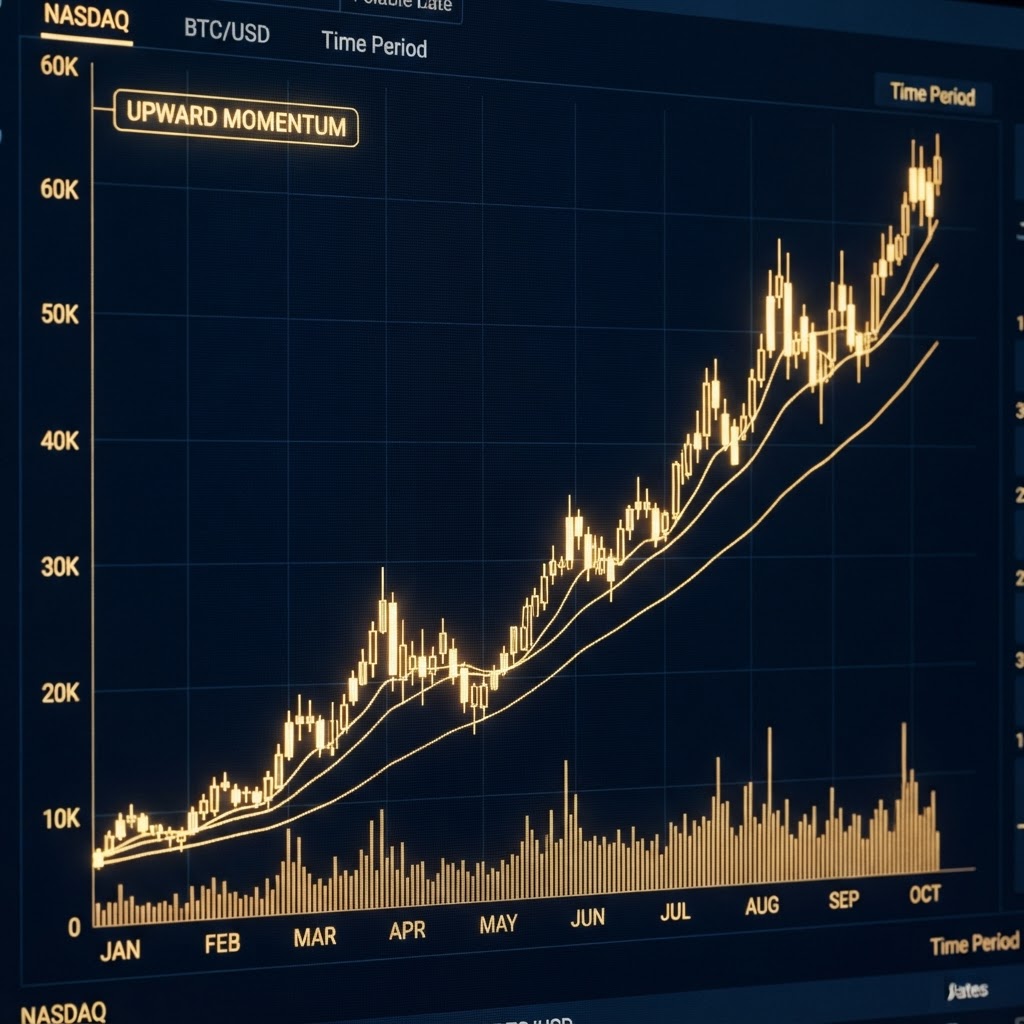
The returns have been extraordinary — Bitcoin went from less than $1 in 2010 to over $60,000 at its peak in 2021, a return of millions of percent. But the volatility is also extraordinary — Bitcoin has experienced drawdowns of 70-80 percent on multiple occasions. An investor who bought at the 2021 peak lost over 75 percent by the end of 2022.
How to Think About Crypto
Cryptocurrency is a new asset class with no long-term track record. Unlike stocks (100+ years of data), bonds (centuries of data), or real estate (millennia of data), crypto has less than 15 years of price history. No one knows whether Bitcoin will be worth $1 million or zero in 10 years. This uncertainty is the defining characteristic of the asset class.
If you choose to invest in cryptocurrency, the prudent allocation is 1-5 percent of your total portfolio. This is enough to benefit if the asset class succeeds, but not enough to derail your financial plan if it fails. Dollar-cost average into the position over months rather than buying all at once, to reduce timing risk.
Store cryptocurrency securely. Exchanges can be hacked or go bankrupt — the collapse of FTX in 2022 destroyed $8 billion of customer assets. For holdings above a few thousand dollars, use a hardware wallet (like a Ledger or Trezor) that stores your private keys offline. Never share your private keys or seed phrase with anyone.
Collectibles and Other Alternatives
Fine art, rare coins, vintage cars, wine, watches, and trading cards have all appreciated significantly as alternative asset classes. The Masterworks platform lets investors buy fractional shares in individual paintings. Collectible watches (Rolex, Patek Philippe) have returned 5-10 percent annually over the past decade. Rare trading cards have seen explosive growth.
However, these markets are illiquid, opaque, and subject to changing tastes. Authentication is critical and expensive. Storage and insurance costs eat into returns. Transaction costs are high (auction houses charge 10-25 percent commissions). And performance data is unreliable because these assets trade infrequently and pricing is subjective.
If you invest in collectibles, do so primarily because you love the object — not because you expect it to be your retirement plan. The financial return should be a bonus, not the primary motivation. The investor who buys art they hate for investment purposes usually sells at a loss.
The Alternative Asset Allocation
For sophisticated investors with large portfolios ($1 million+), a reasonable alternative allocation might be 5-15 percent spread across private equity, crypto, real estate syndications, and select collectibles. For most investors, alternatives should be limited to 0-5 percent — primarily a small crypto position and perhaps a REIT allocation.
The danger of alternatives is that they are marketed as exciting, exclusive, and high-return. This leads investors to over-allocate to complex products they don't fully understand, while under-allocating to the boring but proven assets (low-cost stock and bond index funds) that will reliably build wealth over decades. Boring is beautiful in investing.
Reflect
Every alternative investment offers the promise of high returns and the risk of total loss. What percentage of your portfolio can you truly afford to lose without it changing your life? That is your maximum allocation to all alternatives combined.
Worksheet
List every investment you currently own. Categorize each by asset class (equities, bonds, real estate, commodities, alternatives, cash). Calculate the percentage in each. Does this match your intended allocation? What would you change?

Part III
Budgeting, Debt, and Cash Flow
Budgeting is not about restriction — it is about intention. A budget tells your money where to go instead of wondering where it went. This part covers budgeting frameworks, debt elimination strategies, cash flow optimization, and the behavioral psychology of spending. Master these and you will keep more of what you earn, which is the foundation of all wealth.
Chapter 11
Budgeting Frameworks
Why Most Budgets Fail
Most budgets fail because they are designed as punishment. The typical budgeter tracks every penny for two weeks, feels deprived, finds the process tedious, and abandons it. The problem is not the budgeting — it is the approach. A budget that feels like a diet will fail for the same reason a diet fails: willpower is finite, and deprivation triggers rebound.
A successful budget is not a constraint but a plan. It says: of every dollar I earn, here is how much goes to survival, here is how much goes to joy, here is how much goes to the future. It is an expression of values, not a sentence to austerity. The budget that works is the one you can actually follow for decades, not the one that looks perfect on paper for a week.
The other reason budgets fail is that they are too detailed. Tracking 47 categories of spending is unsustainable for most people. The most effective budgeting systems use a small number of broad categories and simple rules — the 50/30/20 rule, zero-based budgeting, or the envelope system — that require minutes, not hours, to maintain.
The 50/30/20 Rule
Popularized by Senator Elizabeth Warren in her book 'All Your Worth,' the 50/30/20 rule is the simplest budgeting framework. Of your after-tax income: 50 percent goes to needs (housing, food, utilities, insurance, minimum debt payments), 30 percent goes to wants (dining out, entertainment, travel, hobbies), and 20 percent goes to savings and debt repayment above minimums.
The beauty of this system is its simplicity and its built-in balance. It does not require you to eliminate enjoyment — 30 percent for wants is substantial. It does require that your needs do not exceed half your income, which is the single most important financial health indicator. If your needs exceed 50 percent, the solution is almost always to reduce housing cost, which is usually the largest need and the hardest to change.
For someone earning $5,000 per month after tax, the 50/30/20 rule allocates $2,500 to needs, $1,500 to wants, and $1,000 to savings and debt. Over a year, that's $12,000 in savings — enough to build an emergency fund in 6 months, max out a Roth IRA ($7,000), and still have money left for additional investing. Over 30 years at 7 percent returns, that $1,000/month becomes $1.2 million.
The 50/30/20 rule is a starting point, not a destination. As income rises, the 'needs' percentage should ideally fall (because needs do not scale linearly with income), allowing more to flow to savings. A person earning $10,000/month might live on 30 percent needs, 30 percent wants, and 40 percent savings — accelerating wealth dramatically.
Zero-Based Budgeting
Zero-based budgeting (ZBB) means assigning every dollar a job before the month begins. Income minus assigned amounts equals zero — not because you spend everything, but because every dollar is allocated to a category, including savings and investment categories. This approach is more intensive than 50/30/20 but gives maximum control and awareness.
The process: At the start of each month, list your expected income. Then allocate it to categories — housing, food, transportation, utilities, debt payments, savings, investing, and specific discretionary categories. The goal is for income minus allocations to equal exactly zero. If you have $200 left over after all categories are funded, assign it to a goal — extra debt payment, vacation fund, or investment.
ZBB is especially effective for people with variable income (freelancers, commission workers, business owners). Instead of a fixed monthly budget, you allocate based on what you actually earned, prioritizing needs first, then savings, then wants. In a high-income month, more goes to savings; in a low-income month, wants are cut first, needs are always covered.
The downside of ZBB is that it requires more active management. You need to track spending against categories, adjust as the month progresses, and re-plan each month. Apps like YNAB (You Need A Budget) are built around this method and make it manageable, but it still requires more attention than the 50/30/20 rule. For detail-oriented people, ZBB is the gold standard; for others, it may be more structure than needed.
The Envelope System
The envelope system is the oldest budgeting method — literally putting cash in labeled envelopes for each spending category. When the 'dining out' envelope is empty, you eat at home. When the 'clothing' envelope is empty, you don't buy clothes. The physical constraint of cash prevents overspending in a way that credit and debit cards cannot.
The psychology behind the envelope system is powerful. Studies show that people spend 12-18 percent less when paying with cash versus credit, because cash feels real — handing over physical bills activates the brain's pain centers in a way that swiping a card does not. The envelope system leverages this by making spending feel like giving something up, rather than an abstract number change.
In the modern era, the envelope system can be adapted digitally. Apps like Goodbudget and EveryDollar create virtual envelopes that serve the same function. Some people use a hybrid: cash for discretionary categories where overspending is a problem (dining out, entertainment, clothing) and cards for fixed expenses (housing, utilities, insurance).
The envelope system is especially effective for people who struggle with credit card discipline. If you find yourself consistently overspending on cards, switching to cash for variable categories can break the cycle. It is less about the specific system and more about creating a mechanism that makes overspending difficult rather than easy.
Choosing the Right System
The best budgeting system is the one you will actually use. If you are detail-oriented and want maximum control, zero-based budgeting is ideal. If you want simplicity and a rough framework, 50/30/20 is sufficient. If you struggle with spending discipline, the envelope system adds the friction you need.
The system matters less than the habit. A person who checks their spending once a week for five minutes and adjusts will outperform someone who builds a perfect budget and never looks at it. The key is creating a sustainable rhythm — a weekly or monthly check-in where you review what you spent, compare it to your plan, and adjust.
Whatever system you choose, automate what you can. Set up automatic transfers to savings and investment accounts on payday, so the money is gone before you can spend it. Automatic bill payment prevents late fees. The less willpower your system requires, the more likely it is to succeed. The goal is to make the right choice the default choice, and the wrong choice the one that requires extra effort.
Reflect
What budgeting system have you tried, and why did it work or fail? Was the problem the system, or the way you used it? What would make budgeting feel less like punishment and more like planning?
Worksheet
Calculate your current 50/30/20 split. What percentage of after-tax income goes to needs, wants, and savings? If needs exceed 50%, what is the single largest driver? If savings is below 20%, where is the gap going?
Chapter 12
Conquering Debt
The Three Types of Debt
Not all debt is created equal. There are three types, and they require fundamentally different strategies. Understanding the difference is the first step to becoming debt-free.
Type 1 — Productive debt: Debt used to acquire assets that generate income or appreciate in value. A mortgage on a rental property, a business loan for a profitable company, or a student loan for a degree that significantly increases earning power. This debt can be strategic and beneficial — it leverages someone else's money to build your wealth. The test: does the asset generate more return than the debt costs?
Type 2 — Neutral debt: Debt on assets that hold value but don't generate income. A mortgage on your primary residence falls here — the house may appreciate, but it doesn't produce income, and you need somewhere to live regardless. This debt is acceptable but should be managed: keep the payment affordable (no more than 25-28 percent of gross income), get the lowest rate possible, and pay it off before retirement.
Type 3 — Toxic debt: Debt used to buy things that lose value, at high interest rates. Credit card debt, payday loans, car loans on depreciating vehicles, personal loans for consumption. This debt is financially destructive — you are paying 15-25 percent interest on assets that are worth less each month. The only correct strategy for toxic debt is aggressive elimination. Every dollar of toxic debt is a dollar working against you, 24 hours a day.
The Avalanche Method
The avalanche method is the mathematically optimal debt payoff strategy. List all debts by interest rate, highest to lowest. Pay minimums on all debts, and put every extra dollar toward the highest-interest debt. When that debt is paid off, redirect its payment (minimum + extra) to the next-highest interest debt. Continue until all debts are paid.
Example: You have a credit card at 22 percent APR (balance $8,000, minimum $200), a personal loan at 12 percent (balance $5,000, minimum $150), and a car loan at 6 percent (balance $15,000, minimum $300). Total minimums: $650/month. If you can pay $1,000/month total, the extra $350 goes to the credit card. When the card is paid off (in about 19 months), you redirect the full $550 ($200 minimum + $350 extra) to the personal loan. When that's gone, you redirect $700 to the car loan.
The avalanche method saves the most money because it eliminates the most expensive debt first. On the example above, avalanche saves approximately $1,800 in interest compared to the snowball method (described below). For someone with significant high-interest debt, the savings can be thousands of dollars.
The downside of avalanche is psychological. The highest-interest debt is often not the smallest balance, so it may take months or years to see the first debt eliminated. For people who need the motivation of seeing debts disappear, this can lead to discouragement and abandonment of the plan.
The Snowball Method
The snowball method, popularized by Dave Ramsey, ignores interest rates and focuses on balance size. List debts from smallest balance to largest. Pay minimums on all, and put every extra dollar toward the smallest balance. When it's paid off, redirect that payment to the next-smallest balance.
Example: Using the same debts above, the order would be: personal loan ($5,000), credit card ($8,000), car loan ($15,000). The extra $350 goes to the personal loan first, which is paid off in about 12 months. Then $500 goes to the credit card, paid off in about 17 more months. Then $850 goes to the car loan.
The snowball method costs more in interest — about $1,800 more in the example above. But behavioral research shows it is more effective for most people because of the psychological power of quick wins. Seeing a debt eliminated in the first few months creates momentum and motivation that sustains the effort through the longer, harder middle debts.
The choice between avalanche and snowball depends on your personality. If you are purely rational and motivated by optimization, avalanche is better. If you have tried and failed to pay off debt before because you lost motivation, snowball's quick wins may be what you need to succeed this time. The best method is the one you will actually complete.
Debt Consolidation and Refinancing
Debt consolidation means taking out a new, lower-interest loan to pay off multiple higher-interest debts. This can dramatically reduce total interest paid and simplify repayment to a single monthly payment. Common methods: a personal loan from a bank or credit union (typically 8-15 percent for good credit), a balance transfer credit card (0 percent introductory APR for 12-21 months), or a home equity loan or HELOC (using your home as collateral, at lower rates but with risk).
Balance transfer cards are especially powerful for credit card debt. A $10,000 credit card balance at 22 percent APR costs $2,200 per year in interest. Transferred to a 0 percent card for 18 months, you pay $0 in interest during the promotional period — saving $3,300. The key is to pay off the balance before the promotional period ends, because the rate jumps to 20-25 percent afterward. There is usually a 3-5 percent transfer fee ($300-500 on $10,000), but this is far less than the interest saved.
Refinancing is similar but applies to a single loan. If you have a mortgage at 6 percent and rates drop to 4 percent, refinancing can save hundreds per month. The rule of thumb: refinancing makes sense if you can reduce your rate by at least 0.75-1 percent and you plan to stay in the home long enough to recoup the closing costs (typically 2-5 years). Refinancing to a longer term (e.g., 30 to 30 years) resets the clock and may cost more in total interest even with a lower rate; refinancing to a shorter term (30 to 15 years) saves enormous interest but increases monthly payment.
Negotiating with Creditors
Many people do not know that you can negotiate with credit card companies. If you are struggling to make payments, call the creditor and ask for a hardship program. Many banks have internal hardship programs that temporarily reduce interest rates (sometimes to 0-9 percent), waive fees, or set up a payment plan. You must ask — they will not offer.
For debts that have gone to collections, you can often settle for less than the full amount. Collection agencies buy debt for pennies on the dollar — a $10,000 debt might have been purchased for $500-1,000. They are motivated to settle for anything above their purchase price. A common outcome: settling a $10,000 debt for $3,000-5,000, paid in a lump sum. Get any settlement agreement in writing before paying, and be aware that forgiven debt over $600 is considered taxable income by the IRS.
If debt is truly unmanageable — more than you can pay in 5 years even with aggressive budgeting — bankruptcy may be the most rational option. Chapter 7 bankruptcy eliminates most unsecured debt (credit cards, medical bills, personal loans) but stays on your credit report for 10 years. Chapter 13 creates a 3-5 year repayment plan. Bankruptcy is not a moral failure; it is a legal tool designed for situations where debt has become unpayable. Consult a bankruptcy attorney to understand whether it is right for you.
Staying Out of Debt
Paying off debt is a one-time event; staying out of debt is a lifestyle. The transition requires changing the habits and circumstances that created the debt in the first place. This usually means: building an emergency fund (so unexpected expenses don't go on credit cards), living below your means (so you have room to absorb shocks), and changing your relationship with credit (treating credit cards as convenience tools that are paid in full monthly, not as sources of additional income).
The single most effective habit for staying out of debt is paying credit cards in full every month. If you cannot pay a purchase in full when the bill arrives, you cannot afford it. This one rule, followed absolutely, prevents the accumulation of credit card debt that traps millions of people. It requires saying 'no' to purchases you want but cannot afford — which is uncomfortable but far less uncomfortable than debt.
The second most effective habit is the 48-hour rule: for any non-essential purchase over a threshold (say $100), wait 48 hours before buying. This cooling-off period eliminates impulse purchases, which are the primary source of consumer debt for people who are otherwise responsible. The purchase that still seems important after two days of thought is usually a good one; the purchase that fades from desire was an impulse.
Reflect
What type of debt do you carry — productive, neutral, or toxic? If toxic, what emotional or circumstantial pattern led to it? What would need to change for you to never carry toxic debt again?
Worksheet
List every debt you owe: creditor, balance, interest rate, minimum payment. Calculate the total. Then choose avalanche or snowball, write down the payoff order, and calculate how many months to debt-free with your current extra payment capacity. Write the date.
Chapter 13
Cash Flow Optimization
The Cash Flow Gap
Cash flow is the difference between what comes in and what goes out. The gap between income and expenses is the single number that determines your financial future. A positive gap means wealth building; a negative gap means debt accumulation. A large positive gap means rapid wealth building; a small positive gap means slow wealth building. Everything else — investing, budgeting, tax strategy — is secondary to the size of this gap.
The two ways to increase the gap are to earn more and to spend less. Both work, but they are not equal. Earning more is theoretically unlimited — there is no ceiling on income. Spending less has a floor — you cannot cut below basic survival. But spending less is immediately controllable, while earning more takes time and effort. The most effective approach is both: cut spending first (fast results) while building income (long-term growth).
A common mistake is focusing only on one side. The person who earns more but doesn't control spending sees their expenses rise with their income — the 'lifestyle creep' that traps high earners in financial fragility. The person who only cuts spending but never increases income eventually hits the floor and has no more room to cut. The wealth-building sweet spot is increasing income while holding expenses flat — every raise goes to savings, not to lifestyle.
Increasing Income
Income growth comes from three sources: career advancement (promotions, raises, job changes), skill development (marketable abilities that command higher pay), and additional income streams (side businesses, freelance work, investments). The most reliable is career advancement, because it leverages your existing skills in a known context.
Career advancement: The data is clear that job changers earn more than job stayers — about 50 percent more over a career. The average raise for staying at a job is 3-4 percent per year; the average raise for changing jobs is 10-15 percent. Changing jobs every 2-3 years, when done strategically, is the single highest-leverage income growth strategy for most professionals.
Skill development: The highest-ROI skills are those that directly generate revenue (sales, marketing), are in short supply (software engineering, data science, specialized healthcare), or are rare combinations of complementary abilities (technical + communication, domain expertise + data analysis). Investing 5-10 hours per week in skill development compounds dramatically over a decade. A $5,000 course that increases your salary by $15,000 per year has a 300 percent first-year return.
Side income: A side business or freelance practice can add $500-5,000 per month to income. The key is to choose something that leverages your existing skills, doesn't conflict with your day job, and has the potential to grow. Common side incomes: consulting in your professional field, teaching/tutoring, creating digital products, freelancing on platforms like Upwork, or starting an e-commerce business. Even $1,000/month in side income, invested at 7 percent, becomes $170,000 in 10 years.
Reducing Expenses
The three largest expenses for most households are housing (30-35 percent of income), transportation (15-20 percent), and food (10-15 percent). Together these three account for 55-70 percent of spending. Optimizing them has far more impact than cutting small expenses.
Housing: The single most powerful expense reduction. Living in a less expensive home or apartment, house-hacking (renting rooms), or moving to a lower-cost area can free up $500-2,000 per month. The rule of thumb: housing should not exceed 28 percent of gross income. If you are at 35 percent or higher, you are house-poor and have little room for savings. Reducing housing cost is often uncomfortable — it may mean a smaller home, a different neighborhood, or a roommate — but it has the largest single impact on cash flow.
Transportation: The second-largest expense. A new car loses 20 percent of its value in the first year and 60 percent over five years. Buying a reliable 3-5 year old used car and driving it for 10+ years saves an average of $300-500/month compared to leasing or buying new every 3-4 years. Other transportation savings: carpooling, public transit, biking for short trips, and working from home (which also saves on gas, maintenance, and sometimes childcare).
Food: The third-largest expense and the most controllable. Cooking at home costs roughly one-third of dining out. A family of four spending $1,200/month on food might spend $400 on groceries and $800 on restaurants. Shifting to 80 percent home cooking saves $480/month — $5,760/year. The key strategies: meal planning (know what you'll cook before the week starts), batch cooking (make 4-6 servings at once), and limiting restaurant meals to once or twice per week as a conscious choice rather than a default.
The Latte Factor — Myth and Reality
The 'latte factor' is the idea that small daily expenses — a $5 coffee, a $15 lunch, a $10 streaming subscription — add up to significant wealth over time. The math is correct: $5/day invested at 7 percent over 40 years is $525,000. But the advice is often criticized for deflecting attention from the large expenses that matter more.
The reality is that both matter, but they serve different purposes. Large expense optimization (housing, transportation) creates the big gap that makes wealth building possible. Small expense optimization prevents the slow leak that undermines the big savings. The person who reduces housing by $500/month but doesn't address the $200/month in forgotten subscriptions and impulse purchases still loses ground.
The most honest approach is to tackle both, but in order: First optimize the three big categories (housing, transportation, food). Then review recurring subscriptions and eliminate unused or low-value ones. Then set a monthly 'fun money' allowance for small discretionary spending — an amount you can spend guilt-free on coffee, lunches, and treats. This prevents both deprivation and leakage.
Automating Your Cash Flow
The most powerful cash flow optimization is automation. Set up your financial system so that the right things happen without willpower. On payday: automatically transfer a fixed amount to savings, a fixed amount to investments, and fixed amounts to sinking funds (annual expenses like insurance, car registration, holidays). What remains in checking is available for monthly spending.
This 'pay yourself first' approach, popularized by Robert Kiyosaki and David Bach, inverts the typical budget. Instead of saving what's left after spending, you spend what's left after saving. The psychological effect is profound: the savings happen automatically and consistently, and the spending naturally adjusts to what's available. Most people find they don't miss the saved money — they simply spend less when less is available.
The specific automation setup: On payday, $500 goes to an emergency fund savings account (until it reaches 3-6 months of expenses), $500 goes to an investment account (automatic purchase of index fund ETFs), $200 goes to a 'sinking fund' for annual expenses, and the remainder stays in checking for monthly spending. When the emergency fund is full, redirect that $500 to investments. This system runs on autopilot for decades, building wealth without requiring ongoing willpower.
Reflect
What is your current cash flow gap — the difference between monthly income and monthly expenses? Is it positive or negative? If you doubled it, what would that mean for your financial future? What is the single biggest lever to increase the gap?
Worksheet
Calculate your current monthly cash flow gap. Then identify the single largest expense you could reduce by 20 percent and the single largest opportunity to increase income by 10 percent. What would your gap become if you did both? What date will you start?
Chapter 14
The Emergency Fund
What an Emergency Fund Is
An emergency fund is a pool of liquid savings set aside for unexpected expenses — job loss, medical bills, car repairs, home repairs, or any financial shock that would otherwise go on a credit card. It is the financial airbag that prevents a fender-bender from becoming a head-on collision. Without an emergency fund, every unexpected expense becomes debt; with one, unexpected expenses are simply inconveniences.
The recommended size is 3-6 months of essential expenses (not income — expenses). If your essential monthly expenses are $3,000, your target is $9,000-18,000. Single-income households or those in volatile industries should aim for 6 months; dual-income households in stable fields can target 3 months. The fund should be in a high-yield savings account — liquid, safe, and earning 4-5 percent interest.
An emergency fund is not an investment. Its purpose is not to grow — it is to be there when you need it. Keeping it in a high-yield savings account (currently earning 4-5 percent) rather than a checking account (earning 0.01 percent) means $15,000 earns $600-750 per year in interest, with zero risk. But don't chase higher returns by investing it — a 30 percent stock market drop during a recession, combined with a job loss, would be catastrophic.
Building the Fund
If starting from zero, the first goal is $1,000. This covers most minor emergencies — a car repair, a medical bill, a broken appliance — and prevents the credit card cycle. Save aggressively until you reach this number: cut all discretionary spending, sell unused items, take on extra work. The $1,000 is the foundation that everything else builds on.
After $1,000, the next milestone is one month of expenses. This is enough to handle most single unexpected events without going into debt. Continue building toward 3 months, then 6 months. The progression from $1,000 to one month to three months to six months typically takes 6-24 months of consistent saving, depending on income and expenses.
The fastest way to build an emergency fund is to dedicate a windfall to it. A tax refund, a bonus, a gift, or the proceeds from selling a car — any unexpected lump sum goes directly to the emergency fund until it is fully funded. This accelerates the process dramatically — what might take a year of monthly savings can be accomplished in a single windfall.
Once fully funded, the emergency fund requires maintenance. Review annually: have your expenses changed? Do you need more or less? If your monthly expenses increased from $3,000 to $4,000, your 6-month fund should grow from $18,000 to $24,000. If a legitimate emergency requires withdrawal, make rebuilding the fund your first financial priority — before investing, before extra debt payments, before discretionary spending.
What Counts as an Emergency
The definition of 'emergency' must be clear, or the fund becomes a slush fund for discretionary spending. An emergency is an unexpected, necessary expense that cannot be delayed or covered by normal cash flow. Job loss, medical emergencies, essential car repairs, essential home repairs (not upgrades), and unexpected legal or tax obligations qualify.
What does not count: vacations, holiday gifts, new electronics, clothing (unless replacing essential workwear), home upgrades or renovations, a new car, elective medical procedures, or any planned expense. These should be funded by sinking funds — separate savings accounts for specific future expenses. The holiday gift fund, the car replacement fund, the home maintenance fund — each gets its own mini-savings account funded monthly.
The test for whether something is an emergency: Is it unexpected? Is it necessary? Is it urgent? If you answer yes to all three, use the emergency fund. If you answer no to any, do not. A car repair is an emergency if the car is essential and the repair is unexpected. A car upgrade is not. A medical bill is an emergency if it's for an acute condition. A planned procedure is not. The discipline to use the fund only for true emergencies is what preserves it for when you truly need it.
Sinking Funds
Sinking funds are targeted savings accounts for known future expenses. Unlike an emergency fund (which is for the unknown), sinking funds are for the predictable — you know the expense is coming, you just don't want to pay for it all at once. Common sinking funds: car insurance (paid every 6 months), property taxes (annual), holiday gifts (annual), car replacement (every 8-10 years), home maintenance (1-2 percent of home value per year), and annual subscriptions.
The mechanics: Divide the annual cost by 12 and save that amount monthly. A $1,200 annual insurance premium requires $100/month. A $3,000 holiday season requires $250/month. When the bill arrives, the money is already saved — no stress, no credit card, no disruption to the monthly budget.
Sinking funds transform large, irregular expenses into small, predictable monthly costs. They are the budgeting secret that prevents the cycle of 'something always comes up.' Most financial surprises are not actually surprising — they're just irregular. A car will need repairs. A roof will need replacement. A child will need braces. These are not emergencies; they are certainties on unknown timelines. Sinking funds acknowledge this and plan for it.
The Peace of Mind
The financial value of an emergency fund is the interest saved on debt that would have been incurred. The psychological value is immeasurable. People with emergency funds sleep better, make better decisions, take better-calculated risks, and experience less chronic stress. The knowledge that a $2,000 car repair is an inconvenience, not a crisis, changes the way you experience life.
This psychological benefit extends to career and business decisions. A person with 6 months of expenses saved can quit a toxic job, start a business, or take a sabbatical — options that are impossible when you're one paycheck from disaster. The emergency fund is not just financial insurance; it is the foundation of personal freedom. Every dollar in the fund is a dollar of autonomy — the ability to say no to bad situations because you have a cushion.
This is why the emergency fund should be funded before investing, before extra debt payments (beyond minimums), and before discretionary spending. It is the first financial priority after covering basic needs. No investment strategy, no debt payoff plan, no budget system can work without the stability that an emergency fund provides. Build it first, build it fast, and protect it fiercely.
Reflect
How much do you currently have in emergency savings? How many months of expenses does it cover? If you lost your job tomorrow, how long could you maintain your lifestyle before things became critical? What would change if you had 6 months of expenses saved?
Worksheet
Calculate your essential monthly expenses (housing, food, utilities, insurance, minimum debt payments). Multiply by 3 and by 6 to get your target range. Compare to current savings. What is the gap? How many months will it take to close the gap at your current savings rate? What could you do to halve that time?
Chapter 15
Behavioral Finance: The Psychology of Money
Why Behavior Beats Math
The most important financial decisions are not mathematical — they are psychological. The investor who knows the math of compound interest but panics during a market crash underperforms the investor who knows less but stays calm. The person who has a perfect budget but can't control impulse purchases stays broke. The family with an optimal asset allocation but no emergency fund goes into debt at the first crisis. Behavior, not knowledge, determines financial outcomes.
Behavioral finance, pioneered by Daniel Kahneman, Amos Tversky, and Richard Thaler, studies how psychological factors affect financial decisions. It reveals that humans are not the rational actors that traditional economics assumes. We are systematically biased, emotionally driven, and socially influenced in ways that lead to predictable financial errors. Understanding these patterns is more valuable than understanding any financial formula.
The practical implication is that the best financial strategies are those that work with human nature, not against it. A strategy that requires constant willpower and rational decision-making will fail. A strategy that automates good decisions and makes bad decisions difficult will succeed. Design your financial life so that the default behavior is the correct behavior.
The Pain of Paying
Research by Dan Ariely and Drazen Prelec found that the brain experiences spending money as physical pain — the same regions that process physical discomfort activate when we pay. This 'pain of paying' varies by payment method: cash hurts most, debit cards less, credit cards least, and automatic payments barely at all. This is why credit card spending averages 12-18 percent more than cash spending for the same purchases.
This finding has profound implications. If spending is painful, then reducing the pain of spending increases spending — which is exactly what credit card companies, Apple Pay, and one-click checkout are designed to do. They reduce friction to increase spending. If you want to spend less, increase friction: use cash, delete saved credit card information from websites, enforce a 48-hour waiting period for non-essential purchases.
Conversely, if you want to increase saving and investing, reduce the friction of those activities. Automate transfers to savings and investment accounts so they happen without your involvement. The pain of paying works in reverse here — automatic savings feel painless because you never 'see' the money in your checking account. The less you have to think about saving, the more you will save.
Mental Accounting
Mental accounting is the tendency to treat money differently depending on its source or intended use. A $100 tax refund feels different from a $100 paycheck, even though they are economically identical. A $100 gift card is spent more freely than $100 cash. Money 'won' (a casino payout, a windfall) is spent more recklessly than money 'earned.'
Mental accounting can be both a bug and a feature. The bug: treating windfall money as 'free' leads to wasteful spending. A $5,000 bonus is not free money — it is $5,000 of your life energy, same as your salary. The rational approach is to treat all money the same regardless of source. The feature: deliberately using mental accounting to improve behavior. Creating a 'vacation fund' that feels separate from 'retirement savings' can help you save for both without feeling like you're raiding retirement for a trip.
The practical application: be aware of mental accounting distortions. When you receive a windfall, pause and ask: 'If I had earned this dollar by working, how would I spend it?' This reframe prevents the reckless spending that windfalls trigger. Simultaneously, use mental accounting deliberately: create separate accounts for different goals (emergency fund, vacation, car replacement, investing) so that each pool of money has a clear purpose and you're less tempted to raid one for another.
Social Comparison and Lifestyle Creep
Humans are social animals, and our financial behavior is deeply influenced by those around us. The phenomenon of 'keeping up with the Joneses' is real and measurable — people who live in neighborhoods with higher average incomes save less, regardless of their own income. This is because the social reference point shifts upward, making relative deprivation feel real even when absolute wealth is growing.
Social media has amplified this effect dramatically. Fifty years ago, you compared yourself to your neighbors — a small, relatively similar group. Today, you compare yourself to the curated highlights of millions of people worldwide. The result is a constant sense of relative deprivation that drives overspending on visible goods (clothing, cars, vacations, homes) at the expense of invisible wealth (savings, investments, debt reduction).
Lifestyle creep is the most pernicious result. As income rises, expenses rise to match — not because needs increase, but because the social reference point shifts. The promotion that should have doubled your savings rate instead doubled your spending, because you upgraded your car, your apartment, your wardrobe, and your dining habits to match your new peer group. The defense is conscious frugality — deliberately maintaining your lifestyle as income grows, and directing raises to savings rather than spending. This is uncomfortable socially but transformative financially.
The most effective antidote to social comparison is choosing your reference group. If your friends are frugal savers, you will feel pressure to save. If your friends are big spenders, you will feel pressure to spend. You cannot easily change human nature, but you can change the social context that activates it. Spend time with people whose financial habits you admire, and the social pressure that currently undermines your finances will begin to support them.
Designing Your Financial Environment
The ultimate lesson of behavioral finance is that environment design beats willpower. You cannot willpower your way past every cognitive bias and emotional trigger — there are too many, and they are too deeply wired. What you can do is design an environment where the right financial behaviors are the default, and the wrong behaviors require extra effort.
Practical environment design: Automate savings and investments (pay yourself first, before the money hits checking). Remove saved credit cards from online shopping sites (add friction to impulse purchases). Use cash for discretionary categories (increase the pain of paying). Set up account alerts for large transactions (create awareness of spending). Keep the emergency fund at a different bank from checking (create friction against raiding it). Put investment statements on auto-review (reduce the urge to check and tinker during market volatility).
The person who designs their financial environment so that good decisions are automatic and bad decisions are difficult will outperform the person with superior knowledge and willpower but a hostile environment. This is the deepest insight of behavioral finance: you are not the rational agent you think you are, but you can design systems that compensate for your irrationality. The system, not the willpower, is what builds wealth over decades.
Reflect
What financial decision have you made that was driven by emotion or social pressure rather than rational analysis? What environmental change could have prevented it? What is one change you could make today to design a better financial environment?
Worksheet
Audit your financial environment for friction. List every automatic payment, saved credit card, and one-click purchase option. Which of these reduce friction in ways that help you (automatic savings, automatic bill pay) and which reduce friction in ways that hurt you (saved cards, easy checkout)? What is one change you will make today?

Part IV
Family Finance and Insurance
Wealth is not built in isolation — it is built within families, across generations, and against the background of risk. This part covers family financial planning, life insurance, estate planning, and the financial aspects of major life transitions: marriage, children, college funding, and retirement. Master these and you protect not just yourself but the people who depend on you.
Chapter 16
Family Financial Planning
The Family as a Financial Unit
A family is not just a social unit — it is a financial system. Income, expenses, savings, and risk are shared (or should be) across the family, not held in isolated silos. When the family operates as a coordinated financial unit, it builds wealth faster and withstands shocks better. When family members operate independently or in conflict, wealth leaks through inefficiency, duplication, and disputes.
The first principle of family finance is transparency. Both partners should have full knowledge of all accounts, debts, income, and investments. Financial secrecy — hidden accounts, secret debt, undisclosed spending — is not just a financial risk; it is a relationship risk. Studies show that financial infidelity is as damaging to trust as romantic infidelity, and is a leading predictor of divorce.
The second principle is alignment on goals. If one partner wants to retire early and travel, and the other wants to build a business and work into their 70s, the financial plan cannot serve both. Regular conversations about financial goals — what you want, when you want it, and what you're willing to sacrifice — are essential. These conversations should happen before marriage, before major purchases, and at least annually throughout the relationship.
Joint vs. Separate Accounts
The question of joint versus separate accounts is one of the most common financial questions couples ask. There is no single right answer — the best system depends on the couple's dynamics. The three common approaches: fully joint (all income goes into shared accounts, all expenses paid from them), fully separate (each partner keeps their own accounts and splits shared expenses), or hybrid (shared accounts for household expenses, separate accounts for personal spending).
The hybrid approach works best for most couples. A joint checking account covers shared expenses (housing, food, utilities, children's needs), funded by proportional contributions based on income. Each partner also has a separate account for personal spending, funded by an agreed-upon amount. This system combines transparency for shared finances with autonomy for personal choices, reducing both financial conflict and the resentment of having to justify every personal purchase.
Whatever system you choose, both partners should have access to all account information and know how to manage the finances. If one partner handles all the finances and becomes incapacitated, divorced, or deceased, the other partner is left without the knowledge to manage their own life. Both partners should attend financial meetings, know the passwords, and understand the investment strategy. Financial empowerment is a form of self-protection.
Teaching Children About Money
Children learn about money from their parents — not from what parents say, but from what they do. Children who see their parents budget, save, discuss financial decisions openly, and make trade-offs consciously develop a healthy relationship with money. Children who see their parents argue about money, hide spending, or avoid financial conversations develop anxiety and avoidance patterns that can last a lifetime.
The most effective financial education for children is an allowance with responsibility. Give children an age-appropriate allowance (e.g., $1 per year of age per week) and let them manage it. They will make mistakes — overspend, regret purchases, run out of money — and these mistakes are the lesson. A child who wastes their entire allowance on candy and has no money for the toy they wanted has learned more about budgeting than any lecture could teach.
As children grow, involve them in family financial decisions. Share the grocery budget and let them help plan meals within it. Discuss the cost of activities and let them choose. Explain the family's savings goals and how trade-offs are made. By the teenage years, children should understand the family's income, major expenses, and financial priorities. This transparency prepares them for adult financial life in a way that no school curriculum can match.
Financial Planning for Children
The financial cost of raising a child in the United States averages about $230,000-300,000 from birth to age 18, not including college. This breaks down to roughly $12,000-17,000 per year, varying significantly by location, income, and lifestyle. The largest expenses are housing (additional bedroom), food, childcare (which can exceed $15,000 per year for infants), and healthcare.
College funding is the second largest family financial commitment after housing. The average cost of a 4-year public university is about $100,000 (in-state, including room and board); private universities average $200,000-300,000. The most effective college savings vehicle is a 529 plan — a tax-advantaged investment account where earnings grow tax-free and withdrawals for qualified education expenses are tax-free. Many states also offer tax deductions for contributions. Starting a 529 at birth with $200/month at 7 percent returns produces about $65,000 by age 18.
The key principle: prioritize your own retirement savings over your children's college fund. Your children can borrow for college; you cannot borrow for retirement. The parent who sacrifices retirement savings to fully fund college may end up as a financial burden on those same children in old age. A balanced approach — save for both, but never let college funding derail retirement savings — is the responsible path.
Blended Families and Complex Situations
Blended families face additional financial complexity: child support, alimony, inheritance from previous marriages, stepchildren's education, and the emotional dynamics of money across households. Transparency is even more critical — financial secrets in a blended family can destroy trust that is already fragile. Clear agreements about what is shared, what is separate, and what is reserved for children from previous relationships prevent future conflict.
Estate planning is especially important in blended families. Without clear documentation, assets may pass to the current spouse, leaving children from a previous marriage with nothing. A trust can ensure that assets are distributed according to the person's wishes — providing for the current spouse during their lifetime, with remaining assets passing to children from all marriages. This is not a do-it-yourself project; consult an estate attorney.
Prenuptial agreements, while unromantic, are essential for blended families, for couples with significant assets, or for business owners. A prenup is not a plan for divorce; it is a clarification of financial rights and responsibilities that prevents disputes if the marriage ends. The conversation about a prenup, while uncomfortable, often reveals financial values and expectations that would have caused conflict later if left unspoken.
Reflect
How does your family handle money — with transparency or secrecy? With alignment or conflict? What would change if you had a monthly financial meeting where all accounts, goals, and decisions were discussed openly?
Worksheet
If you have a partner, schedule a financial date night. Bring all account statements, list all income and debts, and discuss: What are our top 3 financial goals? What do we disagree about? What will we do differently? If single, do the same exercise alone — full financial transparency with yourself.
Chapter 17
Insurance: Protecting What You Build
The Principle of Insurance
Insurance is the transfer of risk from an individual to a pool. You pay a small, known amount (the premium) to protect against a large, unknown loss (the claim). The principle is simple: if 1,000 people each pay $1,000 per year, the pool has $1,000,000. If 10 people suffer $100,000 losses, the pool covers them. No individual bears the full loss; the risk is shared across the group. This is the fundamental principle behind all insurance.
Insurance is not an investment — it is protection. You buy insurance for losses you cannot afford to absorb yourself: the death of a primary earner, a major medical event, the destruction of your home, a lawsuit that exceeds your assets. For losses you can afford (a $500 phone repair, a $1,000 medical deductible), self-insure through your emergency fund. The test: if the worst happened, would it devastate you financially? If yes, insure. If not, don't.
The biggest mistake people make with insurance is over-insuring small risks (extended warranties, low deductibles) and under-insuring catastrophic risks (inadequate life insurance, no disability insurance, low liability limits). The correct approach is the inverse: high deductibles on everything you can afford to self-insure, and maximum coverage on the catastrophic risks that would destroy your financial life.
Life Insurance
Life insurance replaces the income that would be lost if you died. If anyone depends on your income — a spouse, children, aging parents — you need life insurance. The general rule: coverage should equal 10-12 times your annual income, or enough to pay off all debts, fund children's education, and provide a stream of income for your dependents until they can be self-sufficient.
Term life insurance is the right choice for 95 percent of people. It provides coverage for a specific period (10, 20, or 30 years) at a fixed premium, and pays out only if you die during the term. A 30-year, $500,000 term policy for a healthy 30-year-old costs about $25-40 per month. This is cheap because the probability of a healthy 30-year-old dying in the next 30 years is low. The insurance is there for the catastrophic risk; the low probability keeps the cost affordable.
Whole life insurance combines a death benefit with a savings/investment component. It is significantly more expensive than term — a $500,000 whole life policy might cost $300-500 per month versus $30 for term. The investment component typically earns 2-4 percent, far below what you could earn in a diversified investment portfolio. Whole life insurance is appropriate only in specific situations: high-net-worth individuals who have maxed out other tax-advantaged investments, business owners with succession planning needs, or individuals with lifelong dependents (e.g., a special-needs child). For most people, 'buy term and invest the difference' is the optimal strategy.
The insurance industry has a vested interest in selling whole life because the commissions are 5-10 times higher than term. Be skeptical of any insurance advisor who recommends whole life for a typical family — they may be motivated by commission rather than your best interest. If you need permanent insurance, consult a fee-only financial advisor (who does not earn commissions) to evaluate whether it truly makes sense for your situation.
Disability Insurance
Disability insurance is the most overlooked form of protection. Statistically, a 30-year-old is more likely to become disabled (unable to work) before age 65 than to die. Yet most people have life insurance (protecting against the less likely event) and no disability insurance (leaving the more likely event unprotected). If your income depends on your ability to work, disability insurance is essential.
Disability insurance replaces 50-70 percent of your income if you become unable to work due to illness or injury. The cost varies by occupation (desk jobs are cheaper than physical jobs), age, health, and the policy's terms. Key terms to understand: the elimination period (how long you must be disabled before benefits begin — 90 days is standard, shorter is more expensive), the benefit period (how long benefits last — 2 years, 5 years, or to age 65/67), and the definition of disability ('own occupation' is best — it pays if you can't do YOUR job; 'any occupation' pays only if you can't do ANY job).
Employer-provided disability insurance is a good start but may not be sufficient. It typically replaces 60 percent of income, is taxable (reducing the actual replacement to about 45 percent after taxes), and ends if you leave the job. An individual policy, while more expensive, is portable, can be structured with after-tax premiums (making benefits tax-free), and can have better definitions of disability. For high-income earners, individual disability insurance is one of the most important financial purchases you will make.
Health, Property, and Liability Insurance
Health insurance: The single largest financial risk for most American families is a major medical event. Even with insurance, the average out-of-pocket cost for a serious illness or surgery can be $5,000-15,000. Without insurance, it can be $100,000-500,000 — enough to bankrupt most families. Maximize coverage through employer plans, ACA exchanges, or (if eligible) Medicaid. A Health Savings Account (HSA) paired with a high-deductible plan offers triple tax advantages: contributions are tax-deductible, earnings grow tax-free, and withdrawals for medical expenses are tax-free.
Property insurance: Homeowner's or renter's insurance covers damage to your home and possessions from fire, theft, and (separately) flood and earthquake. Ensure coverage is for replacement cost (what it would cost to rebuild at today's prices), not actual cash value (replacement cost minus depreciation). For renters, renter's insurance costs $15-30/month and covers possessions and liability — it is one of the best values in insurance. For homeowners, review coverage annually — construction costs rise, and a policy written 5 years ago may be underinsured.
Auto insurance: State minimums are almost always insufficient. If you cause an accident that injures someone, the lawsuit could be for $500,000 or more — far exceeding the $25,000-50,000 minimum. Carry at least $100,000/$300,000 liability (per person/per accident) and consider an umbrella policy. An umbrella policy provides $1,000,000+ of additional liability coverage for $150-300/year, and is one of the best values in insurance for anyone with assets to protect.
Umbrella insurance is critical for anyone with a net worth above $300,000, a high income, or public visibility. It sits on top of your auto, home, and other liability policies, providing additional coverage if a claim exceeds those limits. A $1-2 million umbrella policy costs $150-400/year. If you are sued and lose, without umbrella coverage, your assets (savings, investments, even future wages) are at risk. With it, the insurance company pays. This is catastrophic risk insurance at a remarkably low cost.
Insurance Review Checklist
Review all insurance annually. Life changes — marriage, children, home purchase, income changes — require insurance adjustments. A policy that was appropriate 3 years ago may be insufficient today. The annual review should cover: life insurance (is the death benefit adequate for current dependents and debts?), disability insurance (does it reflect current income?), health insurance (is the deductible and coverage appropriate? Are HSA contributions maximized?), property insurance (is coverage adequate for current home value and possessions?), auto insurance (are liability limits sufficient?), and umbrella insurance (is coverage adequate for current net worth?).
Shop insurance every 2-3 years. Insurance companies offer their best rates to new customers and gradually raise rates on existing customers (the 'price optimization' practice). Getting quotes from competing companies every few years ensures you're not overpaying. Use an independent insurance broker (who represents multiple companies) rather than a captive agent (who represents one).
Document everything. Keep an inventory of possessions (photos, serial numbers, purchase dates) stored in the cloud or a fireproof safe. After a loss, the insurance company will ask for documentation of what was lost; without it, claims are delayed or denied. The inventory should take an afternoon to create and can save tens of thousands of dollars in a claim.
Reflect
If you died tomorrow, would your family be financially secure? If you were disabled and couldn't work for 2 years, what would happen? What insurance gaps do you have, and which is the most dangerous?
Worksheet
List every insurance policy you have: type, coverage amount, monthly premium, and deductible. Then list the insurance you should have but don't. What is the single most dangerous gap? What will it cost to fill it? When will you fill it?
Chapter 18
Estate Planning: Legacy and Transfer
What Estate Planning Is
Estate planning is the process of arranging your affairs so that your assets are distributed according to your wishes after your death, with minimal taxes, delays, and family conflict. It is not just for the wealthy — anyone who has assets, dependents, or wishes about their medical care needs an estate plan. The person who dies without an estate plan leaves their family to navigate probate court, state intestacy laws, and potential disputes — all during grief.
A complete estate plan includes: a will (directing asset distribution and naming guardians for minor children), a durable power of attorney (naming someone to manage finances if incapacitated), a healthcare proxy (naming someone to make medical decisions if incapacitated), a living will (specifying end-of-life preferences), and possibly a trust (for complex situations or to avoid probate). These documents can be created by an estate attorney for $1,000-3,000, or through online services for $200-500 for simple situations.
The cost of not having these documents is enormous. Without a will, the state determines who gets your assets (which may not match your wishes) and who raises your children (which may not match your preferences). Without a power of attorney, your family must go to court to manage your finances if you're incapacitated — a costly, time-consuming process. Without a healthcare proxy, medical decisions may be made by someone you wouldn't have chosen, or by a court.
Wills and Trusts
A will is the most basic estate planning document. It directs how your assets are distributed, names an executor to manage the process, and names guardians for minor children. A will must go through probate — the court-supervised process of validating the will, paying debts, and distributing assets. Probate typically takes 6-18 months and costs 3-8 percent of the estate value in court fees, attorney fees, and executor fees.
A trust is a legal entity that holds assets for the benefit of named beneficiaries. Assets in a trust do not go through probate — they are distributed by the trustee according to the trust's terms, without court involvement. This saves time, money, and privacy (probate is a public process; trust distributions are private). A revocable living trust can be changed during your lifetime and is the most common type for estate planning. An irrevocable trust cannot be changed but offers tax advantages and asset protection.
For most families with assets under $1 million, a will is sufficient. For larger estates, families with minor children, real estate in multiple states, or complex situations (blended families, special-needs dependents, business ownership), a trust is worth the additional cost ($2,000-5,000). The decision should be made with an estate attorney who can evaluate your specific situation.
Regardless of whether you have a will or trust, ensure beneficiary designations on retirement accounts (401k, IRA), life insurance, and bank accounts are current. These designations override the will — if your ex-spouse is still named as beneficiary on your life insurance, they will receive the proceeds regardless of what your will says. Check beneficiary designations annually, especially after major life events.
The Estate Tax
The federal estate tax applies to estates above a certain threshold — currently about $13 million per individual ($26 million per married couple). This means the vast majority of families (over 99 percent) will never pay federal estate tax. However, some states have estate or inheritance taxes with much lower thresholds — as low as $1 million in some states. Check your state's rules.
For estates that do exceed the threshold, the tax rate is 40 percent on the amount above the exemption. Strategies to reduce estate tax include: gifting (you can gift up to $18,000 per person per year without tax consequences), charitable giving (donations to qualified charities are deductible), trusts (irrevocable trusts can remove assets from the taxable estate), and life insurance (proceeds are generally income-tax-free and can be structured to be estate-tax-free through an irrevocable life insurance trust).
For most families, estate tax is not a concern. But estate planning is still essential — not for tax avoidance, but for ensuring that assets are distributed as intended, minor children are cared for, and the family is spared the burden of navigating intestacy and probate during grief. The value of a good estate plan is not measured in tax savings but in peace of mind.
End-of-Life Planning
End-of-life planning is the most overlooked and most important aspect of estate planning. A healthcare proxy (or medical power of attorney) names someone to make medical decisions if you cannot. A living will (or advance directive) specifies your preferences for medical treatment in various end-of-life scenarios — whether you want to be resuscitated, intubated, or kept alive artificially.
These documents prevent two terrible outcomes: the family fighting over what you 'would have wanted,' and the medical system providing treatment you would not have chosen. The Terri Schiavo case — in which a woman in a persistent vegetative state was kept alive for 15 years while her husband and parents fought in court — is the nightmare scenario that proper end-of-life planning prevents.
Discuss your wishes with your family and your healthcare proxy. Give copies of your advance directive to your doctor, your hospital, and your designated proxy. Review and update these documents every few years or after major health changes. The conversation is uncomfortable but essential — it is one of the greatest gifts you can give your family, sparing them the burden of guessing what you would have wanted.
Digital Estate Planning
In the modern era, estate planning must include digital assets. Your digital life — email, social media, online banking, cryptocurrency, cloud storage, photos, and subscriptions — is inaccessible to your family after your death unless you provide access. Create a digital inventory: list all accounts, usernames, passwords, and instructions for what should be done with each (closed, memorialized, transferred, or preserved). Store this securely (password manager, encrypted file, or with your estate attorney).
Cryptocurrency requires special attention. Unlike bank accounts, crypto wallets cannot be accessed without the private keys. If you die without sharing your seed phrase, your cryptocurrency is permanently lost — no bank, court, or lawyer can recover it. Store your seed phrase in a secure location (safe deposit box, fireproof safe) with instructions for access. Consider a multi-signature wallet that requires multiple parties to approve transactions, reducing the risk of a single point of failure.
The digital estate plan should be updated whenever you add or change significant digital accounts. Just as with physical assets, the goal is to ensure that your family can access, manage, and distribute your digital assets according to your wishes. Without it, they may face months of frustration trying to access accounts, close subscriptions, and recover digital assets — all while grieving.
Reflect
If you died tomorrow, would your family know your wishes? Would they be able to find your will, access your accounts, and care for your children? What would it take to create a complete estate plan, and what is stopping you from doing it?
Worksheet
List the estate planning documents you have: will, trust, power of attorney, healthcare proxy, living will. List the documents you need. List the digital assets you have and whether anyone could access them after your death. Choose one gap and commit to filling it this month.
Chapter 19
Retirement Planning
How Much Do You Need?
The most common retirement question is also the hardest: how much money do I need to retire? The answer depends on your spending, your lifestyle, your lifespan, and your risk tolerance. The most widely used rule of thumb is the 4 percent rule: you can safely withdraw 4 percent of your retirement savings each year, adjusted for inflation, with a high probability of the money lasting 30 years. This means you need 25 times your annual expenses to retire.
For example: if your annual expenses in retirement will be $60,000, you need $1.5 million ($60,000 × 25). If your expenses will be $100,000, you need $2.5 million. Social Security may cover $20,000-40,000 of annual expenses, reducing the amount you need to have saved. A pension, if you have one, further reduces the requirement.
The 4 percent rule has been tested against historical market data and has survived every 30-year period in U.S. history, including the Great Depression and the 1970s stagflation. However, some financial planners now recommend 3-3.5 percent to account for potentially lower future returns and longer lifespans. Using 3.5 percent, you need about 28.5 times annual expenses instead of 25 — a significant difference. The most conservative approach uses 3 percent, requiring 33 times annual expenses.
The key variables are your spending and your lifespan. If you can live on $40,000 per year, you need $1 million (at 4 percent). If you need $120,000 per year, you need $3 million. The most powerful retirement strategy is not earning more or investing better — it is controlling spending, because every dollar less in annual expenses reduces the required nest egg by $25-33.
Retirement Accounts
The U.S. tax code provides several retirement savings vehicles, each with different tax advantages. The 401(k) is an employer-sponsored plan where you contribute pre-tax income (reducing current taxes), earnings grow tax-free, and withdrawals in retirement are taxed as ordinary income. The 2024 contribution limit is $23,000 ($30,500 if 50+). Many employers match contributions — typically 50 percent of your contribution up to 6 percent of salary. This is free money — always contribute at least enough to get the full match.
The Traditional IRA is an individual account with the same tax treatment as a 401(k): pre-tax contributions, tax-free growth, taxed withdrawals. The contribution limit is $7,000 ($8,000 if 50+). Deductibility may be limited if you have a workplace retirement plan and income above certain thresholds. The Roth IRA is the inverse: after-tax contributions (no current deduction), tax-free growth, and tax-free withdrawals in retirement. The same $7,000 limit applies. Roth is generally better for young investors (decades of tax-free growth) and those who expect to be in a higher tax bracket in retirement.
For self-employed individuals and small business owners, the SEP IRA and Solo 401(k) allow much higher contributions — up to $69,000 in 2024. These are powerful tools for reducing current taxes while building retirement wealth. A self-employed person earning $150,000 could contribute $30,000-40,000 to a Solo 401(k), reducing their taxable income to $110,000-120,000 while building significant retirement savings.
The optimal strategy for most people: 1) Contribute to 401(k) up to employer match (free money). 2) Max out Roth IRA (tax-free growth). 3) Return to 401(k) and contribute up to the maximum. 4) If still able to save, use a taxable brokerage account. This order maximizes both tax advantages and employer benefits.
Social Security
Social Security provides a foundation of retirement income, but it was never designed to be the sole source. The average monthly benefit in 2024 is about $1,900, or $22,800 per year. The maximum benefit (for someone who earned the maximum taxable wage for 35 years and retires at full retirement age) is about $3,800 per month, or $45,600 per year.
The age at which you claim Social Security dramatically affects the benefit amount. Full retirement age (FRA) is 67 for people born after 1960. Claiming at 62 (the earliest age) reduces benefits by about 30 percent permanently. Claiming at 70 (the latest age) increases benefits by about 24 percent permanently. For someone with a full benefit of $2,500/month at FRA: claiming at 62 gives $1,750/month; claiming at 67 gives $2,500/month; claiming at 70 gives $3,100/month.
The decision of when to claim depends on individual circumstances. If you need the income to survive, claim early. If you have other income sources and expect to live past 80, delaying to 70 maximizes lifetime benefits (the higher monthly benefit eventually exceeds the total of lower monthly benefits claimed earlier). For married couples, the higher earner should generally delay to 70, because the survivor benefit will be based on the higher earner's record.
Social Security faces long-term funding challenges. Without congressional action, benefits may be reduced by about 20-25 percent after 2034. Planning should account for this possibility — do not rely on current benefit levels as guaranteed. The most prudent approach: plan as if Social Security will provide 75 percent of the currently projected benefit, and treat any additional amount as a bonus.
Retirement Withdrawal Strategies
Accumulating retirement savings is only half the challenge; withdrawing them wisely is equally important. The order in which you withdraw from different account types affects both taxes and longevity of the portfolio. The general strategy: withdraw from taxable accounts first (to allow tax-advantaged accounts to continue growing), then traditional tax-deferred accounts, then Roth accounts last (to maximize tax-free growth).
Tax-efficient withdrawal: In years with low income (before required minimum distributions begin at age 73), consider converting traditional IRA funds to Roth IRA. This creates taxable income at a potentially lower tax rate, and the converted funds grow tax-free thereafter. This 'Roth conversion ladder' can significantly reduce lifetime taxes for retirees with large traditional balances.
Required Minimum Distributions (RMDs): At age 73, you must begin withdrawing from traditional 401(k) and IRA accounts. The withdrawal amount is calculated based on life expectancy tables — roughly 4 percent at age 73, increasing each year. Failure to take RMDs results in a 25 percent penalty on the undistributed amount — one of the harshest penalties in the tax code. Plan ahead to avoid being forced to withdraw more than needed (and pay unnecessary taxes) in any given year.
The bucket strategy: Divide your portfolio into three 'buckets' — cash and short-term bonds (1-2 years of expenses), intermediate bonds (3-10 years of expenses), and stocks (10+ years of expenses). In retirement, spend from the cash bucket. When stocks are up, sell stocks to refill the cash bucket. When stocks are down, spend from bonds and let stocks recover. This strategy prevents being forced to sell stocks during a downturn, which is the primary cause of retirement portfolio failure.
The Non-Financial Side of Retirement
Retirement is not just a financial transition; it is a psychological and social one. Studies show that retirement can initially increase happiness but may decline after 2-3 years as the novelty wears off and the loss of purpose, identity, and social connection takes its toll. The happiest retirees are those who have planned not just their finances but their life — what they will do, who they will spend time with, and what gives them meaning.
Before retiring, consider: What will your days look like? What will provide purpose and structure? Who will your social connections be? What will you learn or create? The person who retires with $2 million but no plan for their time is often less happy than the person who retires with $1 million but a rich plan for how to spend their days. Financial planning is necessary but not sufficient; life planning is equally important.
Consider a phased retirement rather than a cliff retirement. Reducing work gradually — from 5 days to 4 to 3 to 2 — allows you to adjust to the non-working life while maintaining income, identity, and social connection. Many people find that partial retirement — working 2-3 days per week at a job they enjoy — is the ideal balance of income, purpose, and freedom. The binary choice between full work and full retirement is a false one; explore the continuum.
Reflect
How much will you need to retire? Calculate your number using the 4 percent rule (annual expenses × 25). How much have you saved? What is the gap, and how many years will it take to close? What could you do to close it faster?
Worksheet
Estimate your annual retirement expenses. Multiply by 25 (for the 4 percent rule). Subtract your current savings. This is your gap. Divide by your monthly savings rate to estimate how many months to close the gap. Does the timeline work? What needs to change — spending, savings rate, retirement age, or expected returns?
Chapter 20
Giving: The Final Pillar
Why Giving Matters
Giving is the fourth pillar of wealth — after earning, keeping, and growing. It may seem counterintuitive to give away what you have worked to accumulate, but the evidence is clear: generosity is correlated with happiness, health, and even financial success. Studies by the National Institutes of Health found that giving activates the same brain regions as receiving, producing a 'warm glow' effect. Other research shows that givers are more likely to be promoted, to have strong social networks, and to report life satisfaction.
Giving breaks the grip that money can take on the heart. When you hold wealth tightly — hoarding, fearing loss, defining yourself by net worth — money becomes a prison. Giving loosens the grip. It reminds you that money is a tool, not an identity. The person who can give freely is the person who is free from money's control — they own their wealth; it does not own them.
Giving also connects you to something larger than yourself. Whether the recipient is a person in need, a cause you believe in, or an institution you value, giving is an act of participation in the world. It says: I am not just a consumer; I am a contributor. This identity shift — from consumer to contributor — is one of the most powerful psychological transitions in the financial life.
How Much to Give
There is no universally correct amount to give. Religious traditions have various guidelines: the biblical tithe (10 percent of income), the Islamic zakat (2.5 percent of wealth annually), the Buddhist dana (voluntary giving without a fixed amount). Secular guidelines include giving what you can afford without jeopardizing your own financial stability, and increasing the percentage as income grows.
The practice of percentage-based giving — committing a fixed percentage of income rather than a fixed dollar amount — is powerful because it scales automatically. As income rises, the amount given rises, without requiring a new decision each time. The person who commits to giving 5 percent of income gives $2,500 on $50,000 and $10,000 on $200,000 — the commitment is the same, but the impact grows with capacity.
Effective altruism, a movement pioneered by philosophers like Peter Singer, argues that giving should be optimized for impact. Rather than giving to charities with the best marketing or the most emotional stories, effective altruists research which charities produce the most good per dollar. Organizations like GiveWell evaluate charities based on cost-effectiveness — some health interventions in developing countries save a life for $2,000-5,000, making them extraordinarily high-impact compared to domestic charities that may spend $50,000-100,000 per life-equivalent saved.
Tax-Efficient Giving
The U.S. tax code encourages charitable giving through deductions. Contributions to qualified charities (501(c)(3) organizations) are deductible from taxable income, reducing tax liability. For someone in the 24 percent tax bracket, a $1,000 donation costs $760 after tax savings. For someone in the 37 percent bracket, the cost is $630. The government effectively subsidizes a significant portion of charitable giving.
For larger donations, consider giving appreciated stock rather than cash. If you bought stock for $5,000 that is now worth $20,000, donating the stock gives you a $20,000 deduction (the current value) and avoids the $2,250 capital gains tax you would owe if you sold the stock first. The charity receives $20,000, you get a $20,000 deduction, and you pay no capital gains tax. This is one of the most tax-efficient ways to give.
A Donor-Advised Fund (DAF) is a charitable giving account offered by financial institutions (Fidelity Charitable, Schwab Charitable, etc.) that provides immediate tax deduction while allowing you to distribute the funds to charities over time. You contribute to the DAF (taking the deduction in the year of contribution), the funds grow tax-free, and you recommend grants to charities whenever you choose. DAFs are especially useful for 'bunching' — combining several years of donations into one year to exceed the standard deduction and maximize tax savings.
Giving Beyond Money
Financial giving is only one form of generosity. Time, skills, and attention are often more valuable than money, both to the recipient and the giver. Volunteering — tutoring, mentoring, serving on a board, helping at a food bank — provides direct impact, social connection, and the meaning that comes from seeing the difference you make. The person who gives money only may feel removed from the impact; the person who gives time experiences it directly.
Skill-based volunteering — offering professional skills (legal, accounting, marketing, web design) to nonprofits — is especially high-impact. A lawyer who bills $300/hour can provide enormous value to a nonprofit that could never afford to pay those rates. Platforms like Catchafire and Taproot Foundation match skilled volunteers with nonprofits needing specific expertise.
Mentorship is perhaps the highest-leverage form of giving. Sharing knowledge, experience, and network with someone who is earlier in their journey creates ripple effects that extend far beyond the immediate relationship. The person you mentor will mentor others, who will mentor others — a chain of generosity that amplifies your impact across generations. The time cost is small (an hour or two per month); the potential impact is immeasurable.
Teaching Generosity
Generosity is learned, not innate. Children who see their parents give — time, money, attention — develop generosity as a value. Children who see their parents hoard, complain about giving, or treat money as something to be clutched develop scarcity mindsets. The most powerful financial education you can give your children is not teaching them to invest — it is teaching them to give.
Involve children in giving decisions. Let them choose a charity to support with a portion of their allowance. Volunteer together as a family. Discuss why you give and what causes you care about. These experiences shape not just financial habits but character — the child who learns to give freely becomes the adult who is free from money's grip.
The ultimate giving is legacy giving — the decision about what happens to your wealth after your death. Some choose to leave everything to their children. Others, following the example of Andrew Carnegie, Bill Gates, and Warren Buffett, believe that leaving children too much wealth is harmful and choose to give the majority to charity. There is no universally right answer, but the decision should be made intentionally, not by default. Discuss it with your family — the conversation itself is valuable, clarifying values and intentions that might otherwise go unspoken.
Reflect
What percentage of your income do you currently give? Is it consistent with your values? What cause or organization would you support if you gave more? What would it mean to commit to a specific percentage, knowing it scales automatically as your income grows?
Worksheet
List all the ways you give — money, time, skills, attention. Calculate what percentage of income your financial giving represents. Choose one cause that matters deeply to you. Commit to a specific percentage of income for the next year. Write the commitment down. Set up an automatic monthly transfer to make it happen without requiring willpower.
Part V
Advanced Wealth Strategies and Synthesis
The final part brings together everything from the previous four. It covers advanced topics — tax strategy, asset protection, business ownership, real estate leverage — and then synthesizes the entire system into a practical, lifelong wealth-building framework. This is the capstone: the integration that turns knowledge into wisdom and strategy into a life well-lived.
Chapter 21
Tax Strategy: Keeping What You Earn
The Tax Mindset
Taxes are the largest expense most people will ever pay — often exceeding housing, food, and transportation combined. Over a 40-year career, a person earning $100,000 per year will pay over $1 million in federal, state, and local taxes. Yet most people spend more time planning a vacation than planning their taxes. The person who understands and optimizes their tax strategy can legally keep tens of thousands of additional dollars per year — money that compounds into hundreds of thousands over a career.
Tax strategy is not tax evasion — it is the legal use of the tax code's provisions to minimize tax liability. The U.S. tax code contains thousands of pages of rules, deductions, credits, and exceptions, many designed specifically to encourage certain behaviors (saving for retirement, buying a home, investing in business, giving to charity). Using these provisions is not a loophole — it is the system working as designed.
The three pillars of tax strategy: reduce taxable income (through deductions and pre-tax contributions), reduce the tax rate on remaining income (through long-term capital gains vs. ordinary income, tax-advantaged accounts), and defer taxes (through retirement accounts and 1031 exchanges). Each pillar is available to ordinary taxpayers, not just the wealthy. The difference is that the wealthy actively use all three, while most people use none.
Retirement Account Tax Strategy
Retirement accounts are the most accessible tax-advantaged vehicles. A 401(k) contribution reduces taxable income dollar-for-dollar — contributing $23,000 to a 401(k) saves about $5,500 in federal taxes for someone in the 24 percent bracket. The money grows tax-free until withdrawal, potentially decades of compounding without annual tax drag. This is the single most powerful tax strategy available to most workers.
The Roth conversion strategy: Converting traditional retirement funds to Roth during low-income years (early retirement, between jobs, sabbatical) allows you to pay tax at a potentially lower rate, and the converted funds grow tax-free forever. For someone who retires early with a large traditional IRA balance, gradual Roth conversions over several years — keeping taxable income in a low bracket — can save hundreds of thousands in lifetime taxes.
The backdoor Roth IRA: For high-income earners who are above the Roth IRA income limit, the 'backdoor' strategy allows indirect Roth contributions. You contribute to a traditional (non-deductible) IRA and then convert to Roth. Since the traditional contribution was after-tax, the conversion is largely tax-free. This strategy requires care to avoid the pro-rata rule (if you have other traditional IRA funds, the conversion is proportionally taxed) and should be done with tax professional guidance.
The Mega Backdoor Roth: Some 401(k) plans allow after-tax contributions beyond the $23,000 pre-tax limit — up to $69,000 total in 2024. These after-tax contributions can be converted to Roth, either in-plan or by rolling to a Roth IRA. This is the most powerful retirement savings vehicle available, allowing up to $46,000 of additional Roth savings per year. Not all plans offer this feature; check with your HR department.
Business Tax Strategy
Business ownership provides tax advantages unavailable to employees. A business can deduct expenses that are ordinary and necessary for the business — home office, vehicle, travel, meals, equipment, education, and more. The key is that the expense must be genuinely business-related; personal expenses disguised as business expenses are tax fraud. But legitimate business expenses that also provide personal benefit (a business trip that includes personal leisure, a home office, a vehicle used for business) can be partially or fully deductible.
The S-Corporation election: A sole proprietorship or LLC can elect S-Corp tax treatment, which can save significant self-employment tax. As a sole proprietor, all business profit is subject to self-employment tax (15.3 percent). As an S-Corp, the owner pays themselves a reasonable salary (subject to employment tax) and takes remaining profit as distributions (not subject to employment tax). For a business with $100,000 in profit, paying a $50,000 salary and taking $50,000 as distributions saves about $7,500 in self-employment tax annually.
Section 179 deduction: Businesses can immediately expense (deduct in the year purchased) up to $1,160,000 of equipment purchases rather than depreciating them over years. This includes computers, furniture, vehicles (over 6,000 pounds), and other tangible property. For a profitable business, this can eliminate the current year's tax liability while acquiring necessary equipment.
Qualified Business Income (QBI) deduction: The TCJA created a 20 percent deduction for qualified business income from pass-through entities (sole proprietorships, partnerships, S-Corps). This means that up to 20 percent of business profit is tax-free. The deduction has income limits and limitations for certain service businesses, but for eligible businesses, it is a significant tax benefit.
Real Estate Tax Strategy
Real estate offers the most powerful tax advantages of any asset class. Depreciation: The IRS allows you to depreciate the building portion (not land) of a rental property over 27.5 years. On a $300,000 property with $240,000 building value, that's $8,727 per year in depreciation that shelters rental income from tax. A property with $12,000 in positive cash flow might show only $3,273 in taxable income after depreciation — and if you have other deductions, you might show a paper loss while collecting real income.
Cost segregation: A more aggressive form of depreciation, cost segregation identifies components of the property (appliances, carpeting, fixtures, landscaping) that can be depreciated over 5-15 years instead of 27.5 years. This front-loads the depreciation, creating large deductions in the early years of ownership. Cost segregation requires a professional study ($3,000-7,000) and is cost-effective for properties worth $500,000+.
1031 Exchange: When you sell a rental property, you can defer all capital gains tax by reinvesting the proceeds in another investment property within specific timelines (identify replacement property within 45 days, close within 180 days). This allows you to upgrade properties without paying tax on the gains — potentially deferring hundreds of thousands in taxes over a lifetime of property exchanges. The tax is only due when you eventually sell without exchanging, and at death, the property passes to heirs at stepped-up basis, wiping out the deferred gain entirely.
Real Estate Professional Status (REPS): If you (or your spouse) spend more than 750 hours per year in real estate activities and more than half your working time in real estate, you qualify as a Real Estate Professional. This allows you to deduct real estate losses against any income (including W-2 wages), not just passive income. For a high-earning couple where one spouse works in real estate, this can shelter hundreds of thousands of ordinary income from tax.
Charitable Giving Strategy
Charitable giving provides both tax benefits and the satisfaction of supporting causes you care about. The most tax-efficient giving strategies go beyond simply writing a check to maximize both the deduction and the impact.
Give appreciated stock: Instead of selling stock and donating the cash, donate the stock directly. You get a deduction for the full market value (not just your cost basis), and neither you nor the charity pays capital gains tax on the appreciation. On $20,000 of stock that cost $5,000, donating directly saves you about $4,400 in capital gains tax (at 20 percent) plus gives you a $20,000 deduction. The charity receives $20,000 instead of $16,000 (after-tax proceeds).
Donor-Advised Fund (DAF): A DAF allows you to make a large contribution in a high-income year (taking the full deduction) and distribute the funds to charities over many years. This is ideal for 'bunching' — combining several years of donations into one year to exceed the standard deduction threshold. You get the tax benefit now; the charities receive funds over time.
Qualified Charitable Distribution (QCD): At age 70½, you can direct up to $100,000 per year from your IRA directly to a qualified charity. The distribution counts toward your Required Minimum Distribution but is not included in your taxable income. This is especially valuable for retirees who don't need the RMD for living expenses and would otherwise pay tax on it before donating.
Reflect
How much did you pay in taxes last year? What percentage of your income went to federal, state, and local taxes? What tax-advantaged accounts and strategies are you using, and which are you leaving on the table?
Worksheet
Review your last tax return. List every deduction and credit you claimed. Then list three strategies from this chapter that you are not using. Calculate the potential tax savings from each. Which is the most impactful? When will you implement it?
Chapter 22
Asset Protection: Shielding What You Build
Why Asset Protection Matters
Building wealth is only half the battle — keeping it is the other half. In a litigious society, the wealth you have spent decades building can be taken in a single lawsuit. Asset protection is the legal strategy of structuring your affairs so that your assets are difficult or impossible for creditors to reach. It is not about hiding assets or evading legitimate debts — it is about using legal structures to protect yourself from catastrophic loss.
The time to implement asset protection is before you need it. Transferring assets after a claim arises is considered a 'fraudulent conveyance' and can be reversed by a court. Asset protection must be proactive — put in place when there are no current threats, so that when a threat arises, the protection is already established and cannot be challenged as a response to the specific threat.
The level of asset protection needed depends on your risk profile. A W-2 employee with no business and no rental properties has minimal liability risk and may need little beyond adequate insurance. A business owner, real estate investor, doctor, or anyone in a high-liability profession needs comprehensive asset protection. The strategies below range from simple (available to everyone) to complex (requiring legal counsel and significant assets).
Insurance: The First Line of Defense
Insurance is the first and most important layer of asset protection. Liability insurance — auto, homeowner's, professional malpractice, and umbrella — pays claims so that your personal assets are not touched. An umbrella policy providing $1-2 million of coverage costs $150-400 per year and is the best value in asset protection for most people.
For business owners and professionals, the right entity structure (discussed below) combined with adequate business liability insurance provides the primary protection. Professional corporations, LLCs, and certain trust structures can shield personal assets from business liabilities, but only if the entity is properly formed, funded, and maintained (not commingled with personal assets).
The limitation of insurance: it covers accidental harm, not intentional wrongdoing or contractual obligations. If you personally guarantee a business loan, insurance will not protect your personal assets — the guarantee is a contractual promise. If you commit fraud or intentional harm, insurance typically excludes coverage. For these risks, entity structure and exempt-asset laws are the primary protection.
Exempt Assets
State and federal laws exempt certain assets from creditor claims. These exemptions vary by state but commonly include: retirement accounts (401(k), IRA, pension — often fully exempt), primary residence (homestead exemption — ranges from unlimited in Texas and Florida to $75,000-500,000 in other states), life insurance cash value (often partially or fully exempt), annuities (often exempt), and certain personal property (clothing, household goods, tools of trade).
Maximizing exempt assets is a simple but powerful asset protection strategy. Funding your 401(k) and IRA not only saves taxes and builds retirement wealth — it places those assets beyond the reach of most creditors. In states with strong homestead exemptions (Texas, Florida, Oklahoma, South Dakota), investing in your primary residence provides significant creditor protection. In states with generous life insurance exemptions, using cash-value life insurance as a savings vehicle (not just for the death benefit) can shield assets.
The limitation of exempt assets: they are subject to federal bankruptcy limits. In bankruptcy, IRA protection is capped at about $1.5 million (adjusted every three years), and certain state exemptions are overridden. Also, exempt assets are generally not protected from the IRS (tax debts), child support, or certain other federal claims. But for protection from ordinary civil judgments, exempt assets are a powerful and accessible first line of defense.
Entity Structures
For business owners and real estate investors, the right entity structure separates personal assets from business liabilities. An LLC (Limited Liability Company) or corporation is a separate legal entity — if the business is sued, only the business's assets are at risk, not the owner's personal assets (assuming the entity is properly maintained).
For real estate: Each rental property should ideally be in its own LLC. This isolates each property's liability — if a tenant sues over an injury at Property A, only Property A's assets are at risk, not Property B, C, or your personal assets. The cost is $100-500 per LLC per year in state fees, plus the administrative work of maintaining separate bank accounts and records for each entity. For a portfolio of multiple properties, a Series LLC (available in some states) allows multiple series within one LLC, each with separate liability.
For business: An LLC provides liability protection for business operations and the flexibility of pass-through taxation. An S-Corporation provides similar liability protection with potential tax savings (through the salary/distribution split). The choice depends on the business's size, profitability, and tax situation. For larger businesses or those planning to raise capital, a C-Corporation may be appropriate.
The critical requirement: the entity must be properly maintained. This means separate bank accounts, no commingling of personal and business funds, proper record-keeping, annual filings, and holding the entity out to the public as a separate entity (using 'LLC' in the business name, having a separate address). If these formalities are not followed, a court can 'pierce the corporate veil' and hold the owner personally liable, defeating the entire purpose of the entity.
Advanced Strategies: Trusts and Timing
For high-net-worth individuals (typically $1 million+ in assets), more advanced asset protection strategies may be appropriate. These require legal counsel and careful planning.
Irrevocable trusts: Assets transferred to an irrevocable trust are no longer yours — they belong to the trust. Since you don't own them, creditors cannot reach them. The trade-off is that you lose control — the trust is managed by a trustee, not you. This is a significant step that should not be taken lightly, as the transfer is permanent. Domestic asset protection trusts (available in about 17 states) provide a middle ground — some protection with more flexibility than a traditional irrevocable trust.
Tenancy by the entirety: In some states, married couples can own property as 'tenants by the entirety,' which means neither spouse's separate creditors can reach the property — only creditors of both spouses. This can protect the family home from one spouse's business or professional liability.
The timing principle: All asset protection must be done before any claim arises. Once a claim exists or is foreseeable, transferring assets is fraudulent conveyance and will be reversed. The protection must be in place during good times, so it is available during bad times. This is why asset protection is a lifelong strategy, not a last-minute defense.
Reflect
What would happen if you were sued for $1 million tomorrow? Which of your assets would be protected, and which would be at risk? What entity structures or asset protection strategies are you currently using, and what gaps exist?
Worksheet
List all your assets and categorize each as: exempt from creditors (retirement accounts, homestead), protected by entity (business assets in LLC), or unprotected (personal savings, investments in your name). What percentage of your net worth is unprotected? What is the single most important step you could take to improve your protection?
Chapter 23
Business Ownership: The Wealth Multiplier
Why Business Owners Build More Wealth
Statistically, business owners are over-represented among the wealthy. The Federal Reserve's Survey of Consumer Finances shows that the median net worth of business owners is approximately 2.5 times that of non-business owners. This is not because business owners are smarter or luckier — it is because business ownership provides multiple wealth-building mechanisms that employment does not.
Three mechanisms: First, a successful business generates ongoing income (profit) that can exceed what the owner could earn as an employee. Second, the business itself is an asset that can be sold — often for 2-5 times annual profit — creating a lump-sum wealth event. Third, the business provides tax advantages (deductions, entity structures, retirement plans) that reduce tax liability compared to W-2 employment.
The trade-off is risk. The majority of new businesses fail within 5 years. The business owner risks their capital, their time, and their income in a way that an employee does not. The wealth statistics reflect survivorship bias — the businesses that succeed generate extraordinary wealth, while the many that fail are not counted. The person considering business ownership must honestly assess their risk tolerance, their idea's viability, and their willingness to work through the inevitable challenges.
Starting vs. Buying a Business
There are two paths to business ownership: starting from scratch or buying an existing business. Starting allows you to build exactly what you envision, with low initial capital (for service businesses) and no goodwill to pay for. The downside is high failure risk — most new businesses do not survive the first 5 years, and the founder must build everything from nothing: product, customer base, systems, brand.
Buying an existing business has significant advantages: the business already has revenue, customers, systems, and cash flow. The risk is dramatically lower — established businesses have proven their concept works. The downside is cost: a profitable business typically sells for 2-5 times annual profit (SDE — Seller's Discretionary Earnings). A business generating $100,000 in annual profit might sell for $200,000-500,000.
SBA loans make business acquisition accessible. The Small Business Administration (SBA) 7(a) loan program allows buyers to purchase a business with as little as 10 percent down. On a $500,000 business, that's $50,000 down and a $450,000 loan. The business's cash flow services the loan, and the buyer owns a business that may generate $100,000+ in annual profit. This is one of the most powerful wealth-building strategies available — using leverage to buy a cash-flowing asset, with the asset itself paying the debt.
The key to buying a business is due diligence: verifying that the financials are accurate, understanding why the owner is selling, assessing the competitive landscape, and identifying any hidden liabilities. A business broker or CPA experienced in business acquisitions can help navigate this process. Never buy a business without thorough due diligence — the seller's motivation to sell may include problems that are not immediately visible.
Business Systems and Scaling
The difference between a business that makes its owner wealthy and one that makes its owner exhausted is systems. A business without systems depends entirely on the owner's personal effort — if the owner stops working, the business stops producing. A business with systems can operate (and grow) without the owner's constant involvement, because the systems handle the operations.
Systems are documented processes for every aspect of the business: how to deliver the product or service, how to handle customer inquiries, how to process orders, how to manage finances, how to hire and train employees. Each system should be documented (written or video), standardized (done the same way every time), and delegable (someone other than the owner can execute it).
The process of systematizing a business: Identify the core processes (sales, delivery, customer service, financial management). Document each process step by step. Train employees to follow the documented processes. Monitor and improve the processes based on results. The owner's goal is to move from 'doing the work' to 'managing the systems that do the work' to 'managing the people who manage the systems.' Each step up increases the owner's leverage and frees their time.
Scaling: Once systems are in place, the business can scale — grow revenue without proportional growth in the owner's time or effort. Scaling strategies include: adding employees (more capacity), adding locations (geographic expansion), adding products/services (market expansion), franchising (replicating the model), and licensing (selling the systems to others). The right scaling strategy depends on the business model, market, and owner's goals. Not every business needs to scale — a well-systematized small business can provide an excellent income and lifestyle for its owner without growth.
Selling the Business: The Exit
For most business owners, the sale of the business is the single largest wealth-building event of their lives. A business selling for 3-4 times annual profit can represent hundreds of thousands or millions of dollars — the culmination of years of work in a single transaction. Planning for the exit — from the beginning — dramatically affects the sale price and the owner's financial outcome.
Valuation: Business value is typically based on a multiple of SDE (Seller's Discretionary Earnings — the total financial benefit to the owner, including salary, profit, and personal expenses run through the business). The multiple varies by industry, size, growth rate, and the degree to which the business is systematized. A business that depends entirely on the owner sells for 1-2 times SDE; a business with strong systems and growth potential sells for 3-5 times SDE or more.
Preparing for sale: The best time to prepare for sale is 2-3 years before the actual sale. This allows time to: systematize operations (so the business can run without the owner), clean up financials (so a buyer can see clear, defensible numbers), diversify the customer base (so no single customer represents more than 20 percent of revenue), and document all processes and relationships. A business that is prepared for sale typically commands a 30-50 percent premium over one that is not.
The deal structure: Sales can be asset sales (buyer purchases the assets of the business) or stock sales (buyer purchases the ownership shares). The tax implications differ significantly — asset sales may result in double taxation (corporate level and personal level), while stock sales may qualify for capital gains treatment. The structure of payment also matters: an all-cash deal is simplest but may require a lower price; a deal with seller financing (the buyer pays over time) may command a higher price but carries the risk of buyer default. A business broker, CPA, and attorney should all be involved in structuring the sale.
The Entrepreneurial Mindset
Business ownership requires a mindset distinct from the employee mindset. The employee thinks in terms of hours and salary — trading time for money. The business owner thinks in terms of assets and equity — building something that generates value independently of their time. This shift — from time-for-money to asset-building — is the fundamental mindset of entrepreneurship.
Risk tolerance: The entrepreneur must be comfortable with uncertainty. Income is not guaranteed; success is not linear; failure is always possible. The person who cannot tolerate this uncertainty will find business ownership stressful and exhausting. The person who can tolerate it — who can hold the tension of not knowing whether the business will succeed — is suited for the entrepreneurial path.
Learning orientation: Business ownership requires continuous learning. Markets change, technologies evolve, competitors emerge, regulations shift. The entrepreneur who stops learning will be out-competed by those who don't. Read books, attend conferences, join peer groups, hire coaches. The investment in learning is the investment with the highest ROI in business — a single insight can transform a struggling business into a thriving one.
Patience and persistence: Most businesses do not succeed overnight. The typical path is years of struggle, incremental progress, setbacks, and gradual breakthrough. The entrepreneur who expects quick success will quit before the compounding takes hold. The entrepreneur who can persist through the difficult early years — maintaining faith in the vision while honestly assessing the reality — is the one who eventually succeeds.
Reflect
Do you have an entrepreneurial mindset? Are you comfortable with uncertainty, continuous learning, and delayed gratification? If you already own a business, is it systematized, or does it depend entirely on you? What would need to change for it to run without your daily involvement?
Worksheet
If you own a business: rate its systematization 1-5 (1 = completely dependent on you, 5 = runs without you). List the three most important systems that are NOT yet documented. Choose one and document it this month. If you don't own a business: what type of business would you consider starting or buying? What is stopping you? What is the smallest first step you could take?
Chapter 24
The Wealth Mindset: Psychology of the Wealthy
How the Wealthy Think Differently
Research on the wealthy — including Thomas Stanley's 'The Millionaire Next Door' and Ramsey Solutions' 'National Study of Millionaires' — reveals consistent patterns in how wealthy people think and behave. These patterns are not about income (many high-income people are not wealthy) or luck (most wealthy people attribute their success to hard work and discipline, not lucky breaks). The patterns are about mindset — specifically, how the wealthy relate to money, risk, time, and status.
The most striking finding: most millionaires do not look like millionaires. They live in modest homes, drive used cars, buy clothes off the rack, and avoid conspicuous consumption. Their wealth is not visible — it is in their retirement accounts, investment portfolios, and business equity. The person who looks wealthy (expensive house, luxury car, designer clothes) is often not wealthy at all — they are spending what they earn, or worse, borrowing to maintain appearances. The person who is wealthy is often invisible, because they have chosen net worth over status.
This finding challenges the cultural assumption that wealth is about spending. It is not. Wealth is about keeping and growing — the second and third pillars. The person who earns $200,000 and spends $200,000 is not wealthy; they are a high-income consumer. The person who earns $80,000 and invests $20,000 per year will have over $1 million in 20 years. The difference is not income; it is the mindset of keeping and growing.
The Time Horizon of the Wealthy
The wealthy think in decades, not months. This long time horizon affects every financial decision: they invest rather than speculate (because they can wait for returns), they build rather than flip (because they can wait for businesses to mature), they endure volatility (because they know that time, not timing, produces returns).
The short-term thinker sees a market crash as a disaster. The long-term thinker sees it as a sale — an opportunity to buy quality assets at reduced prices. The short-term thinker takes a job for the salary. The long-term thinker takes a job for the skills, network, and trajectory. The short-term thinker spends the bonus. The long-term thinker invests it.
This time horizon is not natural — the human brain is wired for immediate rewards and delayed costs (the present bias). Developing a long time horizon requires deliberate practice: visualizing your future self, studying the compounding effects of small decisions, and cultivating patience through the inevitable periods when short-term results are disappointing. The person who can extend their time horizon — from months to years to decades — gains an enormous advantage over those who cannot.
The Status Trade-Off
The single most important psychological trade-off in wealth building is the trade-off between visible status and invisible wealth. Every dollar spent on visible status (luxury car, expensive clothes, large house in the 'right' neighborhood) is a dollar not available for invisible wealth (savings, investments, business equity). The wealthy have chosen, consistently and over decades, invisible wealth over visible status.
This trade-off is difficult because status is social — it affects how others perceive and treat you. The person who drives a 10-year-old car and lives in a modest home may be wealthier than the person in the luxury car and mansion, but they will not be treated as wealthier. The social reward goes to the spender, not the saver. The person who chooses wealth over status must be internally motivated — they must value financial freedom over social perception.
The irony is that the person who chooses wealth over status eventually has both. The millionaire who lives modestly for 30 years can, at age 55, afford any car, any house, any lifestyle they want. The person who chose status over wealth for 30 years, at 55, can afford nothing — they have spent everything they earned maintaining an image. The status-seeker borrows to look wealthy; the wealth-builder lives modestly to become wealthy. Time reveals which strategy works.
The Learning Mindset
Wealthy people are continuous learners. The Ramsey study found that the average millionaire reads at least one non-fiction book per month, and many read significantly more. They invest in courses, attend seminars, join mastermind groups, and seek out mentors. They understand that their most valuable asset is not their money — it is their ability to earn, manage, and grow money, which depends on their knowledge and skills.
The specific areas of learning for wealth building: financial literacy (how money works, investing, taxes, accounting), business skills (sales, marketing, management, systems), communication (writing, speaking, negotiation), and personal development (discipline, emotional regulation, leadership). The person who continuously develops in these areas becomes increasingly valuable — to employers, customers, and themselves — which translates into increasing income and wealth.
The commitment to learning is a form of delayed gratification: time spent learning is time not spent earning (or consuming entertainment). But the return on learning compounds — each skill builds on previous skills, each insight opens new opportunities, each connection leads to others. Over decades, the person who invests 5-10 hours per week in deliberate learning will dramatically out-earn the person who spends that time watching television. The difference is not talent; it is the accumulation of small, consistent investments in self.
Generosity and Abundance
The wealthiest people are often the most generous. This is not because wealth causes generosity (many wealthy people are not generous), but because a generous mindset — an abundance mentality — tends to produce wealth. The person who believes there is enough for everyone, who gives freely of their time, knowledge, and money, tends to attract opportunities, relationships, and resources. The person who hoards, fearing scarcity, tends to repel them.
The abundance mentality is not naive optimism — it is the recognition that wealth is created, not distributed. The pie is not fixed; value is created through innovation, service, and exchange. The person who creates value for others is rewarded proportionally. The person who focuses only on what they can extract from others will find that the opportunities dry up.
Generosity also produces psychological benefits that support wealth building. Giving reduces the grip that money has on the heart — the person who can give freely is free from money's control. This freedom produces better financial decisions: less fear-based selling, less greed-based chasing, more patient, disciplined, long-term thinking. The generous person is not less wealthy than the hoarder — they are more wealthy, in both financial and non-financial terms, because their relationship with money is healthier.
Reflect
Do you think more like a wealth-builder or a status-seeker? What visible status expenses do you maintain that you could redirect to invisible wealth? What would it mean to choose net worth over appearance for the next decade?
Worksheet
List your visible-status expenses: car payment, clothing, housing above what you need, dining out, subscriptions, entertainment. Calculate the monthly total. What would happen if you redirected half of that to investments? What would your net worth be in 10 years? In 20 years? Is the status worth the trade-off?
Chapter 25
The Integrated Wealth Plan: A Lifelong Framework
Bringing It All Together
Wealth building is not a single strategy — it is the integration of earning, keeping, growing, and giving, sustained over decades. Each pillar supports the others: earning more creates the capacity to keep and grow; keeping provides the capital to grow; growing produces the wealth to give; giving breaks money's grip and supports the clarity to earn, keep, and grow wisely. The person who masters all four pillars, and integrates them into a lifelong practice, builds not just wealth but a life of financial freedom and purpose.
The integrated wealth plan has these components: an earning strategy (career, business, or both) that produces income above expenses; a budgeting system that ensures consistent saving; an investment strategy that grows savings at market returns with appropriate risk management; an insurance and asset protection plan that shields wealth from catastrophic loss; a tax strategy that minimizes the government's share; and a giving strategy that channels wealth toward purposes beyond self.
These components are not independent — they interact. The business owner's entity structure provides both tax benefits and asset protection. The real estate investor's depreciation provides both tax shelter and cash flow. The 401(k) contribution provides both tax deduction and retirement savings. The integrated plan recognizes these interactions and optimizes the whole, not just the parts.
The Decades: How the Plan Evolves
20s — Foundation: Build the earning capacity through education, skills, and career advancement. Establish the habits of keeping (budgeting, emergency fund, automatic savings). Start growing early — even small amounts, because time is the most powerful factor in compounding. Avoid toxic debt. The 20s are about establishing the system, not about the size of the numbers.
30s — Accumulation: Income typically rises significantly. The key is to resist lifestyle creep — keeping expenses flat while income grows, directing raises to savings and investments. Build the emergency fund to 6 months. Max out retirement accounts. Start or buy a business if entrepreneurial. Buy a home if it makes financial sense. The 30s are about converting rising income into rising net worth.
40s — Acceleration: Compound growth begins to show. Investment portfolios may have 6-7 figures. Business equity may be substantial. The 40s are about optimizing: refining the investment strategy, maximizing tax-advantaged savings, ensuring adequate insurance and asset protection, and beginning to think about the endgame — when and how to transition from accumulation to preservation.
50s — Transition: Begin shifting from growth to preservation. Reduce equity allocation slightly, increase bonds and cash. Begin estate planning in earnest. Consider the timing of Social Security, pension benefits, and retirement. Pay off remaining debt, including mortgage. The 50s are about preparing for the transition from earning to spending.
60s+ — Distribution: Shift to a withdrawal strategy. Begin Required Minimum Distributions at 73. Manage the portfolio for income and stability rather than growth. Enjoy the wealth you have built. Give generously — both because you can and because giving produces meaning. The 60s and beyond are about enjoying the fruits of decades of discipline.
The Monthly Wealth Routine
Wealth building is not about one-time decisions — it is about the monthly practices that, repeated over decades, produce extraordinary results. The monthly wealth routine ensures that the important financial activities happen consistently, regardless of motivation or busyness.
Week 1 — Review: Review the previous month's spending against budget. Check investment performance (without reacting to short-term movements). Confirm automatic savings and investment transfers occurred. Pay all bills. Reconcile bank and credit card statements.
Week 2 — Optimize: Look for one expense to reduce or eliminate. Research one tax-advantaged strategy you're not using. Read one article or book chapter about finance or business. Update one aspect of your financial system (beneficiary designations, insurance coverage, estate documents).
Week 3 — Earn: Focus on income growth — a new skill, a side project, a networking connection, a negotiation. The highest-leverage wealth-building activity is increasing income, because every additional dollar earned and saved compounds for decades.
Week 4 — Give and Plan: Make charitable contributions. Review financial goals and progress. Plan the next month's spending. Have the financial conversation with your partner if applicable. Set one financial intention for the coming month.
This routine, followed monthly for decades, will produce more wealth than any single financial decision. The power is in the consistency — the accumulation of small, smart choices repeated thousands of times.
Financial Independence: The Goal
Financial independence is the point at which your investments can sustain your lifestyle without earned income. Using the 4 percent rule, this occurs when your net worth reaches 25 times your annual expenses. For annual expenses of $50,000, that's $1.25 million. For $100,000, it's $2.5 million. At this point, work becomes optional — you work because you want to, not because you have to.
Financial independence is not the same as retirement. Many financially independent people continue to work — because they enjoy their work, because it provides purpose, or because they want to continue growing their wealth. The difference is freedom: the financially independent person chooses their work; the financially dependent person is chosen by it.
The path to financial independence is simple but not easy: spend less than you earn, invest the difference consistently, and wait. The math is straightforward; the challenge is the decades of consistency required. The person who saves 50 percent of their income can reach financial independence in about 17 years. The person who saves 20 percent needs about 37 years. The person who saves 10 percent needs about 51 years. The savings rate — not the income level — is the primary determinant of how quickly financial independence is achieved.
The ultimate value of financial independence is not the money — it is the freedom. Freedom to choose your work, your location, your pace of life. Freedom to say no to things that don't serve you. Freedom to say yes to things that do. Freedom to be generous without anxiety. Freedom to rest. The money is the tool; the freedom is the purpose. Keep this in mind through the decades of accumulation — the goal is not wealth for its own sake but the life that wealth enables.
The Final Word
Wealth is built one decision at a time. Every dollar earned, kept, grown, and given is a choice — a vote for the future you want to create. No single decision will make you wealthy, just as no single decision will make you poor. It is the accumulation — the thousands of small, consistent choices over decades — that produces the result.
The system described in this book — the four pillars, the six asset classes, the budgeting frameworks, the debt strategies, the tax advantages, the asset protection, the business ownership, the insurance, the estate planning, the giving — is not a get-rich-quick scheme. It is a get-rich-slow certainty. The person who follows it consistently for 20-30 years will be wealthy. Not because of luck or special knowledge, but because the principles are sound and the math is unfailing.
The question is not whether the system works — it does. The question is whether you will work the system. Whether you will choose keeping over spending, growing over hoarding, giving over clutching. Whether you will extend your time horizon beyond this month, this year, this quarter. Whether you will build systems rather than chase outcomes. Whether you will choose invisible wealth over visible status.
Begin today. Not with a grand gesture, but with a single decision: save a dollar, invest a dollar, give a dollar, learn one thing. The journey of a lifetime begins with one step, and the wealth of a lifetime is built one decision at a time. May this book serve you well on that journey.
Reflect
What is your current decade of wealth building, and what is the primary focus for this decade? What is your monthly wealth routine, and what is missing? What does financial independence mean to you — not just the number, but the life it would enable?
Worksheet
Write your integrated wealth plan in one page: 1) Your earning strategy (current and target income). 2) Your keeping system (budget method, savings rate, emergency fund target). 3) Your growing strategy (asset allocation, investment vehicles). 4) Your protection plan (insurance, entity structures, estate documents). 5) Your giving commitment (percentage, causes). 6) Your financial independence target (number and date). Review this plan annually and adjust as life evolves.
Glossary
Index
Allocation, 3
Budgeting, 4
Compounding, 2
Credit, 6
Diversification, 3
Dollar-cost averaging, 3
Emergency fund, 2
Giving, 5
Net worth, 2
Protection, 6
Stewardship, 5
About the Author
AKASHIC INTELLIGENCE is the collective authorship under which LOVELOVINGLIFE publishes its synthesized, cross-tradition curriculum. The name points to a method rather than a person: taking the shared, tested practices human beings have used across cultures and centuries to tend the inner life, and presenting them clearly and without claims that do not survive scrutiny.
LOVELOVINGLIFE is a universal spiritual operating system for inner life. This volume is one book in that larger map.
"Wealth is rarely built by a single lucky break. It is built by a system — and the system runs whether the market is up or down."
LOVELOVINGLIFE · 2026